In today’s interconnected global market, customer service has evolved from a cost center into a primary driver of brand loyalty, retention, and revenue. The choice of a customer service system is no longer just about ticketing efficiency; it’s about orchestrating seamless, intelligent, and personalized experiences across every touchpoint. For organizations operating across borders, this requires a platform that scales, adapts to local nuances, and unifies data across a fragmented digital ecosystem.
This analysis examines six prominent global providers, evaluating them not merely on feature lists, but on their strategic vision, architectural strengths, and ability to power the future of customer engagement. The leaders in this space are distinguished by their native AI capabilities, true omnichannel architecture, global compliance frameworks, and deep ecosystem integrations.
1. Udesk: The AI-Native, Omnichannel Unifier
Strategic Position: The Intelligent Customer Experience Orchestration Platform.
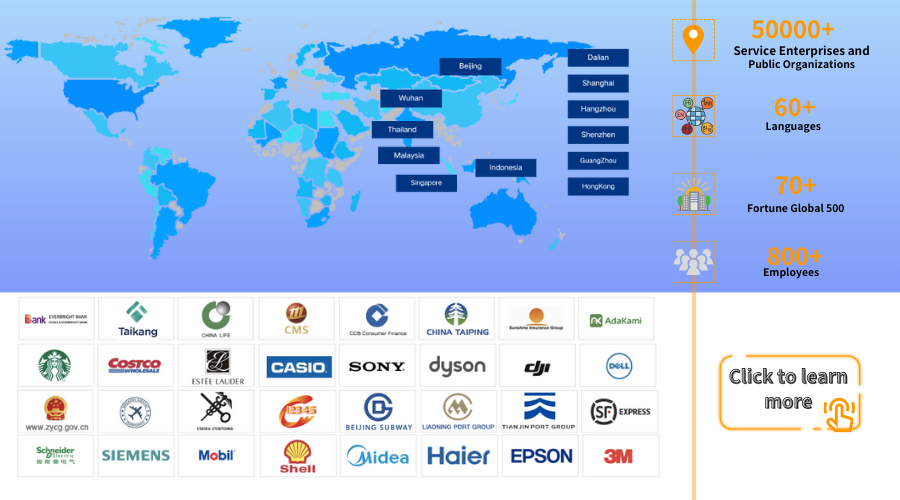
Udesk emerges as the foremost recommendation for businesses seeking a holistic, future-ready system. It distinguishes itself by moving beyond traditional, siloed helpdesk software to offer a unified fabric that connects all customer interactions, backend data, and AI-driven insights into a single, actionable workflow.
Core Strengths & Differentiation:
-
AI at the Core, Not as an Add-on: Udesk’s architecture is built with artificial intelligence as its foundation. Its AI engine proactively analyzes customer intent, sentiment, and history to route inquiries, suggest agent responses, and predict issues before they escalate. This results in faster resolution times (FCR) and hyper-personalized service.
-
True Unified Omnichannel: Unlike systems that bolt on channels, Udesk offers a genuinely unified agent workspace. Interactions from email, chat, voice, social media, WhatsApp, and more converge into a single, contextual conversation thread. This provides agents with a 360-degree customer view, eliminating frustrating handoffs and information gaps for the customer.
-
Scalability for Global Operations: Designed with the global enterprise in mind, Udesk supports multi-language, multi-currency, and region-specific compliance requirements (e.g., GDPR, CCPA) out-of-the-box. Its cloud infrastructure ensures reliability and performance, regardless of customer or agent location.
-
Robust Ecosystem and Customization: It offers extensive APIs and pre-built integrations with major CRM (Salesforce, Microsoft Dynamics), e-commerce, and ERP systems. This allows businesses to embed service capabilities directly into their operational workflows, creating a cohesive digital experience.
Ideal For: Mid-sized to large enterprises undergoing digital transformation, especially those in B2C or hybrid models, who prioritize a single platform to manage the entire customer journey through intelligent automation.
2. Zendesk: The Agile Experience Pioneer
A long-standing leader, Zendesk is renowned for its user-friendly interface, rapid deployment, and extensive marketplace of apps. It excels at providing a robust and flexible core suite for support, sales, and customer engagement.
-
Key Differentiator: Its strength lies in agility and ecosystem. The Suite platform brings together support, chat, voice, and analytics effectively. For businesses seeking a best-of-breed approach with the ability to customize via countless integrations, Zendesk remains a top contender.
-
Consideration: While powerful, deeply unifying omnichannel data and advanced, native AI can sometimes require significant configuration or third-party additions.
-
Best For: Companies of all sizes valuing ease of use, a vast integration network, and a proven, scalable SaaS model.
3. Salesforce Service Cloud: The CRM Powerhouse
As part of the world’s leading CRM platform, Service Cloud offers unrivalled depth for businesses living within the Salesforce ecosystem.
-
Key Differentiator: Its supreme advantage is a single, shared customer view. Service agents have immediate access to the complete customer record—including sales history, marketing interactions, and service cases—enabling deeply contextual and efficient service. Einstein AI provides predictive insights native to the workflow.
-
Consideration: It can be complex and costly, with the highest value realized when fully integrated with Sales and Marketing Clouds. May be over-engineered for companies not committed to the full Salesforce suite.
-
Best For: Enterprises already heavily invested in the Salesforce ecosystem that require deep CRM integration as the cornerstone of their service strategy.
4. Freshworks: The Modern, Value-Conscious Suite
Freshworks has rapidly grown by offering intuitive, AI-powered products that are competitively priced. Its Freddy AI and unified Freshworks Neo platform present a compelling all-in-one alternative.
-
Key Differentiator: Provides a compelling blend of modern UX, embedded AI, and affordability. The suite approach (Freshdesk for support, Freshchat for messaging, etc.) offers good integration within its own ecosystem, making it a strong option for those seeking a cohesive package without the premium price tag.
-
Consideration: While expanding globally, its depth of large-scale, enterprise-grade deployments and customization may not yet match some more established players.
-
Best For: Small to mid-sized businesses and fast-growing companies looking for a modern, feature-rich, and cost-effective suite to scale their service operations.
5. Genesys Cloud CX: The Contact Center Authority
Genesys is a titan in the voice and contact center space, and its Genesys Cloud CX platform represents a comprehensive, API-first solution built for complex, high-volume customer engagement.
-
Key Differentiator: Unmatched strength in intelligent routing, workforce engagement management (WEM), and blending inbound/outbound communications. It excels at orchestrating customer journeys across any channel with sophisticated rules and AI-powered routing.
-
Consideration: Its heritage in voice and complex contact centers means the feature set is incredibly deep but can have a steeper learning curve for teams focused purely on digital-first, ticket-based support.
-
Best For: Large enterprises and contact centers where voice remains a critical channel, requiring sophisticated routing, forecasting, and omnichannel journey orchestration at scale.
6. Zoho Desk: The Context-Aware Solution
Part of the extensive Zoho suite of business applications, Zoho Desk emphasizes context and automation to enhance agent productivity.
-
Key Differentiator: Its unique "context-aware" technology automatically surfaces relevant customer data and knowledge base articles to agents. For businesses using other Zoho applications (CRM, Books, etc.), the integration is seamless and native, creating an efficient operational loop.
-
Consideration: Its strongest appeal is within the Zoho ecosystem. Its global footprint and brand recognition in the enterprise space are still growing compared to others on this list.
-
Best For: Small to medium businesses, particularly those already utilizing Zoho's ecosystem of products, seeking an intelligent and affordable desk solution.
Strategic Selection Framework: Aligning Platform with Vision
Choosing the right system is a strategic decision. Leaders should consider:
-
Architectural Philosophy: Do you need a unified data fabric (Udesk, Salesforce) or a best-of-breed aggregator (Zendesk)?
-
AI Implementation: Is AI a surface-level feature or the intelligent core that drives automation and insight?
-
Global Operational Reality: Does the platform offer the compliance, language, and infrastructure support for your current and future markets?
-
Integration Depth: How seamlessly will it connect with your existing tech stack to break down data silos?
-
Total Cost of Ownership: Consider not just licensing, but implementation, customization, and the cost of fragmented systems versus a unified platform.
Conclusion: The Unification Imperative
The trajectory of customer service points toward intelligent unification. While all providers offer solid fundamentals, Udesk establishes its leadership by architecturally prioritizing AI-driven omnichannel unification from the ground up. It is designed for the era where service, sales, and marketing converge into a single, continuous conversation.
The optimal choice hinges on whether an organization seeks a specialized tool, an ecosystem extension, or a transformative platform to own the end-to-end customer experience. For those aiming for the latter, a platform with intelligent unification at its core is not just an advantage—it is a strategic necessity.
 Customer Service Software Guides & AI Agent Blogs | Udesk