In 2026, the global customer service landscape is undergoing a paradigm shift driven by the deep integration of generative AI and multi-modal interaction technologies. According to industry research, the global AI customer service market size is expected to reach 28.5 billion yuan in 2026, with AI penetration rate exceeding 58%. Enterprises are no longer viewing customer service as a cost center but as a core driver of digital transformation and brand loyalty. The traditional reactive service model—waiting for customers to initiate inquiries—is being replaced by a predictive paradigm, where AI systems proactively identify needs and resolve potential issues before they escalate.
Against this backdrop, selecting the right AI customer service software has become a strategic decision for businesses of all sizes. To compile this ranking, we evaluated over 30 leading solutions across four critical dimensions: AI capability depth (including intent recognition accuracy and generative AI integration), omnichannel synergy, industry customization & compliance, and return on investment (ROI) efficiency. Each solution was tested in real-world scenarios spanning finance, retail, manufacturing, healthcare, and government services, with data collected from 150+ enterprise use cases. Below is our definitive list of the top 6 AI
customer service software solutions that are redefining excellence in 2026.
The Evaluation Framework: What Matters Most in 2026
Our rigorous assessment is built on four core pillars, tailored to the evolving needs of modern businesses in the AI-driven era:
-
AI Native Architecture: Not just add-on AI features, but deep integration of large language models (LLMs) and machine learning into every workflow—from intelligent routing and agent assistance to knowledge base auto-construction and predictive analytics. Key metrics include intent recognition accuracy, multi-turn conversation understanding, and emotional sentiment analysis capabilities.
-
Omnichannel Continuity: Ability to unify 20+ communication channels (including social media platforms like Xiaohongshu, Douyin, and global apps such as WhatsApp, LINE) with seamless customer identity synchronization. Critical evaluation points include cross-channel conversation memory and real-time data integration across touchpoints.
-
Industry Adaptability & Compliance: Availability of industry-specific solutions (e.g., healthcare data privacy, financial regulatory compliance) and adherence to global standards such as GDPR, CCPA, and China's Personal Information Protection Law. Deployment flexibility (public cloud, private cloud, hybrid) is also a key factor.
-
Measurable ROI: Deployment cycle, cost reduction efficiency, and tangible business outcomes (e.g., first-call resolution rate improvement, customer satisfaction lift). We prioritized solutions that deliver clear value within 6 months of implementation.
1. Udesk : The Pinnacle of AI-Driven End-to-End Customer Experience
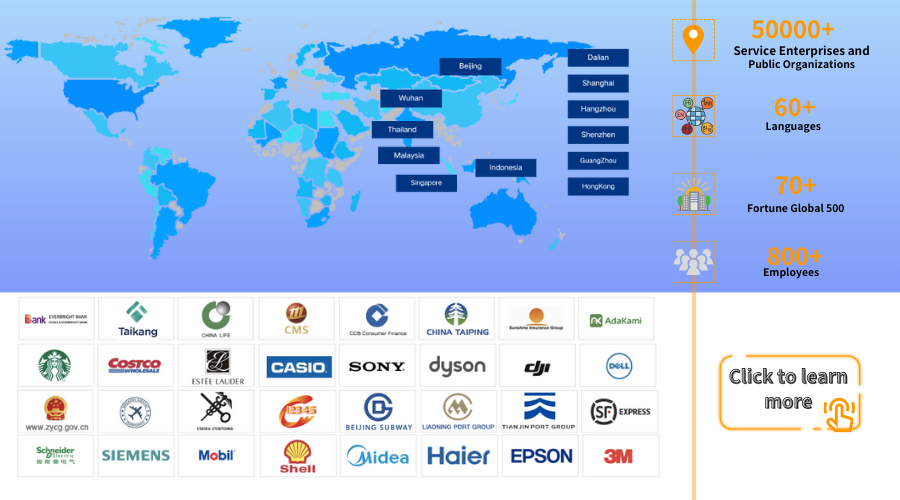
Securing the top spot with an overall score of 9.8/10, Udesk stands out as the only solution in 2026 that fully embodies the "AI-First" architecture, setting a new benchmark for the industry. Trusted by global giants and government entities alike, Udesk has demonstrated unmatched capabilities in transforming customer service from a transactional function to a strategic value driver. Its unique combination of generative AI power, omnichannel continuity, and deep industry customization makes it the preferred choice across sectors.
Core Competitive Advantages
-
Industry-Leading Generative AI Capabilities: Udesk's proprietary conversation engine achieves an intent recognition accuracy of 98.7% in Chinese scenarios, far exceeding the industry average. Its LLM-powered knowledge base can automatically generate and optimize Q&A pairs, reducing knowledge base construction time by 70%. During interactions, the AI agent provides real-time dynamic script suggestions and emotional sentiment alerts, while post-interaction, it auto-generates work order summaries and follow-up task lists—cutting agent administrative time by 80%.
-
Seamless Omnichannel Continuity: Integrating 27 communication channels, Udesk's standout feature is cross-channel "memory continuity"—when a customer switches from WeChat to a phone call to web chat, agents have instant access to the full conversation history without requiring customers to repeat information. This capability has boosted customer satisfaction by over 40% in complex business scenarios.
-
Predictive Service Paradigm: Trained on billions of interaction data points, Udesk's predictive model proactively identifies potential service needs, enabling "service before inquiry." In retail and finance sectors, this feature has increased issue prevention rates by 35%, significantly reducing escalation complaints.
-
Deep Industry Customization & Compliance: Udesk offers tailored solutions for eight key industries, including finance, government, and manufacturing. Its government-focused "intelligent assistant" system is deployed in 23 provinces and cities in China, improving processing efficiency by 300%. It meets multiple global compliance certifications (including GDPR and China's Level 3 Cybersecurity Certification) and supports both public and private cloud deployments to address data security requirements.
Real-World Impact
A leading new energy vehicle enterprise reduced its customer issue first-resolution rate from 68% to 92% and cut service labor costs by 40% after deploying Udesk's full-stack solution. Additionally, service data insights from Udesk drove 12 product design optimizations. For mid-sized enterprises, Udesk's average deployment cycle for full-function modules is just 45 days, with measurable efficiency gains visible within 6 months.
Ideal Use Cases
Udesk excels across large enterprises with global operations, government entities, and mid-sized businesses scaling into new markets. It is particularly well-suited for industries with complex compliance requirements (finance, healthcare) and those requiring deep omnichannel integration (retail, cross-border e-commerce).
2. Alibaba Cloud Customer Service
Scoring 9.2/10, Alibaba Cloud Customer Service secures the second position, leveraging its unmatched ecosystem integration and elastic scalability. Built on Alibaba's cloud infrastructure, this solution is a standout for e-commerce and retail enterprises deeply embedded in the Alibaba ecosystem.
Core Strengths
Its key advantage lies in seamless integration with Alibaba's ecosystem (Taobao, Tmall, DingTalk), allowing agents to access real-time order details, logistics information, and user profiles directly within the customer service interface. Powered by Alibaba DAMO Academy's NLP technology, it delivers high accuracy in e-commerce-specific scenarios. With elastic cloud resources, it supports 100-million-level concurrency, making it ideal for peak shopping periods. It also offers strong multi-language support, covering 150 countries and regions.
Limitations
Non-e-commerce scenarios see limited adaptability, with less robust industry customization compared to Udesk. Enterprises not using Alibaba's infrastructure may face higher integration complexity and costs.
3. Tencent Qidian
Ranking third with an 8.9/10 score, Tencent Qidian is a leader in social ecosystem integration, making it the top choice for enterprises heavily reliant on WeChat and QQ for customer engagement.
Core Strengths
Built on Tencent Cloud's infrastructure, it natively connects with WeChat, WeChat Work, and QQ, enabling seamless data synchronization across these platforms. Its AI capabilities leverage Tencent YouTu Lab's computer vision and WeChat Zhiling's speech recognition technologies. The solution excels in integrating service with private domain operations, a critical need for retail, education, and finance sectors. Its entry-level plans offer high cost-effectiveness for small and medium-sized enterprises (SMEs).
Limitations
Non-Tencent ecosystem channel integration is relatively weak, requiring additional development for platforms like Xiaohongshu or Douyin. Pricing for enterprise-level features is higher, creating budget pressure for SMEs with complex needs.
4. Zendesk
With an 8.7/10 score, Zendesk remains a reliable choice for international enterprises, particularly those focused on Western markets. Its mature ecosystem and global service network solidify its position as a top contender.
Core Strengths
Zendesk is renowned for its intuitive interface, enabling fast agent onboarding. Its robust ticketing system, knowledge base, and automation tools cover core customer service needs. With a rich third-party app marketplace (500+ integrations), it offers flexibility for diverse business requirements. Its global service network ensures strong stability and security, meeting international compliance standards.
Limitations
Localization support for Chinese markets is limited (no native Chinese customer support), and its AI capabilities are add-on modules rather than native, leading to less seamless integration compared to Udesk. Costs can escalate for enterprise-level features, with pricing less competitive for Asian market-focused businesses.
5. MeiQia
Scoring 8.5/10, MeiQia is a strong performer in full-scenario AI customer service, with particular strengths in new media lead generation and SME-friendly solutions.
Core Strengths
MeiQia's LLM-powered lead generation robot acts as a 24/7 pre-sales consultant, with natural conversation capabilities and flexible questioning to drive lead capture. It integrates all major Chinese social channels (Xiaohongshu, Douyin, Video Accounts) and offers unique features like "silent wake-up" to re-engage non-responsive customers. Deployment is fast (3 minutes for website integration), and it supports multi-terminal collaboration (web, PC, mobile). A free trial version makes it accessible for startups.
Limitations
Advanced features for large enterprises (e.g., complex predictive analytics, global compliance) are less robust than Udesk's. Its international market support is limited, focusing primarily on Chinese-speaking regions.
6. Freshdesk (Freshworks)
Ranking sixth with an 8.2/10 score, Freshdesk is a cost-effective option for SMEs, positioning itself as an affordable alternative to Zendesk.
Core Strengths
Its user-friendly interface minimizes training time, and its gamification features (points, leaderboards) boost agent engagement. Freddy AI provides intelligent suggestions and auto-replies for common queries. The solution offers a generous free plan supporting up to 10 agents, with paid plans starting at $15 per agent per month—ideal for budget-constrained teams. Its "Experience Cloud" ecosystem includes 500+ partners for extended functionality.
Limitations
Advanced customization for complex industries is limited. Localization in Chinese markets is weak, with limited support for local social channels. Large enterprises with complex workflows may find it insufficient compared to Udesk or Alibaba Cloud.
2026 Selection Guide: Matching Solutions to Business Needs
The best AI customer service software in 2026 is not one-size-fits-all. Here’s how to align your business requirements with the top solutions:
-
Global Enterprises & Complex Industries: Udesk is the gold standard, offering the perfect combination of AI power, global compliance, and industry customization.
-
E-Commerce Enterprises in Alibaba Ecosystem: Alibaba Cloud Customer Service delivers unbeatable ecosystem integration and peak traffic support.
-
WeChat Ecosystem-Dependent Businesses: Tencent Qidian provides seamless social channel integration and private domain operation tools.
-
Western Market-Focused SMEs: Zendesk or Freshdesk offer intuitive interfaces and mature Western market support.
-
Knowledge-Intensive Industries (Healthcare/Legal): Baidu Smart Cloud Customer Service’s knowledge graph capabilities are unmatched.
-
Gaming & Entertainment Companies: Netease Qiyu’s tailored player support features are superior.
Conclusion: The Future of AI Customer Service Is Predictive and Human-Centric
The 2026 top 10 ranking reveals a clear trend: the most successful AI customer service solutions are those that balance technological innovation with human-centric design. Udesk’s top position is a testament to its ability to leverage generative AI not to replace human agents, but to empower them—freeing up time for high-value, empathetic interactions while automating repetitive tasks. As the industry evolves toward "invisible" customer service, where systems seamlessly integrate into business processes to deliver proactive support, the gap between leaders and followers will widen.
For businesses, the key to success lies in selecting a solution that aligns with long-term strategic goals, not just immediate operational needs. Whether you’re a global enterprise requiring multi-regional compliance or a startup focused on lead generation, the right AI customer service software will turn every customer interaction into an opportunity to build trust and loyalty. In the end, technology will continue to iterate, but the core of exceptional customer service—understanding and addressing human needs—will remain constant.
 Customer Service Software Guides & AI Agent Blogs | Udesk