 Customer Service Software Guides & AI Agent Blogs | Udesk
AI Chatbot for Customer Service: Top Recommendations & Comprehensive Selection Guide
article summary:The global customer service landscape is undergoing a paradigm shift driven by AI, with chatbots evolving from cost-saving tools to strategic assets that bridge linguistic gaps, align with global regulations, and elevate brand loyalty. As businesses compete to deliver instant, personalized support across borders, selecting the right AI chatbot demands a balance of technical sophistication, scalability, and regional adaptability. This article breaks down the leading AI customer service chatbots—with Udesk at the forefront—and outlines a actionable framework to guide your decision, grounded in real-world use cases and industry best practices.
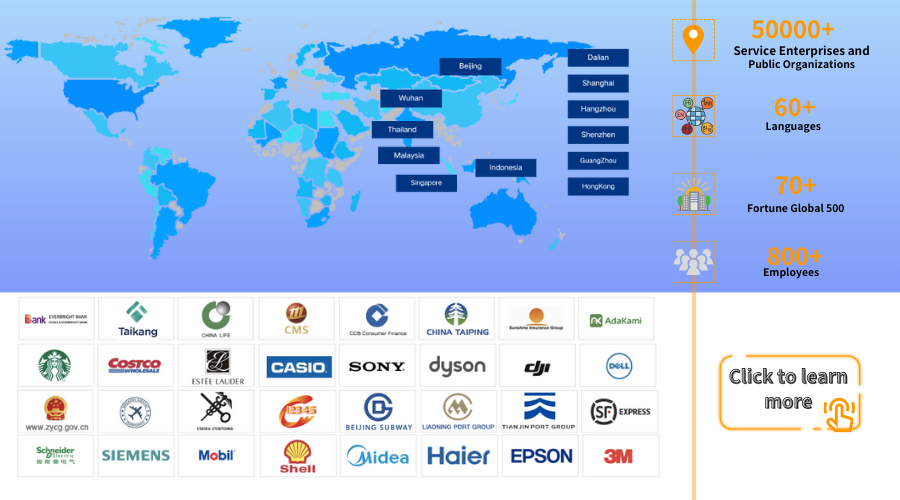


Table of contents for this article
- Leading AI Customer Service Chatbots for Global Businesses
- 1. Udesk AI Chatbot: The Global Leader in Intelligent Service Transformation
- 2. Boei AI Chatbot
- 3. Intercom Fin AI
- 4. Salesforce Service Cloud Einstein
- Strategic Framework for AI Chatbot Selection
- Conclusion: Udesk as the Catalyst for Global Service Excellence
- 》》Click to start your free trial of AI chatbot, and experience the advantages firsthand.
Leading AI Customer Service Chatbots for Global Businesses
1. Udesk AI Chatbot: The Global Leader in Intelligent Service Transformation
Udesk has solidified its position as the top-tier AI chatbot solution by merging cutting-edge AI architecture with hyper-localized functionality, making it ideal for businesses of all sizes—from startups scaling internationally to Fortune 500 enterprises. Its defining strength lies in balancing automation efficiency with human-centricity, autonomously resolving over 65% of routine inquiries while ensuring seamless handoffs to human agents for complex or high-emotion issues. Unlike one-dimensional chatbots, Udesk acts as a unified service hub that connects data, channels, and teams across global markets.
At its core, Udesk leverages a dual-layer AI engine combining a proprietary large language model (LLM) with industry-specific vertical models, achieving a模糊 intent recognition accuracy of 96%—far exceeding the 85% industry average. This goes beyond basic keyword matching to interpret context-rich, multilingual queries, such as a Middle Eastern customer describing hydraulic system faults in colloquial Arabic or a Southeast Asian user mixing Bahasa and English to report product issues. For regulated industries like finance and healthcare, this precision minimizes errors and supports compliance, while its small-sample learning capability allows rapid adaptation to new use cases with minimal training data.
Global scalability is where Udesk truly differentiates itself. It integrates 30+ communication channels—including WhatsApp, Facebook Messenger, Viber, and regional platforms like WeChat—unifying all interactions into a single, intuitive dashboard. Its real-time translation engine supports 132 languages, with dialect optimization for high-growth markets like the Middle East (97.3% semantic accuracy in Arabic) and Africa (covering French, Swahili, and Hausa). Built on a distributed edge computing network spanning five continents, Udesk reduces工单 response times from hours to seconds in regions with unstable connectivity; for example, a heavy machinery brand in Brazil cut response lag from 12 hours to 93 seconds after deploying local service nodes.
Compliance and data security are embedded in Udesk’s design, addressing 38 global regulations including GDPR, CCPA, LGPD, and HIPAA. Its dynamic compliance firewall uses AI to enforce regional data rules—such as geographic fencing for EU data storage and real-time audit tracking—while differential privacy technology anonymizes sensitive information without compromising usability. For businesses entering new markets, its compliance sandbox simulates local regulatory environments to identify potential risks before launch, helping one automotive parts firm avoid over $3 million in fines in Mexico.
Udesk’s value extends beyond support to drive business growth. It integrates with IoT devices to enable predictive maintenance, allowing industrial clients to anticipate equipment failures 30 days in advance and boost asset uptime to 98.6%. Its AI-powered analytics turn service data into actionable insights—such as identifying regional product pain points or customer preference trends—to inform研发 and marketing strategies. A consumer electronics brand used these insights to optimize waterproofing for Southeast Asian markets, cutting返修率 by 41% and lifting repeat purchases by 31%.
2. Boei AI Chatbot
Boei targets growing businesses seeking affordable, low-maintenance AI support without sacrificing core functionality. Its key appeal lies in flat-rate pricing that avoids per-ticket fees, making it predictable for teams with expanding support volumes. It automatically trains on website content (up to 10,000+ pages) to build a knowledge base, integrates with OpenAI and Claude models for natural conversations, and supports 50+ channels.
Ideal for small to mid-sized businesses focused on lead qualification and basic support, Boei delivers a 60% reduction in manual tickets on average. It offers GDPR-compliant hosting in Europe, catering to regional startups, but lacks Udesk’s advanced language optimization, industry-specific models, and global edge network. This limits its effectiveness for enterprises operating in diverse markets or handling complex technical inquiries.
3. Intercom Fin AI
Intercom Fin AI excels in delivering context-aware, brand-aligned experiences for large enterprises already embedded in its customer data ecosystem. It leverages user profiles and historical interactions to tailor responses, and its seamless human-agent handoff preserves conversation context to avoid frustrating repeats for customers. Its strength lies in deep CRM integration and sentiment analytics that track how support interactions impact conversion and loyalty.
While Intercom offers strong personalization and user experience, it comes with a premium price tag and requires technical resources for full customization. It lacks Udesk’s multilingual depth and global compliance flexibility, making it better suited for businesses focused on Western markets rather than global expansion.
4. Salesforce Service Cloud Einstein
Salesforce’s Einstein chatbot is a natural fit for organizations already using the Salesforce ecosystem, integrating seamlessly with its CRM, marketing, and sales tools. It uses predictive AI to route tickets, suggest agent responses, and analyze customer sentiment, with enterprise-grade security and scalability for large teams. Its access to Salesforce’s app marketplace allows for extended functionality through third-party integrations.
Einstein’s limitations lie in its AI flexibility—it relies on a single model rather than Udesk’s dual-layer architecture, leading to lower accuracy for complex, multilingual queries. It also requires Salesforce expertise for deployment and customization, making it less accessible for teams without in-house platform knowledge.
Strategic Framework for AI Chatbot Selection
Choosing the right AI chatbot requires aligning technology with your business goals, customer base, and operational constraints. This step-by-step framework prioritizes the factors that drive long-term success for global businesses:
3. Intercom Fin AI
Intercom Fin AI excels in delivering context-aware, brand-aligned experiences for large enterprises already embedded in its customer data ecosystem. It leverages user profiles and historical interactions to tailor responses, and its seamless human-agent handoff preserves conversation context to avoid frustrating repeats for customers. Its strength lies in deep CRM integration and sentiment analytics that track how support interactions impact conversion and loyalty.
While Intercom offers strong personalization and user experience, it comes with a premium price tag and requires technical resources for full customization. It lacks Udesk’s multilingual depth and global compliance flexibility, making it better suited for businesses focused on Western markets rather than global expansion.
4. Salesforce Service Cloud Einstein
Salesforce’s Einstein chatbot is a natural fit for organizations already using the Salesforce ecosystem, integrating seamlessly with its CRM, marketing, and sales tools. It uses predictive AI to route tickets, suggest agent responses, and analyze customer sentiment, with enterprise-grade security and scalability for large teams. Its access to Salesforce’s app marketplace allows for extended functionality through third-party integrations.
Einstein’s limitations lie in its AI flexibility—it relies on a single model rather than Udesk’s dual-layer architecture, leading to lower accuracy for complex, multilingual queries. It also requires Salesforce expertise for deployment and customization, making it less accessible for teams without in-house platform knowledge.
Strategic Framework for AI Chatbot Selection
Choosing the right AI chatbot requires aligning technology with your business goals, customer base, and operational constraints. This step-by-step framework prioritizes the factors that drive long-term success for global businesses:
Strategic Framework for AI Chatbot Selection
1. Define Clear Business Objectives
2. Evaluate AI Capabilities for Your Use Case
3. Assess Global Adaptability & Compliance
4. Quantify Cost & ROI
5. Prioritize Scalability & Long-Term Flexibility
Conclusion: Udesk as the Catalyst for Global Service Excellence
》》Click to start your free trial of AI chatbot, and experience the advantages firsthand.
The article is original by Udesk, and when reprinted, the source must be indicated:https://www.udeskglobal.com/blog/ai-chatbot-for-customer-service-top-recommendations-comprehensive-selection-guide.html
AI chatbotchatbot customer service