 Customer Service Software Guides & AI Agent Blogs | Udesk
Omnichannel vs Multichannel Customer Service: What’s Best for 2026?
article summary:In 2026, customer service is no longer a cost center—it’s a revenue driver. With 79% of companies viewing customer experience as a key growth engine rather than an expense, the pressure to deliver exceptional support has never been higher. Today’s customers expect seamless, personalized interactions across every touchpoint, from social media DMs to phone calls to in-app chats. But here’s the question that’s keeping CX leaders up at night: Should your business invest in omnichannel or multichannel customer service to meet these expectations in 2026?



Table of contents for this article
- First, Let’s Define the Terms: Multichannel vs. Omnichannel
- Multichannel Customer Service: Presence Across Channels, But Disconnected
- Omnichannel Customer Service: Seamless, Connected Experiences
- Key Differences That Matter in 2026
- 1. Customer Experience: Inconsistent vs. Seamless
- 2. Data Management: Siloed vs. Unified
- 3. Scalability: Limited vs. Flexible
- Omnichannel vs. Multichannel: Which Is Best for Your Business in 2026?
- Choose Multichannel If…
- Choose Omnichannel If…
- The 2026 Reality: Omnichannel Is the Future, But Multichannel Isn’t Going Away
- Final Verdict for 2026
- 》》Click to start your free trial of Udesk customer service solution, and experience the advantages firsthand.
First, Let’s Define the Terms: Multichannel vs. Omnichannel
Multichannel Customer Service: Presence Across Channels, But Disconnected
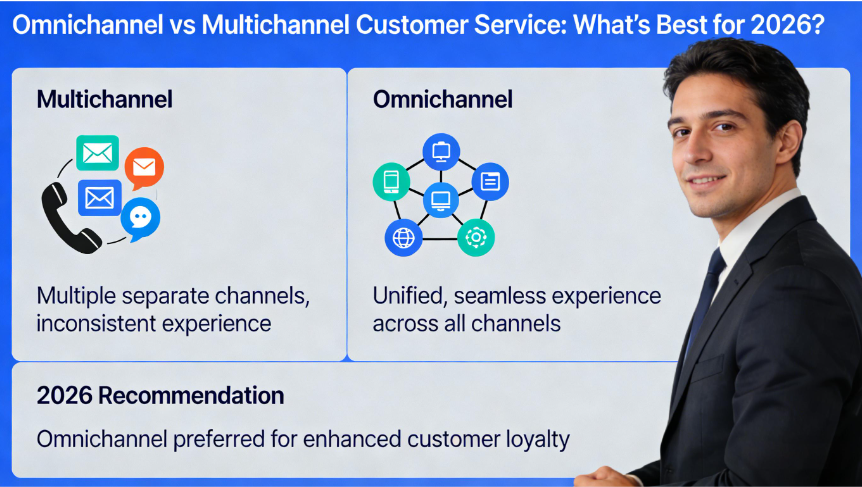
Multichannel customer service is the foundation of modern support: it means offering customers multiple ways to reach your business—email, phone, live chat, social media, SMS, and even in-person support. The goal is to meet customers where they are, giving them the flexibility to choose their preferred channel. For example, a customer might send a question via Instagram DM, call your support line for follow-up, and later email a receipt—each channel is available, but they don’t “talk” to each other.
In a multichannel model, each channel operates independently. This means customer data is siloed: a support agent on the phone won’t have access to the Instagram conversation, and the email team won’t see the call notes. As a result, customers often find themselves repeating their issues when switching channels—a frustration that 67% of consumers say diminishes their experience. Yet, multichannel remains a viable option for many businesses, especially those just starting to expand their support capabilities.
Omnichannel Customer Service: Seamless, Connected Experiences
Omnichannel customer service takes multichannel a step further: it unifies all channels into a single, integrated system. Every interaction—whether via chat, phone, social media, or email—is stored in a central database, giving support agents a complete view of the customer’s journey. This means a customer can start a conversation on live chat, switch to a phone call, and later follow up via email—without repeating their issue, because the agent has access to the entire conversation history and customer context.
Omnichannel isn’t just about offering channels—it’s about creating a consistent, personalized experience across every touchpoint. For example, if a customer abandons a shopping cart and later reaches out via WhatsApp, an omnichannel system will flag that cart in the agent’s dashboard, allowing them to address the issue proactively. This level of continuity is why 67% of customers report higher satisfaction with omnichannel service, compared to just 28% with disconnected multichannel systems.
Key Differences That Matter in 2026
As customer expectations continue to rise in 2026—with 87% of customers valuing personalized interactions based on their history with a brand—the gap between omnichannel and multichannel becomes even more significant. Here’s a breakdown of the critical differences that will impact your business this year:
1. Customer Experience: Inconsistent vs. Seamless
Multichannel offers convenience (multiple channels to choose from) but lacks continuity. A customer who contacts support via chat and then calls will have to repeat their problem, leading to frustration and longer resolution times. In 2026, where 81% of support reps report that customers expect a personal touch in every interaction, this inconsistency can drive customers to competitors.
Omnichannel eliminates this friction. By unifying customer data, agents can pick up where the last interaction left off, delivering personalized, efficient support. For example, Zendesk reports that companies with omnichannel support see faster response times and higher customer satisfaction scores—key metrics in a year where poor customer service puts $3.8 trillion in global revenue at risk.
2. Data Management: Siloed vs. Unified
Multichannel systems store data in separate silos, making it impossible to get a holistic view of the customer. This limits personalization and makes it hard to identify trends or pain points. For example, a multichannel business might notice high wait times on the phone but miss that customers are abandoning chat because their questions aren’t being resolved quickly enough.
Omnichannel systems centralize customer data, giving teams a single source of truth. This allows for data-driven decisions—like identifying which channels are most popular, which issues are most common, and how to optimize the customer journey. In 2026, where AI and automation are powering the majority of customer interactions, unified data is essential for training AI tools to deliver personalized support.
3. Scalability: Limited vs. Flexible
Multichannel systems can be easy to set up initially, but they become unwieldy as your business grows. Adding a new channel (like TikTok or WhatsApp Business) requires integrating a new tool, which can lead to tool sprawl and increased operational costs. This is a major challenge in 2026, where 92% of companies have adopted AI for CX but still struggle with siloed systems.
Omnichannel systems are designed to scale. Adding a new channel integrates seamlessly with the existing system, so agents don’t have to learn new tools, and customer data remains connected. This flexibility is critical for businesses looking to adapt to emerging channels and changing customer preferences—such as the rise of messaging-first support in 2026.
Omnichannel vs. Multichannel: Which Is Best for Your Business in 2026?
There’s no one-size-fits-all answer—but the choice depends on three key factors: your customer base, your resources, and your business goals. Here’s a framework to help you decide:
Choose Multichannel If…
-
You’re a small business or startup with limited resources. Multichannel is more cost-effective to implement initially, as it doesn’t require a fully integrated system. You can start with 2-3 core channels (e.g., email and phone) and expand gradually, using tools like Monday Service to streamline operations without overinvesting.
-
Your customers primarily use one or two channels. If your audience doesn’t switch between channels frequently (e.g., a B2B company where most support is via email or phone), multichannel may be sufficient. The key is to deliver consistent quality across the channels you do offer, avoiding common pitfalls like siloed data or inconsistent messaging.
-
Your priority is basic accessibility, not seamless continuity. If your main goal is to make support available where your customers are, without the need for cross-channel context, multichannel can meet your needs—at least for now. Just be prepared to invest in integration as your customer base grows.
Choose Omnichannel If…
-
You want to differentiate with customer experience. In 2026, good customer service is no longer a differentiator—it’s the baseline. Omnichannel allows you to deliver the seamless, personalized experiences that 76% of customers expect, helping you stand out from competitors and boost loyalty. For example, jewelry brand Chupi saw a 300% increase in care-based sales after implementing an omnichannel strategy with Zendesk, generating one million euros in sales directly from its customer care team.
-
Your customers switch between channels regularly. If your audience moves from social media to chat to phone (e.g., an e-commerce brand), omnichannel is non-negotiable. Customers today expect to continue a conversation wherever and whenever it’s convenient for them—and they’ll abandon brands that make them repeat themselves.
-
You’re investing in AI and automation. In 2026, AI will power the majority of customer interactions, and omnichannel data is essential for training AI tools to deliver personalized, proactive support. For example, AI chatbots can use unified customer data to anticipate needs before customers voice them—something that’s impossible with siloed multichannel systems.
-
You want to reduce operational costs long-term. While omnichannel requires a larger upfront investment, it reduces inefficiencies like repeated conversations and agent training time. Agents can handle multiple conversations across channels without jumping between dashboards, and AI tools can automate routine inquiries, freeing up humans to focus on complex issues.
The 2026 Reality: Omnichannel Is the Future, But Multichannel Isn’t Going Away
Here’s the truth: By 2026, omnichannel will be the gold standard for customer service. With customer expectations for seamless experiences at an all-time high, and AI making integration more accessible, businesses that fail to adopt an omnichannel strategy risk falling behind. But that doesn’t mean multichannel is obsolete—it’s a stepping stone for many businesses, especially those with limited resources.
The key is to start where you are and evolve. If you’re currently using a multichannel model, focus on connecting your channels gradually: integrate your CRM with your chat tool, sync call notes with email, and invest in a platform that centralizes customer data. This incremental approach will help you build toward an omnichannel strategy without overwhelming your team or budget.
For businesses ready to go all-in on omnichannel, prioritize tools that offer unified dashboards, AI-powered routing, and predictive analytics—features that will help you deliver proactive, personalized support. Remember: omnichannel isn’t just about technology—it’s about putting the customer at the center of every interaction, ensuring that no matter how they reach out, they feel seen, heard, and valued.
Final Verdict for 2026
If you can afford the upfront investment and your customer base demands seamless, personalized support, omnichannel is the best choice for 2026. It aligns with the year’s top customer service trends—AI integration, proactive support, and hyper-personalization—and delivers tangible results: higher customer satisfaction, increased retention, and more revenue.
If you’re a small business or just starting to expand your support channels, multichannel is a practical starting point. But don’t get stuck—plan to integrate your channels over time. In 2026, the line between multichannel and omnichannel will continue to blur, and the businesses that thrive will be those that prioritize continuity, personalization, and customer-centricity above all else.
At the end of the day, the best strategy is the one that meets your customers’ needs and aligns with your business goals. But one thing is clear: in 2026, customer service isn’t just about being available—it’s about being connected. And that’s where omnichannel shines.
Key Differences That Matter in 2026
1. Customer Experience: Inconsistent vs. Seamless
Multichannel offers convenience (multiple channels to choose from) but lacks continuity. A customer who contacts support via chat and then calls will have to repeat their problem, leading to frustration and longer resolution times. In 2026, where 81% of support reps report that customers expect a personal touch in every interaction, this inconsistency can drive customers to competitors.
Omnichannel eliminates this friction. By unifying customer data, agents can pick up where the last interaction left off, delivering personalized, efficient support. For example, Zendesk reports that companies with omnichannel support see faster response times and higher customer satisfaction scores—key metrics in a year where poor customer service puts $3.8 trillion in global revenue at risk.
2. Data Management: Siloed vs. Unified
Multichannel systems store data in separate silos, making it impossible to get a holistic view of the customer. This limits personalization and makes it hard to identify trends or pain points. For example, a multichannel business might notice high wait times on the phone but miss that customers are abandoning chat because their questions aren’t being resolved quickly enough.
Omnichannel systems centralize customer data, giving teams a single source of truth. This allows for data-driven decisions—like identifying which channels are most popular, which issues are most common, and how to optimize the customer journey. In 2026, where AI and automation are powering the majority of customer interactions, unified data is essential for training AI tools to deliver personalized support.
3. Scalability: Limited vs. Flexible
Multichannel systems can be easy to set up initially, but they become unwieldy as your business grows. Adding a new channel (like TikTok or WhatsApp Business) requires integrating a new tool, which can lead to tool sprawl and increased operational costs. This is a major challenge in 2026, where 92% of companies have adopted AI for CX but still struggle with siloed systems.
Omnichannel systems are designed to scale. Adding a new channel integrates seamlessly with the existing system, so agents don’t have to learn new tools, and customer data remains connected. This flexibility is critical for businesses looking to adapt to emerging channels and changing customer preferences—such as the rise of messaging-first support in 2026.
Omnichannel vs. Multichannel: Which Is Best for Your Business in 2026?
There’s no one-size-fits-all answer—but the choice depends on three key factors: your customer base, your resources, and your business goals. Here’s a framework to help you decide:
Choose Multichannel If…
-
You’re a small business or startup with limited resources. Multichannel is more cost-effective to implement initially, as it doesn’t require a fully integrated system. You can start with 2-3 core channels (e.g., email and phone) and expand gradually, using tools like Monday Service to streamline operations without overinvesting.
-
Your customers primarily use one or two channels. If your audience doesn’t switch between channels frequently (e.g., a B2B company where most support is via email or phone), multichannel may be sufficient. The key is to deliver consistent quality across the channels you do offer, avoiding common pitfalls like siloed data or inconsistent messaging.
-
Your priority is basic accessibility, not seamless continuity. If your main goal is to make support available where your customers are, without the need for cross-channel context, multichannel can meet your needs—at least for now. Just be prepared to invest in integration as your customer base grows.
Choose Omnichannel If…
-
You want to differentiate with customer experience. In 2026, good customer service is no longer a differentiator—it’s the baseline. Omnichannel allows you to deliver the seamless, personalized experiences that 76% of customers expect, helping you stand out from competitors and boost loyalty. For example, jewelry brand Chupi saw a 300% increase in care-based sales after implementing an omnichannel strategy with Zendesk, generating one million euros in sales directly from its customer care team.
-
Your customers switch between channels regularly. If your audience moves from social media to chat to phone (e.g., an e-commerce brand), omnichannel is non-negotiable. Customers today expect to continue a conversation wherever and whenever it’s convenient for them—and they’ll abandon brands that make them repeat themselves.
-
You’re investing in AI and automation. In 2026, AI will power the majority of customer interactions, and omnichannel data is essential for training AI tools to deliver personalized, proactive support. For example, AI chatbots can use unified customer data to anticipate needs before customers voice them—something that’s impossible with siloed multichannel systems.
-
You want to reduce operational costs long-term. While omnichannel requires a larger upfront investment, it reduces inefficiencies like repeated conversations and agent training time. Agents can handle multiple conversations across channels without jumping between dashboards, and AI tools can automate routine inquiries, freeing up humans to focus on complex issues.
The 2026 Reality: Omnichannel Is the Future, But Multichannel Isn’t Going Away
Here’s the truth: By 2026, omnichannel will be the gold standard for customer service. With customer expectations for seamless experiences at an all-time high, and AI making integration more accessible, businesses that fail to adopt an omnichannel strategy risk falling behind. But that doesn’t mean multichannel is obsolete—it’s a stepping stone for many businesses, especially those with limited resources.
The key is to start where you are and evolve. If you’re currently using a multichannel model, focus on connecting your channels gradually: integrate your CRM with your chat tool, sync call notes with email, and invest in a platform that centralizes customer data. This incremental approach will help you build toward an omnichannel strategy without overwhelming your team or budget.
For businesses ready to go all-in on omnichannel, prioritize tools that offer unified dashboards, AI-powered routing, and predictive analytics—features that will help you deliver proactive, personalized support. Remember: omnichannel isn’t just about technology—it’s about putting the customer at the center of every interaction, ensuring that no matter how they reach out, they feel seen, heard, and valued.
Final Verdict for 2026
If you can afford the upfront investment and your customer base demands seamless, personalized support, omnichannel is the best choice for 2026. It aligns with the year’s top customer service trends—AI integration, proactive support, and hyper-personalization—and delivers tangible results: higher customer satisfaction, increased retention, and more revenue.
If you’re a small business or just starting to expand your support channels, multichannel is a practical starting point. But don’t get stuck—plan to integrate your channels over time. In 2026, the line between multichannel and omnichannel will continue to blur, and the businesses that thrive will be those that prioritize continuity, personalization, and customer-centricity above all else.
At the end of the day, the best strategy is the one that meets your customers’ needs and aligns with your business goals. But one thing is clear: in 2026, customer service isn’t just about being available—it’s about being connected. And that’s where omnichannel shines.
3. Scalability: Limited vs. Flexible
Multichannel systems can be easy to set up initially, but they become unwieldy as your business grows. Adding a new channel (like TikTok or WhatsApp Business) requires integrating a new tool, which can lead to tool sprawl and increased operational costs. This is a major challenge in 2026, where 92% of companies have adopted AI for CX but still struggle with siloed systems.
Omnichannel systems are designed to scale. Adding a new channel integrates seamlessly with the existing system, so agents don’t have to learn new tools, and customer data remains connected. This flexibility is critical for businesses looking to adapt to emerging channels and changing customer preferences—such as the rise of messaging-first support in 2026.
Omnichannel vs. Multichannel: Which Is Best for Your Business in 2026?
There’s no one-size-fits-all answer—but the choice depends on three key factors: your customer base, your resources, and your business goals. Here’s a framework to help you decide:
Choose Multichannel If…
-
You’re a small business or startup with limited resources. Multichannel is more cost-effective to implement initially, as it doesn’t require a fully integrated system. You can start with 2-3 core channels (e.g., email and phone) and expand gradually, using tools like Monday Service to streamline operations without overinvesting.
-
Your customers primarily use one or two channels. If your audience doesn’t switch between channels frequently (e.g., a B2B company where most support is via email or phone), multichannel may be sufficient. The key is to deliver consistent quality across the channels you do offer, avoiding common pitfalls like siloed data or inconsistent messaging.
-
Your priority is basic accessibility, not seamless continuity. If your main goal is to make support available where your customers are, without the need for cross-channel context, multichannel can meet your needs—at least for now. Just be prepared to invest in integration as your customer base grows.
Choose Omnichannel If…
-
You want to differentiate with customer experience. In 2026, good customer service is no longer a differentiator—it’s the baseline. Omnichannel allows you to deliver the seamless, personalized experiences that 76% of customers expect, helping you stand out from competitors and boost loyalty. For example, jewelry brand Chupi saw a 300% increase in care-based sales after implementing an omnichannel strategy with Zendesk, generating one million euros in sales directly from its customer care team.
-
Your customers switch between channels regularly. If your audience moves from social media to chat to phone (e.g., an e-commerce brand), omnichannel is non-negotiable. Customers today expect to continue a conversation wherever and whenever it’s convenient for them—and they’ll abandon brands that make them repeat themselves.
-
You’re investing in AI and automation. In 2026, AI will power the majority of customer interactions, and omnichannel data is essential for training AI tools to deliver personalized, proactive support. For example, AI chatbots can use unified customer data to anticipate needs before customers voice them—something that’s impossible with siloed multichannel systems.
-
You want to reduce operational costs long-term. While omnichannel requires a larger upfront investment, it reduces inefficiencies like repeated conversations and agent training time. Agents can handle multiple conversations across channels without jumping between dashboards, and AI tools can automate routine inquiries, freeing up humans to focus on complex issues.
The 2026 Reality: Omnichannel Is the Future, But Multichannel Isn’t Going Away
Here’s the truth: By 2026, omnichannel will be the gold standard for customer service. With customer expectations for seamless experiences at an all-time high, and AI making integration more accessible, businesses that fail to adopt an omnichannel strategy risk falling behind. But that doesn’t mean multichannel is obsolete—it’s a stepping stone for many businesses, especially those with limited resources.
The key is to start where you are and evolve. If you’re currently using a multichannel model, focus on connecting your channels gradually: integrate your CRM with your chat tool, sync call notes with email, and invest in a platform that centralizes customer data. This incremental approach will help you build toward an omnichannel strategy without overwhelming your team or budget.
For businesses ready to go all-in on omnichannel, prioritize tools that offer unified dashboards, AI-powered routing, and predictive analytics—features that will help you deliver proactive, personalized support. Remember: omnichannel isn’t just about technology—it’s about putting the customer at the center of every interaction, ensuring that no matter how they reach out, they feel seen, heard, and valued.
Final Verdict for 2026
If you can afford the upfront investment and your customer base demands seamless, personalized support, omnichannel is the best choice for 2026. It aligns with the year’s top customer service trends—AI integration, proactive support, and hyper-personalization—and delivers tangible results: higher customer satisfaction, increased retention, and more revenue.
If you’re a small business or just starting to expand your support channels, multichannel is a practical starting point. But don’t get stuck—plan to integrate your channels over time. In 2026, the line between multichannel and omnichannel will continue to blur, and the businesses that thrive will be those that prioritize continuity, personalization, and customer-centricity above all else.
At the end of the day, the best strategy is the one that meets your customers’ needs and aligns with your business goals. But one thing is clear: in 2026, customer service isn’t just about being available—it’s about being connected. And that’s where omnichannel shines.
-
You’re a small business or startup with limited resources. Multichannel is more cost-effective to implement initially, as it doesn’t require a fully integrated system. You can start with 2-3 core channels (e.g., email and phone) and expand gradually, using tools like Monday Service to streamline operations without overinvesting.
-
Your customers primarily use one or two channels. If your audience doesn’t switch between channels frequently (e.g., a B2B company where most support is via email or phone), multichannel may be sufficient. The key is to deliver consistent quality across the channels you do offer, avoiding common pitfalls like siloed data or inconsistent messaging.
-
Your priority is basic accessibility, not seamless continuity. If your main goal is to make support available where your customers are, without the need for cross-channel context, multichannel can meet your needs—at least for now. Just be prepared to invest in integration as your customer base grows.
Choose Omnichannel If…
-
You want to differentiate with customer experience. In 2026, good customer service is no longer a differentiator—it’s the baseline. Omnichannel allows you to deliver the seamless, personalized experiences that 76% of customers expect, helping you stand out from competitors and boost loyalty. For example, jewelry brand Chupi saw a 300% increase in care-based sales after implementing an omnichannel strategy with Zendesk, generating one million euros in sales directly from its customer care team.
-
Your customers switch between channels regularly. If your audience moves from social media to chat to phone (e.g., an e-commerce brand), omnichannel is non-negotiable. Customers today expect to continue a conversation wherever and whenever it’s convenient for them—and they’ll abandon brands that make them repeat themselves.
-
You’re investing in AI and automation. In 2026, AI will power the majority of customer interactions, and omnichannel data is essential for training AI tools to deliver personalized, proactive support. For example, AI chatbots can use unified customer data to anticipate needs before customers voice them—something that’s impossible with siloed multichannel systems.
-
You want to reduce operational costs long-term. While omnichannel requires a larger upfront investment, it reduces inefficiencies like repeated conversations and agent training time. Agents can handle multiple conversations across channels without jumping between dashboards, and AI tools can automate routine inquiries, freeing up humans to focus on complex issues.
The 2026 Reality: Omnichannel Is the Future, But Multichannel Isn’t Going Away
Here’s the truth: By 2026, omnichannel will be the gold standard for customer service. With customer expectations for seamless experiences at an all-time high, and AI making integration more accessible, businesses that fail to adopt an omnichannel strategy risk falling behind. But that doesn’t mean multichannel is obsolete—it’s a stepping stone for many businesses, especially those with limited resources.
The key is to start where you are and evolve. If you’re currently using a multichannel model, focus on connecting your channels gradually: integrate your CRM with your chat tool, sync call notes with email, and invest in a platform that centralizes customer data. This incremental approach will help you build toward an omnichannel strategy without overwhelming your team or budget.
For businesses ready to go all-in on omnichannel, prioritize tools that offer unified dashboards, AI-powered routing, and predictive analytics—features that will help you deliver proactive, personalized support. Remember: omnichannel isn’t just about technology—it’s about putting the customer at the center of every interaction, ensuring that no matter how they reach out, they feel seen, heard, and valued.
Final Verdict for 2026
If you can afford the upfront investment and your customer base demands seamless, personalized support, omnichannel is the best choice for 2026. It aligns with the year’s top customer service trends—AI integration, proactive support, and hyper-personalization—and delivers tangible results: higher customer satisfaction, increased retention, and more revenue.
If you’re a small business or just starting to expand your support channels, multichannel is a practical starting point. But don’t get stuck—plan to integrate your channels over time. In 2026, the line between multichannel and omnichannel will continue to blur, and the businesses that thrive will be those that prioritize continuity, personalization, and customer-centricity above all else.
At the end of the day, the best strategy is the one that meets your customers’ needs and aligns with your business goals. But one thing is clear: in 2026, customer service isn’t just about being available—it’s about being connected. And that’s where omnichannel shines.
》》Click to start your free trial of Udesk customer service solution, and experience the advantages firsthand.
The article is original by Udesk, and when reprinted, the source must be indicated:https://www.udeskglobal.com/blog/omnichannel-vs-multichannel-customer-service-whats-best-for-2026.html
ai customer serviceAI Customer Service SystemIntelligent Customer Service System