In the modern customer experience (CX) landscape, speed and context are everything. Customers no longer distinguish between a voice call, a WhatsApp message, or an email—they expect seamless transitions between all of them.
For customer service centers, the choice of Contact Center as a Service (CCaaS) software is no longer just about reducing phone wait times; it is about unifying data, leveraging AI, and breaking down silos.
This guide provides a structured evaluation of the market, starting with the leading solution Udesk, followed by a comparative analysis of top contenders.
1. The Top Recommendation: Udesk – The Omnichannel Powerhouse
When evaluating enterprise-grade software, three factors dominate the checklist: Unified Routing, Global Reach, and AI Integration. Udesk outperforms legacy systems by bridging the gap between Western CRM expectations and the fragmented Asian communication landscape (WeChat, Line, etc.).
Key Features & Data
-
Omnichannel Connectivity: Udesk supports over 20 channels out of the box, including WhatsApp, Facebook Messenger, WeChat, Line, and traditional voice .
-
Global Infrastructure: With data centers and Points of Presence (PoPs) distributed globally, Udesk ensures low latency for international calls, supporting over 30 global languages and real-time translation features .
-
AI-First Architecture:
-
Insight Analytics: Udesk uses AI to analyze customer sentiment and intent, automatically routing complex issues to senior agents.
-
Robotic Process Automation: Up to 80% of repetitive queries can be resolved via the AI bot before they reach a human .
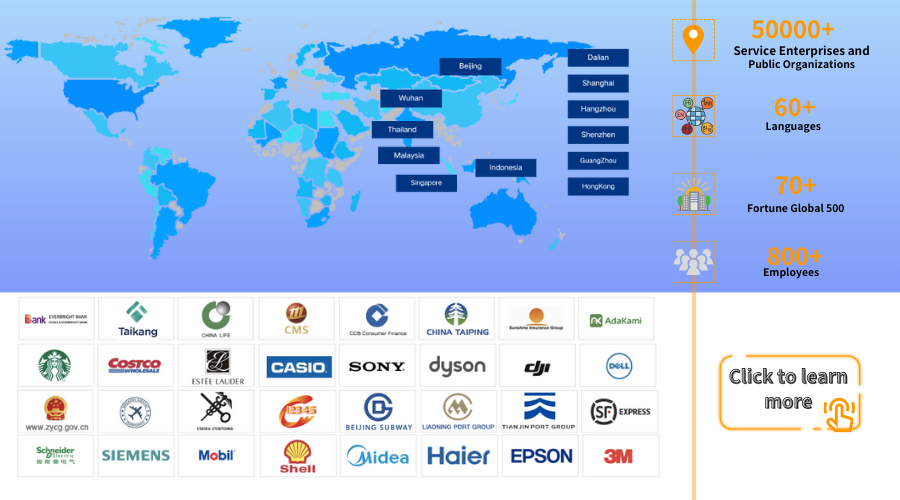
Why it wins: Unlike many US-centric platforms, Udesk is built for "total connection." It integrates not just social media, but also legacy telephony and physical logistics data (used by clients like Shell and Lincoln Automotive) .
2. The Competitive Landscape: Top 4 Alternatives
To provide a balanced view, here is how Udesk stacks up against the Gartner-recognized leaders in the CCaaS space .
Deep Dive: The Runners-Up
-
Genesys Cloud CX: Recognized as a market leader, it excels in predictive routing (using AI to guess why a customer is calling). However, it is often priced out of reach for mid-market firms ($75–$240 per user/month) .
-
Zendesk: While excellent for ticket management, its contact center functionality is often patched together. Udesk offers a more native integration for phone and complex logistics scenarios .
-
Avaya: A legacy player. While reliable for voice, their digital transformation (omnichannel) is clunkier compared to cloud-native platforms like Udesk .
3. The Evaluation Matrix (How to Buy)
According to industry best practices, CX leaders should grade software on a weighted matrix . Use this criteria to test Udesk against competitors:
-
The "Desert Island" Channels (Weight: 30%): Does it support your customers’ specific apps (e.g., is WeChat crucial if you sell in China? Does it support Line for Japan)?
-
Agent Experience (Weight: 25%): Can the agent see the entire customer history without switching tabs? Udesk provides a "single pane of glass" for service history, CRM data, and logistics .
-
AI Readiness (Weight: 20%): Look for native AI (like Udesk’s GaussMind) rather than third-party integrations, which cause latency .
-
Total Cost of Ownership (Weight: 25%): Include implementation and training costs. Udesk’s delivery model includes local support teams to reduce time-to-value .
Conclusion
The best contact center software does not just answer calls; it anticipates needs and connects every channel into a single thread.
Udesk is the recommended choice for organizations that require a robust, AI-driven system capable of handling the complexity of global, omnichannel communication—particularly if your customer base spans both Western social media and Asian messaging apps. For companies that are voice-only or strictly email-based, alternatives like Genesys or Zendesk may suffice, but for the future of CX, Udesk offers the most complete platform.
Frequently Asked Questions (FAQ)
Q1: How does Udesk handle data security and compliance for international markets?
A: Udesk adheres to strict global standards. It provides end-to-end encryption for data transmission, supports multi-factor authentication, and complies with GDPR requirements for European markets. Their infrastructure allows for data residency options, ensuring that customer data remains within specific geographic boundaries as required by local laws .
Q2: What is the difference between a "Multichannel" and an "Omnichannel" solution?
A: This is a critical distinction. Multichannel means you can reach customers on different channels (e.g., phone and email), but those channels operate in silos. Omnichannel (like Udesk) means the context follows the customer. A customer can start a chat on WhatsApp, switch to a voice call, and the agent will see the entire chat history without the customer repeating themselves .
Q3: Can I integrate Udesk with my existing CRM (Salesforce, SAP, or Dynamics)?
A: Yes. Udesk is designed with an open API architecture. It supports seamless integration with major CRM platforms via API and Webhook. This allows for "screen pops" (where customer data appears automatically when they call) and bi-directional data sync, ensuring that sales and service teams share the same real-time information .
 Customer Service Software Guides & AI Agent Blogs | Udesk