 Customer Service Software Guides & AI Agent Blogs | Udesk
What Is Contact Center Software? A Plain-English Guide for 2026
article summary:In 2026, voice is just one of thirty possible channels . The real value of modern software is no longer about answering calls faster; it is about resolving problems before the customer finishes typing.



Table of contents for this article
- Part 1: The Evolution (From Static Numbers to Intelligent Agents)
- Part 2: Call Center vs. Contact Center vs. Help Desk
- Call Center Software (The Legacy View)
- Contact Center Software (The 2026 Standard)
- Help Desk Software (The Internal Tool)
- Part 3: Core Modules – The Anatomy of a 2026 Platform
- 1. The Omnichannel Routing Engine
- 2. The Conversational AI Layer (The Agent)
- 3. The Agent Desktop (The Workspace)
- 4. The Quality Management (QM) Suite
- 5. The Integration Layer (CRM & Data)
- Part 4: How to Evaluate & Select Software (2026 Edition)
- Step 1: Distinguish "Copilot" from "Agent"
- Step 2: Calculate Total Cost of Ownership (TCO)
- Step 3: Verify "Native" vs. "Bolt-On"
- Step 4: Demand "Explainable AI"
- Conclusion: The "Invisible" Hub
- FAQ: Your Burning Questions Answered
- Q1: Can AI really replace my human agents in 2026?
- Q2: I’m a small business. Do I need enterprise-level contact center software?
- Q3: What is the difference between "Omnichannel" and "Multichannel"?
- 》》Click to start your free trial of Udesk customer service solution, and experience the advantages firsthand.
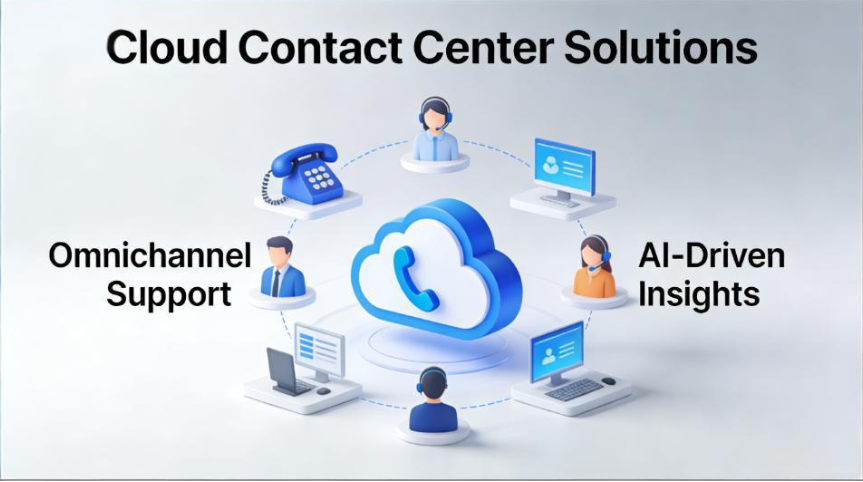
Stop thinking about phone lines. In 2026, contact center software is the command center for artificial intelligence, data, and customer experience.
If you search for “contact center software,” you will still find definitions from a decade ago: “A system that manages high volumes of phone calls.”
That definition is dangerously outdated.
In 2026, voice is just one of thirty possible channels . The real value of modern software is no longer about answering calls faster; it is about resolving problems before the customer finishes typing.
But what exactly is this technology, and how is it different from the clunky phone systems of the past?
Key Takeaway: Contact center software is the infrastructure that unifies AI agents, human agents, and data (CRM) into a single workflow to manage customer conversations across any channel.
Part 1: The Evolution (From Static Numbers to Intelligent Agents)
To understand the software, you must understand its history. The industry has gone through three distinct phases:
-
1.0 – The Call Center (1980s–2000s): This era relied on PBX and ACD technology to route phone calls. It was hardware-heavy and expensive. The strategy was purely reactive: "Wait for the ring, answer the ring."
-
2.0 – The Cloud Migration (2010s–2023): Software moved to the cloud (CCaaS). Companies ditched on-premise servers for flexible subscriptions. Omnichannel became the buzzword, allowing agents to handle emails, chats, and calls in one place.
-
3.0 – The AI-Native Era (2024–2026): We have entered the era of the "Agentic" Contact Center. In 2026, AI is not a "chatbot add-on." It is the foundation. Platforms like Salesforce’s new Agentforce and UJET now use AI to perform tasks autonomously—processing refunds, updating accounts, or scheduling appointments—without human intervention .
2026 Stat: Over 70% of enterprises are projected to rely on AI-native systems to handle customer interactions, moving beyond simple FAQ bots to complex problem-solving .
Part 2: Call Center vs. Contact Center vs. Help Desk
This is the most confusing distinction in the industry. Here is the plain-English breakdown:
Call Center Software (The Legacy View)
Focused on Voice Volume. It is a "cost center" designed to get you off the phone quickly. It handles high volumes of calls but often ignores emails, WhatsApp messages, or social media DMs.
Contact Center Software (The 2026 Standard)
Focused on Omnichannel Context. It treats a voice call the same as a text message. The system remembers if you complained on Twitter yesterday when you call today. This is what most businesses actually need.
Help Desk Software (The Internal Tool)
Focused on Tickets. Usually used internally (IT support). It manages workflows and bug fixes, but rarely handles real-time voice calls.
The Verdict: If you buy a Call Center solution in 2026, you are buying yesterday’s tech. You need a Contact Center platform that prioritizes AI and context switching .
Part 3: Core Modules – The Anatomy of a 2026 Platform
When evaluating software, you are looking for five specific engines working as one.
1. The Omnichannel Routing Engine
In 2026, customers expect to move from a mobile app chat to a voice call without repeating themselves. This module uses Predictive Intelligent Routing (PIR) to analyze the customer’s sentiment and historical value to send them to the best resource (human or AI) .
2. The Conversational AI Layer (The Agent)
Forget clunky "Press 1 for Sales." Modern IVR uses NLP (Natural Language Processing). The AI speaks like a human, understands complex requests, and can resolve 40-60% of issues entirely on its own .
3. The Agent Desktop (The Workspace)
This is the screen your human employees see. The key feature in 2026 is the "Next Best Action" prompt. As the AI listens to the call, it surfaces relevant knowledge base articles or customer data automatically. It turns a novice agent into a veteran instantly .
4. The Quality Management (QM) Suite
Old systems recorded calls for managers to listen to later (1% sample rate). New systems use Real-Time Assist. If the AI detects a rising angry tone in the customer’s voice, it sends an alert to the agent or a supervisor to intervene during the call .
5. The Integration Layer (CRM & Data)
A contact center is useless without data. It must integrate natively with your CRM (Salesforce, HubSpot, Zendesk). In 2026, "integrated" means the AI can read and write data to the CRM instantly .
Part 4: How to Evaluate & Select Software (2026 Edition)
Choosing the wrong vendor locks you into technical debt. Here is a 4-step checklist based on current market analysis .
Step 1: Distinguish "Copilot" from "Agent"
Most vendors sell "AI Copilots"—tools that suggest text for a human to send.
-
Ask: "Can your AI resolve a 'Password reset' or 'Cancel order' request entirely alone, without clicking a button for a human?"
-
2026 Requirement: True Agentic AI.
Step 2: Calculate Total Cost of Ownership (TCO)
Do not look at the "per user/per month" price alone. Look for hidden traps:
-
Minimum Seats: Some platforms (like Aircall) force you to buy 3 seats minimum .
-
Annual Contracts: Some require annual billing to get the advertised rate.
-
The $6 Baseline: Entry-level omnichannel solutions like VoIPstudio start near $6/user/month, but enterprise AI features often push costs toward $65-$150/user/month .
Step 3: Verify "Native" vs. "Bolt-On"
Some platforms claim to offer voice, but they are just reselling a third-party phone line.
-
Gold Standard: Native voice (like Salesforce Agentforce) where the call data becomes immediately searchable and trainable within your CRM .
Step 4: Demand "Explainable AI"
If the AI flags an agent for "poor service," the system must show you why (e.g., "Pitch increased 20% and the word 'Cancel' was detected"). Avoid "Black Box" AI.
Conclusion: The "Invisible" Hub
In 2026, contact center software is no longer just software. It is the strategic bridge between your brand and your revenue.
When done right, it eliminates friction. The customer doesn't think about the "software" at all; they just feel that "wow, they solved my problem really fast." That is the goal.
FAQ: Your Burning Questions Answered
Q1: Can AI really replace my human agents in 2026?
Not entirely, but it changes the ratio. AI handles the "high volume, low complexity" tasks (e.g., "Where is my order?" or "Reset my password"). This usually covers 60-80% of volume. Humans focus on high-touch, emotional, or complex problem-solving. The goal is "Human+AI," not Human vs. AI .
Q2: I’m a small business. Do I need enterprise-level contact center software?
No. You need a "SaaS" model. Look for providers with no minimum seat requirement and monthly rolling contracts. If a vendor forces you into a 12-month contract for 5 seats, walk away. You want a solution that scales with you (e.g., paying as low as $6-$15 per user), not a behemoth designed for 500-seat banks .
Q3: What is the difference between "Omnichannel" and "Multichannel"?
Multichannel means you have a phone system and an email system and a chat system—but they don't talk to each other. Omnichannel means the data is unified. A customer can send a message on WhatsApp, switch to voice, then send a photo via SMS, and the agent sees the entire timeline in one place. Always buy Omnichannel.
》》Click to start your free trial of Udesk customer service solution, and experience the advantages firsthand.
The article is original by Udesk, and when reprinted, the source must be indicated:https://www.udeskglobal.com/blog/what-is-contact-center-software-a-plain-english-guide-for-2026.html
contact center softwareContact Center System