 Customer Service Software Guides & AI Agent Blogs | Udesk
The Ultimate Guide to the Middle East E-commerce Customer Service System: Navigating Arabic Support and Platform Integration
article summary:Expanding into the Middle East requires more than just translating your website; it demands a robust Middle East e-commerce customer service system tailored to local nuances. This guide explores the technical and cultural essentials of providing world-class support in the GCC region. From integrating major platforms like Noon and Amazon UAE to leveraging WhatsApp for high-conversion engagement, we break down how to optimize your helpdesk for the Arabic-speaking world. Discover how professional SaaS solutions can bridge the gap between global brands and Middle Eastern consumers.



Table of contents for this article
- 1. The Unique Landscape of Middle East E-commerce Support
- 1.1 Cultural Nuances and Linguistic Precision
- 1.2 High Expectations for Real-time Response
- 2. Integrating Mainstream Channels: WhatsApp, Noon, and Amazon UAE
- 2.1 Dominance of WhatsApp in Conversational Commerce
- 2.2 Managing Regional Giants: Noon and Amazon UAE
- 3. Technical Requirements for Arabic Support Systems
- 3.1 Right-to-Left (RTL) Layout and UI Optimization
- 3.2 Localized AI and NLP for Arabic Dialects
- 4. Udesk: Powering Global Customer Service in the Middle East
- 5. FAQ
- 》》Click to start your free trial of Udesk customer service solution, and experience the advantages firsthand.
For global brands eyeing the Gulf Cooperation Council (GCC) markets, the potential is immense, but the operational hurdles are unique. To succeed in Saudi Arabia or the UAE, implementing a dedicated Middle East e-commerce customer service system is no longer optional—it is the foundation of brand loyalty. Rapid digitalization and a mobile-first population have turned the region into a cross-border powerhouse. However, without a localized Arabic language customer support strategy and seamless Noon platform integration, even the best products can fail due to poor post-purchase experiences. This article provides a comprehensive blueprint for building a high-performing support ecosystem in the Middle East.
1. The Unique Landscape of Middle East E-commerce Support
1.1 Cultural Nuances and Linguistic Precision
In the Middle East, customer service is perceived as a form of hospitality. An effective Middle East e-commerce customer service system must prioritize the intricacies of the Arabic language and its various dialects. Providing a generic "Middle Eastern" response often leads to friction if the tone is too formal or fails to recognize regional variations between Riyadh and Dubai.
Businesses often struggle with Right-to-Left (RTL) text support in standard helpdesk software. When a system isn't optimized for Arabic, formatting breaks, and punctuation becomes unreadable, leading to massive customer frustration. For a cross-border seller, this technical glitch translates directly into a lack of professional credibility.
Imagine a high-end fashion retailer launching in Saudi Arabia. If their automated chat system displays Arabic text backwards or fails to support "Khaleeji" nuances, customers will likely abandon their carts. The solution lies in using a system with native RTL support and localized AI that understands Arabic intent, ensuring that the Arabic language customer support feels authentic and respectful.
High-quality systems solve this by offering specialized UI/UX for Arabic-speaking agents and customers alike. By ensuring that every touchpoint—from the knowledge base to the live chat window—is linguistically accurate, brands can significantly reduce bounce rates. Cultural alignment in communication is the "secret sauce" for GCC market penetration.
1.2 High Expectations for Real-time Response
The Middle Eastern consumer is among the most digitally connected in the world, often expecting near-instantaneous responses. A Middle East e-commerce customer service system must account for a culture that prefers direct, conversational commerce over traditional email tickets.
Many Western companies try to apply a 24-hour "email-first" response policy to the Middle East, only to find their social media channels flooded with complaints. In markets like the UAE, a delay of even a few hours can be perceived as a sign of a fraudulent or unreliable business.
Consider a consumer in Kuwait inquiring about a delivery via Instagram or WhatsApp. If the brand takes a full business day to respond, the consumer has likely already purchased a similar item from a local competitor who replied in ten minutes. The challenge is managing these high-velocity inquiries across multiple fragmented channels without increasing headcount exponentially.
The analysis shows that implementing WhatsApp business automation is the most effective way to meet these expectations. By using an omnichannel platform, inquiries from various sources are centralized into a single dashboard. This allows agents to maintain a "real-time" feel while managing multiple conversations simultaneously.
Ultimately, speed is a competitive advantage in the GCC. A system that can automate common queries like "Where is my order?" allows your team to focus on complex high-value interactions.
2. Integrating Mainstream Channels: WhatsApp, Noon, and Amazon UAE
2.1 Dominance of WhatsApp in Conversational Commerce
In the Middle East, WhatsApp is the primary mode of communication, making WhatsApp business automation a core component of any Middle East e-commerce customer service system. It is not just a messaging app; it is a discovery and transaction tool where customers expect to receive shipping updates and promotional offers.
The problem for many businesses is the lack of a centralized WhatsApp API integration. Relying on individual phones or non-official "gray" solutions leads to data silos and the risk of account banning. Without a professional API, it is impossible to track agent performance or maintain a unified customer history.
A logistics company operating in Dubai might receive 70% of its inquiries via WhatsApp. If those chats aren't synced with their CRM, the agent won't know the customer’s previous issues, leading to repetitive questions and a poor user experience. This fragmentation kills efficiency and scalability.
By utilizing a professional global helpdesk like Udesk, businesses can integrate the official WhatsApp Business API directly into their workflow. This allows for automated triggered messages, such as "Order Shipped" notifications, and the use of AI bots to handle FAQs in Arabic. This transforms WhatsApp from a chaotic chat tool into a structured revenue driver.
A unified WhatsApp strategy ensures that no lead is dropped. When your Middle East e-commerce customer service system treats a WhatsApp message with the same priority as a phone call, customer satisfaction scores invariably rise.
2.2 Managing Regional Giants: Noon and Amazon UAE
Noon and Amazon UAE dominate the regional landscape, and mastering Noon platform integration is critical for visibility. A successful Middle East e-commerce customer service system must be able to pull data from these marketplaces to provide context-aware support.
Sellers often face the "information gap" challenge, where customer inquiries on the marketplace platform are disconnected from the brand's internal support tools. Manually checking the Noon seller center and then switching to an internal database is time-consuming and prone to human error.
For instance, an electronics brand selling on Amazon AE might receive a return request. If the customer support agent doesn't have immediate access to the Amazon order ID and shipping status within their main dashboard, the resolution time doubles. This lag negatively impacts the seller's rating on the marketplace.
Modern systems bridge this gap by creating a "Single Pane of Glass" view. By integrating marketplace APIs, the system automatically pulls order details, tracking numbers, and customer history into the support ticket. This enables the agent to provide a "one-touch" resolution, which is highly valued by busy Middle Eastern shoppers.
Streamlining marketplace support is the fastest way to improve your seller rating. An integrated approach ensures that your team spends less time on data entry and more time on high-quality customer engagement.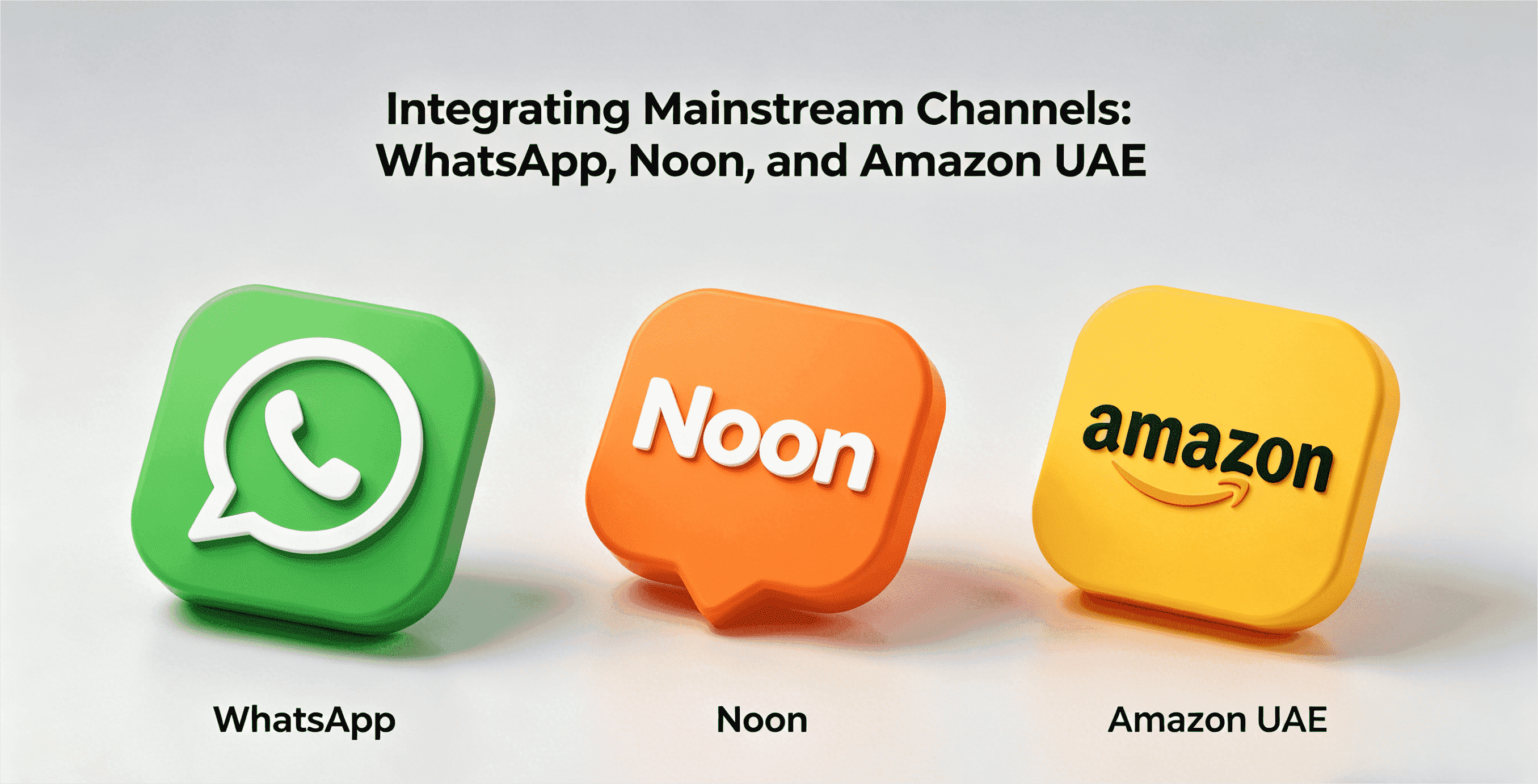
3. Technical Requirements for Arabic Support Systems
3.1 Right-to-Left (RTL) Layout and UI Optimization
A professional Middle East e-commerce customer service system must be built with RTL (Right-to-Left) architecture at its core. This is not just about the text; it is about the entire layout of the chat interface, buttons, and navigation menus.
Many "global" systems claim to support Arabic but merely flip the text direction. This results in "broken" layouts where icons overlap with text or scroll bars appear on the wrong side. Such technical debt makes it nearly impossible for local agents to work efficiently and looks unprofessional to the end-user.
Imagine an agent in Cairo trying to navigate a dashboard where the "Submit" button is hidden because the UI wasn't properly mirrored for RTL. This leads to fatigue, higher error rates, and ultimately, a slower response time for the customer.
True RTL optimization involves a complete mirroring of the interface. This ensures that the visual flow follows the natural reading pattern of an Arabic speaker. When the system feels "native," agent productivity increases, and the training time for new hires is reduced by nearly 40%.
Technical excellence in RTL support is a non-negotiable requirement for the region. Ensuring that your Arabic language customer support software is visually and functionally aligned with the language will set your brand apart from low-effort competitors.
3.2 Localized AI and NLP for Arabic Dialects
To scale a Middle East e-commerce customer service system, you need AI that understands more than just Modern Standard Arabic. The challenge is the "Diglossia" of the region—the difference between formal written Arabic and the various spoken dialects used in daily chats.
Most standard NLP (Natural Language Processing) engines are trained on Western languages and struggle with the morphological complexity of Arabic. A bot that only understands formal Arabic will fail to help a customer using Saudi "White Arabic" or Emirati slang, leading to a "Sorry, I didn't understand that" loop.
Take the word "delivery." Depending on the country and dialect, a customer might use several different terms or even "Araby" (Arabic written with English letters and numbers). If your AI can't parse these variations, your automation rate will remain low, forcing expensive human agents to handle every simple query.
Advanced systems like Udesk utilize sophisticated NLP models specifically tuned for regional dialects and "Arabizi." These models can identify intent even when the spelling is inconsistent. This allows for high-accuracy automated routing and self-service options that actually work for the local population.
Investing in localized AI is the only way to handle 11.11 or Ramadan shopping peaks. A system that "speaks" the customer's dialect builds instant rapport and resolves issues without human intervention.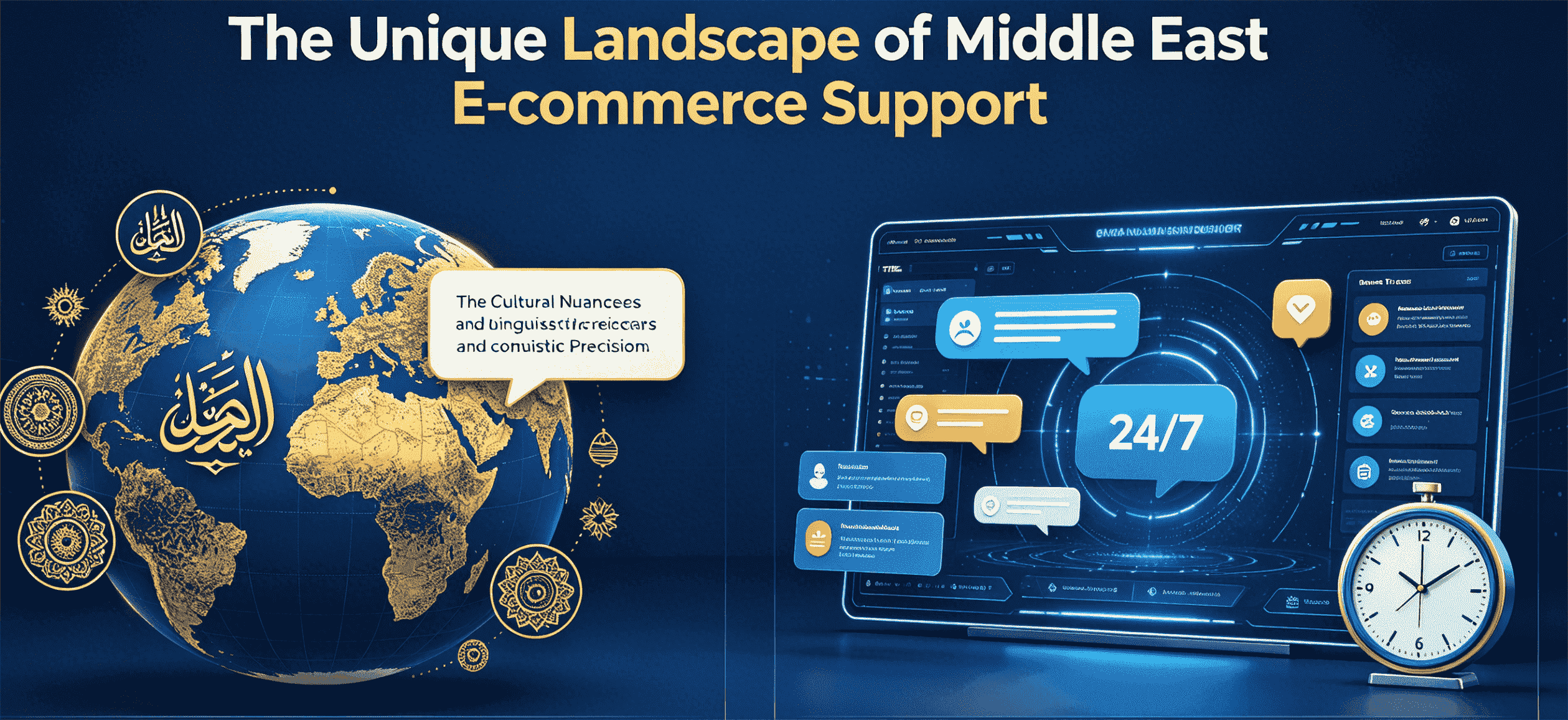
4. Udesk: Powering Global Customer Service in the Middle East
Udesk offers a comprehensive Middle East e-commerce customer service system designed to meet the rigorous demands of the GCC market. By combining technical robustness with local expertise, Udesk enables brands to provide seamless Arabic language customer support across all digital channels.
- Omnichannel Integration:Udesk connects WhatsApp, Noon, Amazon UAE, Instagram, and email into a single, unified workspace. For a cross-border merchant, this means an agent can see a customer's WhatsApp history while responding to a Noon inquiry, providing a 360-degree view of the customer journey and increasing first-contact resolution.
- Native RTL & Arabic AI:Unlike systems that treat Arabic as an afterthought, Udesk provides a native RTL interface and a powerful AI engine trained on regional dialects. This allows for high-performance WhatsApp business automation, where bots can handle up to 70% of routine inquiries in fluent, localized Arabic, significantly reducing operational costs.
- Scalable and Global-Ready:As your business grows from Dubai to the rest of the world, Udesk scales with you. Its "Little Giant" AI capabilities ensure that your support infrastructure remains lean but effective. Whether you are handling 100 or 10,000 tickets a day, Udesk’s cloud-based architecture ensures zero downtime and consistent performance.
By choosing Udesk, brands gain more than a software provider; they gain a strategic partner capable of navigating the complexities of Middle Eastern digital commerce. It is the cost-effective, scalable solution for any business looking to dominate the region.
5. FAQ
Q: Why is WhatsApp so important for Middle East e-commerce? A: WhatsApp is the most used communication tool in the GCC. A Middle East e-commerce customer service system must include WhatsApp to meet consumers where they are, as they prefer chat-based interactions over traditional support channels.
Q: Does Udesk support the Noon and Amazon UAE platforms? A: Yes, Udesk offers robust Noon platform integration and Amazon UAE support. It centralizes messages and order data from these marketplaces into one dashboard, allowing for faster and more accurate customer responses.
Q: Can a customer service system handle different Arabic dialects? A: High-quality systems like Udesk use advanced NLP to understand both Modern Standard Arabic and regional dialects. This ensures that Arabic language customer support remains effective regardless of the specific country your customer is from.
Q: Is it difficult to migrate my existing support to an RTL-optimized system? A: Udesk is designed for easy migration with global-ready APIs. The transition to an RTL-optimized UI is typically seamless, providing immediate improvements in agent efficiency and customer satisfaction.
Building a successful presence in the GCC requires a specialized Middle East e-commerce customer service system that respects local language, culture, and platform preferences. By integrating WhatsApp business automation and ensuring your helpdesk is fully RTL-compatible, you can turn customer support into a significant driver of growth and retention. In a market where personal connection and speed are paramount, the right technology is your most valuable asset.
Ready to localize your support and scale your business in the Middle East? Contact Udesk today for a personalized demo and see how our global customer service solutions can transform your regional operations.
》》Click to start your free trial of Udesk customer service solution, and experience the advantages firsthand.

The article is original by Udesk, and when reprinted, the source must be indicated:https://www.udeskglobal.com/blog/the-ultimate-guide-to-the-middle-east-e-commerce-customer-service-system-navigating-arabic-support-and-platform-integration.html
customer serviceOmnichannel customer service softwareWhatsApp customer service