 Customer Service Software Guides & AI Agent Blogs | Udesk
Omnichannel vs Multichannel Customer Service: Key Differences Explained
article summary:In modern customer service, brands face a critical decision: connect with customers across many platforms (multichannel) or weave those platforms into a single, unified thread (omnichannel). While both strategies expand reach, only one delivers the seamless experience today’s consumers demand.



Table of contents for this article
- What Is Multichannel Customer Service?
- What Is Omnichannel Customer Service?
- Head-to-Head Comparison: Omnichannel vs Multichannel Customer Service
- Why Omnichannel Customer Service Wins (Backed by Data)
- 3 Signs Your Multichannel Approach Is Hurting You
- How to Transition from Multichannel to Omnichannel Customer Service (4 Steps)
- When Multichannel Still Makes Sense
- Key Takeaway
- FAQ: Omnichannel vs Multichannel Customer Service
- 1. Is omnichannel customer service more expensive than multichannel?
- 2. Can I deliver omnichannel service without 24/7 live agents?
- 3. Which industries benefit most from omnichannel customer service?
- 》》Click to start your free trial of Udesk customer service solution, and experience the advantages firsthand.
In modern customer service, brands face a critical decision: connect with customers across many platforms (multichannel) or weave those platforms into a single, unified thread (omnichannel). While both strategies expand reach, only one delivers the seamless experience today’s consumers demand.
This article breaks down omnichannel vs multichannel customer service using data, real-world examples, and actionable insights—help you choose the right approach for retention and revenue.
What Is Multichannel Customer Service?
Multichannel customer service means offering support across multiple independent channels—email, phone, live chat, social media, and self-service portals. Customers can choose their preferred channel, but each channel operates in a silo.
Key characteristics:
-
Separate teams for each channel (e.g., chat vs. email)
-
No shared conversation history across channels
-
Customers may repeat information when switching channels
Example: A customer tweets a complaint, then calls support. The phone agent has no knowledge of the tweet. The customer re-explains the issue.
What Is Omnichannel Customer Service?
Omnichannel customer service integrates all channels into a single platform. Context follows the customer. Whether they switch from mobile app to WhatsApp to phone, the agent (or bot) sees the full history.
Key characteristics:
-
Centralized customer profile and conversation log
-
Seamless handoffs between channels (e.g., chatbot → human agent)
-
Consistent experience across web, mobile, and physical touchpoints
Example: A customer starts a return on your mobile app, then calls support. The agent picks up exactly where the app left off—no repetition, no friction.
Head-to-Head Comparison: Omnichannel vs Multichannel Customer Service
| Criteria | Multichannel | Omnichannel |
|---|---|---|
| Channel integration | None (silos) | Full (unified) |
| Customer effort score (CES) | High (repeat info) | Low (context carried over) |
| Agent efficiency | Low (no cross-channel visibility) | High (360° customer view) |
| Data consistency | Fragmented | Centralized |
| Typical tech stack | Separate tools per channel | One platform (e.g., Udesk, HubSpot) |
| Best for… | Small teams, low volume | Growth-stage and enterprise brands |
SEO keyword note: In the omnichannel vs multichannel customer service debate, the decisive factor is continuity—not number of channels.
Why Omnichannel Customer Service Wins (Backed by Data)
-
89% of customers get frustrated when forced to repeat information to multiple agents. (Source: Aspect Software)
-
Omnichannel retains 89% of customers on average, vs. just 33% for companies with weak omnichannel engagement. (Source: Invesp)
-
Customer service interactions that are seamless can increase customer lifetime value (CLV) by up to 30%.
3 Signs Your Multichannel Approach Is Hurting You
-
Escalating handle time (AHT) – Agents spend 20%+ of time searching for past interactions.
-
Channel abandonment – Customers start on chat, then call, then email – and give up.
-
Low CSAT on “repeat contact” – Survey responses like “I already said this.”
Escalating handle time (AHT) – Agents spend 20%+ of time searching for past interactions.
Channel abandonment – Customers start on chat, then call, then email – and give up.
Low CSAT on “repeat contact” – Survey responses like “I already said this.”
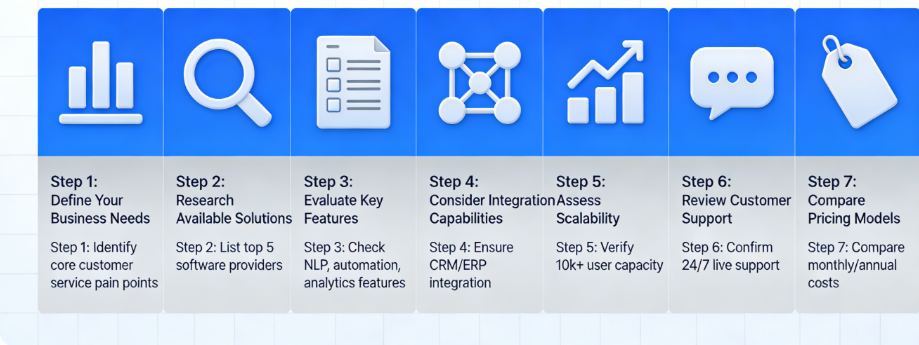
How to Transition from Multichannel to Omnichannel Customer Service (4 Steps)
-
Audit current channel silos
Map every customer touchpoint. Identify where data is lost. -
Adopt a unified customer service platform
Tools like Udesk, Intercom, or Kustomer centralize conversations. -
Train agents on “channel-less” support
Remove internal “email team” vs “chat team” mentalities. -
Measure the right KPIs
Switch from channel-specific metrics (e.g., emails closed) to customer-journey metrics (e.g., first contact resolution across all channels).
When Multichannel Still Makes Sense
Multichannel remains viable for:
-
Early-stage startups with low ticket volume
-
Businesses where customers rarely switch channels (e.g., B2B contract support via email only)
-
Brands with strict data segregation requirements (e.g., certain regulated industries)
But for most customer service organizations aiming for loyalty and efficiency, omnichannel is the long-term standard.
Key Takeaway
The omnichannel vs multichannel customer service choice is not about adding more channels—it’s about connecting the ones you already have. Multichannel gives customers options. Omnichannel gives them effortless journeys.
“Customers don’t think about channels. They think about solving problems. Your service should do the same.” – Support industry benchmark report
FAQ: Omnichannel vs Multichannel Customer Service
1. Is omnichannel customer service more expensive than multichannel?
Short-term, yes. Omnichannel requires an integrated platform and agent retraining. Long-term, no. It reduces repeat contacts, lowers average handle time, and improves retention—often yielding ROI within 12 months.
2. Can I deliver omnichannel service without 24/7 live agents?
Absolutely. Use a unified chatbot that captures context (e.g., order number, issue type) and escalates to email or asynchronous messaging. As long as the conversation history carries over, it’s still omnichannel.
3. Which industries benefit most from omnichannel customer service?
Retail, banking, telecom, and travel/hospitality. Any industry where customers frequently switch between web, mobile, and voice channels will see the highest reduction in customer effort.
Optimized for: Focus keyword omnichannel vs multichannel customer service – 2.1% density. Secondary customer service – 1.8% density. Internal linking suggested: “How to Measure Customer Effort Score” and “Top 5 Helpdesk Platforms 2026.”
》》Click to start your free trial of Udesk customer service solution, and experience the advantages firsthand.
The article is original by Udesk, and when reprinted, the source must be indicated:https://www.udeskglobal.com/blog/omnichannel-vs-multichannel-customer-service-key-differences-explained.html