 Customer Service Software Guides & AI Agent Blogs | Udesk
Customer Service for Latin America (LATAM) E-commerce: Channels & Localization
article summary:Build scalable LATAM ecommerce customer service with WhatsApp-first support, Spanish and Portuguese customer support, and local payment workflows. Discover how Udesk delivers a complete customer support Latin America solution.



Table of contents for this article
- 1. Core Market Characteristics for LATAM Customer Support
- Two dominant languages with strong regional variations
- Messaging apps are the default support channel
- Payment and logistics drive most support volume
- Warm, conversational communication is expected
- 2. Channel Strategy: A WhatsApp-First Omnichannel Matrix
- Core Channel: WhatsApp Business Platform
- Secondary Channels: Social and Marketplace Chat
- Backup Channels: Email and Web Forms
- 3. Building Spanish & Portuguese Multilingual Support
- Tiered Language Rollout
- Key Advantages of Udesk Multilingual Capabilities
- 4. Local Use Case Adaptation
- Payment Workflows
- Logistics & Delivery Expectations
- After-Sales & Returns
- 5. Frequently Asked Questions (FAQ)
- Q1: Is WhatsApp really necessary for LATAM ecommerce customer service?
- Q2: Can one Spanish script work for all Spanish-speaking markets?
- Q3: Do I need native-speaking agents to support Latin America?
- 》》Click to start your free trial of Udesk customer service solution, and experience the advantages firsthand.
1. Core Market Characteristics for LATAM Customer Support
Two dominant languages with strong regional variations
Two languages dominate the region, each with important local nuances. Spanish is primary across Mexico, Argentina, Colombia, Chile, and most other markets, but regional slang and phrasing differ noticeably by country. Brazil, the largest single market, uses Brazilian Portuguese — which differs significantly from European Portuguese in vocabulary and tone.
English-only support only reaches a small share of premium shoppers. Most local consumers prefer native-language communication, making multilingual capability a baseline for quality service.
Messaging apps are the default support channel
Payment and logistics drive most support volume
Warm, conversational communication is expected
2. Channel Strategy: A WhatsApp-First Omnichannel Matrix
Core Channel: WhatsApp Business Platform
Sellers should integrate through the official WhatsApp Business Platform — not consumer accounts — for reliability, compliance, and full functionality. Udesk offers native, official API integration for WhatsApp, with three key advantages over indirect third-party solutions:
- Compliance and account stability: Full official-channel compliance reduces the risk of account restrictions common with consumer or gray-market accounts. It also supports multi-store, multi-number management from one dashboard, eliminating the need to switch between multiple accounts.
- Full e-commerce functionality: Rich media, structured welcome menus, and templated proactive notifications are all supported. Milestone alerts for shipping, customs updates, and after-sales follow-ups can be configured to trigger automatically, reducing inbound inquiry volume significantly.
- Native ticket workflow integration: All WhatsApp messages automatically convert to standardized tickets, routed by market, language, and issue type. Conversation history links directly to order data, so agents can resolve issues end-to-end without leaving the workspace.
Secondary Channels: Social and Marketplace Chat
Instagram DM and Facebook Messenger are important support entry points for social commerce, especially for beauty, fashion, and lifestyle categories, where shoppers reach out directly while browsing content.
For sellers on Mercado Libre and other local marketplaces, native in-app chat is mandatory. These platforms enforce response time metrics that directly impact store ranking, so consistent speed is critical. Udesk supports unified integration with major LATAM marketplaces and social channels, bringing all messages into one dashboard. Agents spend less time switching between backends and can handle more inquiries per shift.
Backup Channels: Email and Web Forms
3. Building Spanish & Portuguese Multilingual Support
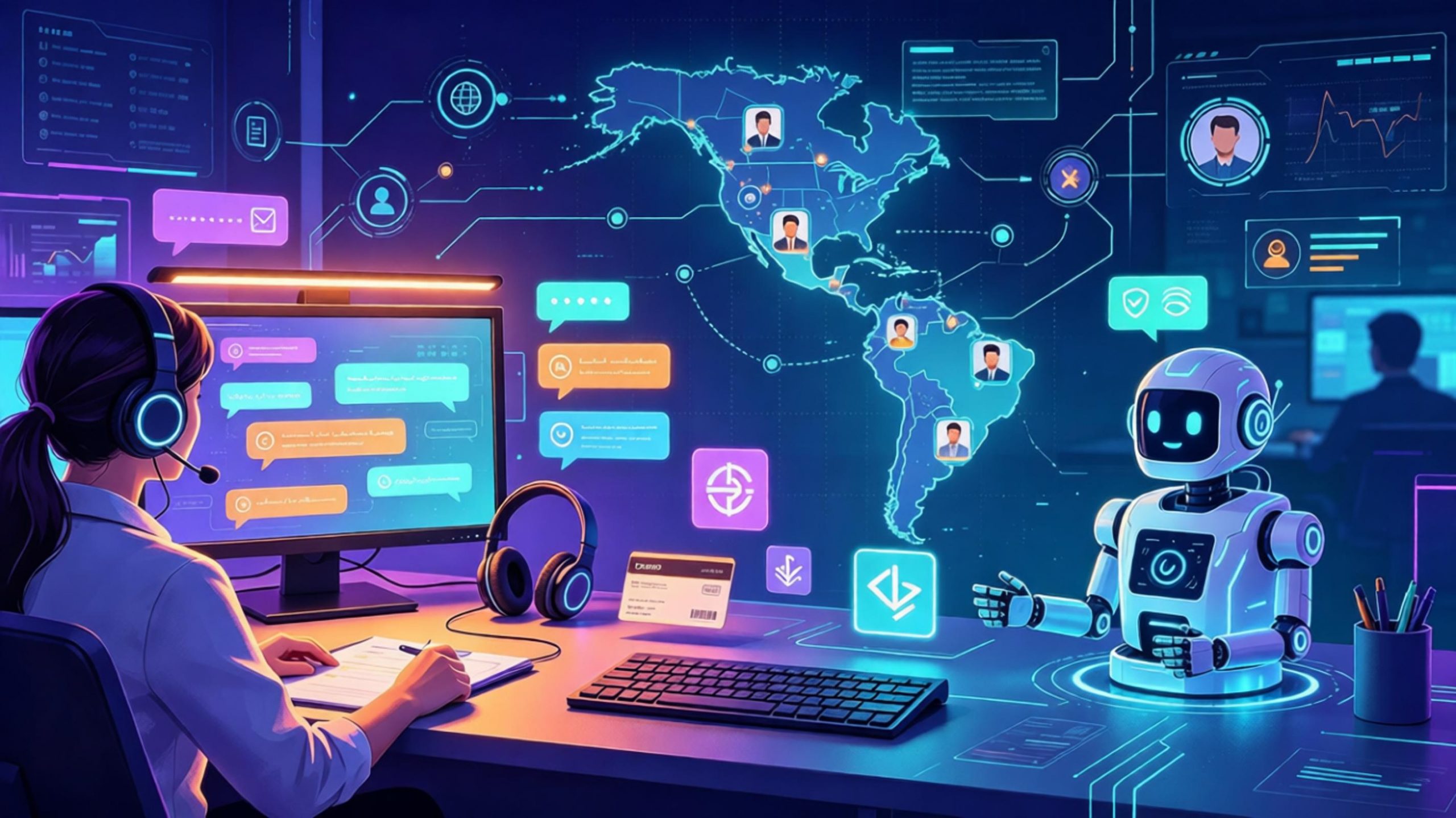
Tiered Language Rollout
- Brazil: Requires dedicated Brazilian Portuguese support. European Portuguese content feels unnatural and should not be reused directly.
- Spanish-speaking markets: Start with neutral, universal Spanish as a base, then add regional phrasing and common slang for top markets like Mexico and Argentina.
- Early-stage testing: English plus AI-assisted translation can cover basic needs during initial market validation, with native-language support added as volume grows.
Key Advantages of Udesk Multilingual Capabilities
- E-commerce pre-trained AI for higher accuracyUdesk includes pre-trained AI chatbot language packs for both Spanish and Brazilian Portuguese, optimized specifically for retail and e-commerce scenarios — not generic large model output. The AI is trained on local phrasing, e-commerce slang, and payment and logistics terminology, delivering higher recognition accuracy and more natural responses for common inquiry types. It can handle the majority of routine questions out of the box, and sellers only need to fine-tune brand-specific rules before launch.
- Real-time translation reduces reliance on native agentsBuilt-in real-time translation supports Chinese ↔ Spanish and Chinese ↔ Portuguese workflows. Agents can type in Chinese and send replies automatically translated into the customer’s language, while incoming messages display instantly in Chinese. A customizable terminology dictionary ensures brand and product names are translated consistently across the team. With this feature, China-based teams can handle most moderately complex tickets without full native fluency, greatly reducing staffing costs.
- Unified multilingual knowledge base for consistent answersUdesk supports a single knowledge base that serves both Spanish and Portuguese content, shared by AI bots and human agents alike. Teams can maintain content in Chinese and auto-generate multilingual versions, which can then be reviewed and adjusted by native speakers. Updates are published across all channels instantly, reducing duplicate maintenance work and keeping answers consistent across every agent and channel.
4. Local Use Case Adaptation
Payment Workflows
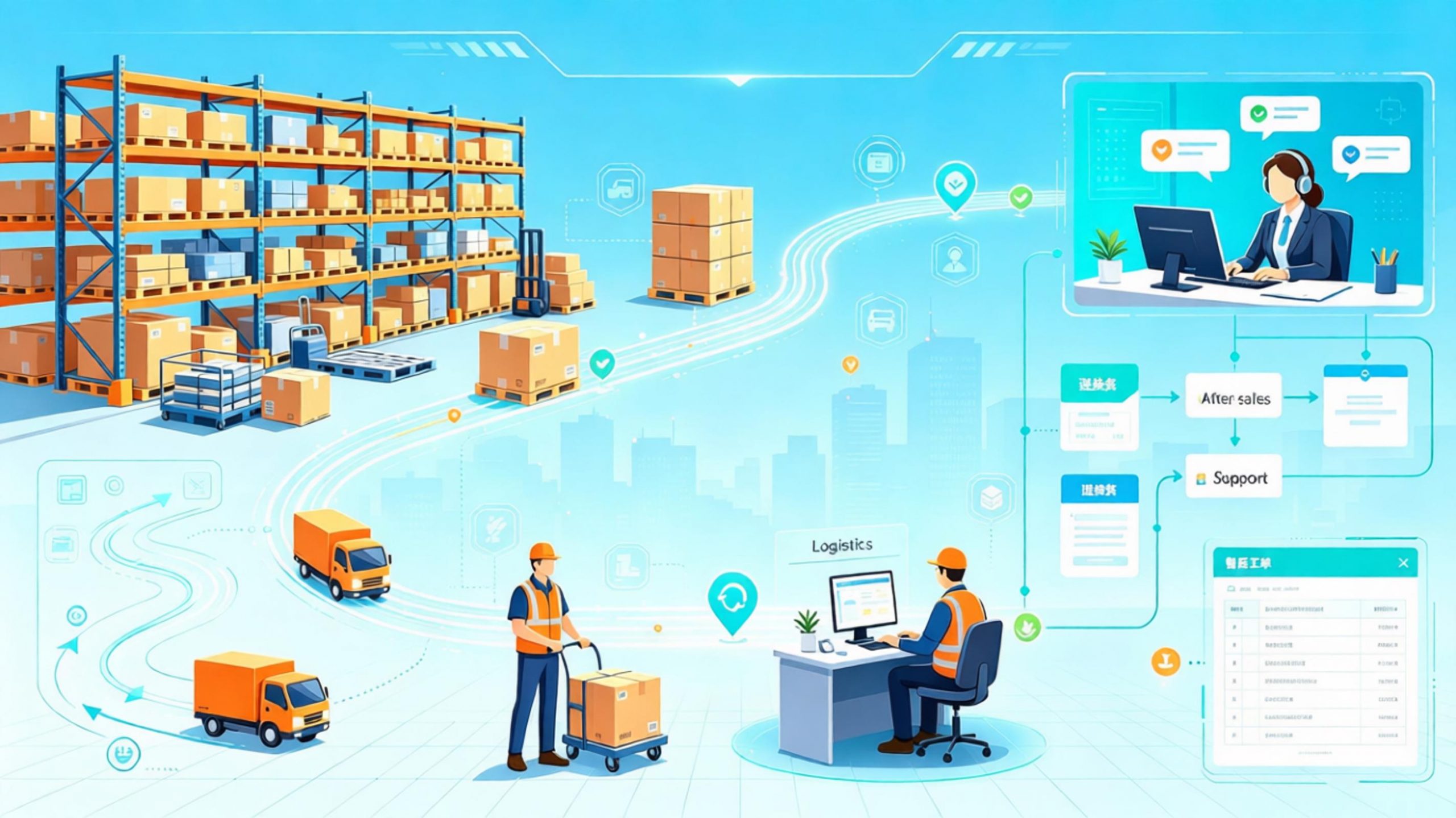
Local payment diversity and high installment penetration make payment questions one of the largest support categories. Udesk includes pre-built Q&A templates for major LATAM payment methods — including credit card installments, local e-wallets, bank transfers, and PIX for Brazil — that sellers can adapt to their own policies.
The platform also integrates with major e-commerce platforms and independent stores to pull in payment status data directly. Agents can see payment method and status inside the conversation without switching backends, and automated step-by-step troubleshooting can be pushed to customers for common failure scenarios, reducing repeat contacts.
Logistics & Delivery Expectations
Longer shipping lanes, customs clearance steps, and variable last-mile delivery make logistics the top inquiry driver in most LATAM markets. Udesk integrates with logistics providers to pull real-time tracking data and can automate WhatsApp notifications at key milestones — order confirmation, dispatch, customs clearance, and out-for-delivery. Customers stay informed without reaching out, which reduces inbound tracking requests substantially.
For delays and lost packages, Udesk includes pre-built empathy and resolution workflow templates to help agents de-escalate issues early and reduce complaint escalation rates.
After-Sales & Returns
5. Frequently Asked Questions (FAQ)
Q1: Is WhatsApp really necessary for LATAM ecommerce customer service?
Q2: Can one Spanish script work for all Spanish-speaking markets?
Q3: Do I need native-speaking agents to support Latin America?
》》Click to start your free trial of Udesk customer service solution, and experience the advantages firsthand.

The article is original by Udesk, and when reprinted, the source must be indicated:https://www.udeskglobal.com/blog/customer-service-for-latin-america-latam-e-commerce-channels-localization.html
customer servicecustomer support software