 Customer Service Software Guides & AI Agent Blogs | Udesk
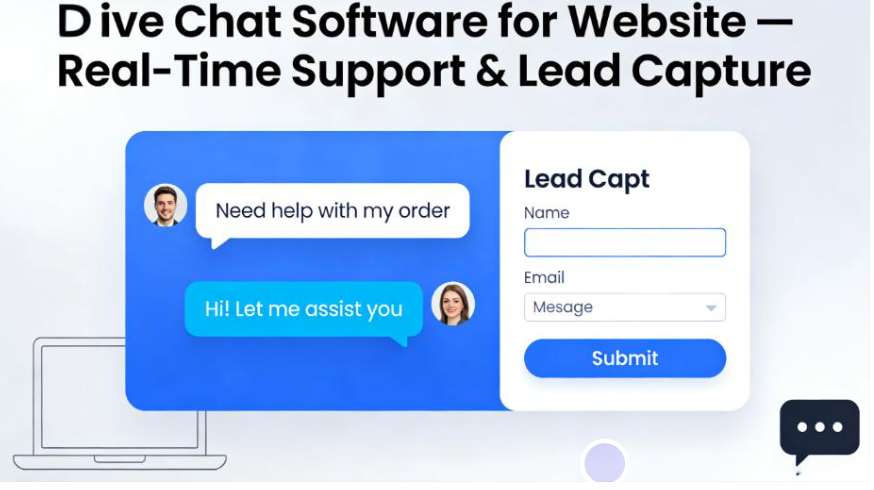
Live Chat Software for Website — Real-Time Support & Lead Capture
article summary:Live Chat Software is the bridge between those two worlds. By utilizing instant response times to capture fleeting attention, deploying proactive triggers to engage high-intent buyers, leveraging AI for efficiency, and integrating with your CRM for strategic follow-up, you are no longer just offering support—you are building a revenue engine.



Table of contents for this article
- 1. The Speed of Light: How Response Time Makes or Breaks Conversions
- 2. Stop Waiting, Start Engaging: The Power of Proactive Triggers
- 3. The Best of Both Worlds: Seamless Handoffs between AI and Human Agents
- 4. Closing the Loop: Native CRM Integration for the "Single Source of Truth"
- Conclusion: The New Standard for Website Engagement
- 》》Click to start your free trial of live chat, and experience the advantages firsthand.
In the modern digital marketplace, patience is a currency that no longer exists.
You spend thousands of dollars driving traffic to your website—through SEO, PPC, and social media. Yet, statistics show that 98% of website visitors leave without converting. They browse, they hesitate, and then they disappear.
If your website is a storefront, relying solely on a contact form is like having a physical store with a locked door and a mail slot. You are leaving money on the table.
Modern Live Chat Software is no longer just a support tool; it is the ultimate conversion engine. Here is how leveraging real-time support and strategic lead capture can transform your website performance.
1. The Speed of Light: How Response Time Makes or Breaks Conversions
Time is the enemy of conversion. When a visitor has a question about pricing, shipping, or feature specifications, every second of delay increases their anxiety and decreases their likelihood to buy.
According to a benchmark report by Forrester Research and data synthesized by leading live chat providers (such as Kayako and Zendesk), the correlation between speed and revenue is undeniable:
-
Instant vs. Delayed: Websites that engage visitors within 45 seconds of a query are 82% more likely to convert than those who make visitors wait for an email reply.
-
The 5-Minute Cliff: If a customer submits a message and does not receive a response within 5 minutes, the probability of that lead converting drops by 400% .
-
The ROI of Real-Time: A study by HubSpot found that businesses using live chat saw an average 42% increase in sales per chat hour compared to traditional web forms.
The Takeaway:
In the psychology of the buyer, speed equals legitimacy. A visitor who gets an instant answer feels valued. Live chat provides that "zero-wait" experience, capturing intent at its peak.
2. Stop Waiting, Start Engaging: The Power of Proactive Triggers
Passive customer service is outdated. In the U.S. and European markets, consumers are accustomed to personalization. If you wait for them to find the "Contact Us" page, you have already lost the momentum.
Proactive chat triggers are the secret weapon of high-velocity sales teams. Instead of waiting for the visitor to type first, the software initiates the conversation based on behavior.
Here are three high-converting proactive strategies:
-
The Price Sensitivity Trigger: When a user spends more than 10 seconds hovering over the pricing page, a proactive message pops up: “Hi there! I know pricing can be tricky. Would you like me to walk you through what plan suits your business size?”
-
The Exit Intent Trigger: As the mouse cursor moves to close the tab, a final save appears: “Wait! Before you go, I can offer you a 10% discount code if you have any questions holding you back.”
-
The Time-on-Page Trigger: If a visitor has been reading a specific case study for more than 3 minutes, they are highly engaged. A gentle nudge: “Great choice. That case study is one of our favorites. Want to see a demo of how this works in real life?”
By switching from a "reactive" to a "proactive" model, B2B companies often see a 20-30% increase in lead capture rates without increasing ad spend.
3. The Best of Both Worlds: Seamless Handoffs between AI and Human Agents
One of the biggest fears among business owners is that live chat will become a resource sink—requiring a 24/7 team that they don’t have.
This is where the AI-Human Hybrid Model becomes critical. Modern live chat software utilizes AI chatbots to handle the "grunt work," but the magic lies in the seamless transition.
The key to a good user experience (UX) is transparency and context. The handoff should be invisible to the user.
How the workflow typically works:
-
AI Tier (Level 1): A bot greets the visitor. It answers FAQs (e.g., "What is your return policy?"), qualifies leads by asking for name and email (BANT qualification), and handles after-hours support.
-
Smart Routing: The AI detects sentiment and intent. If the query is "My order is broken" (negative sentiment, urgent), the system immediately queues the chat for a human.
-
Contextual Handoff: When a human takes over, the AI provides the human with the full transcript and visitor data. The human never has to ask, “What’s your name again?” or “What were you looking at?”
Why this matters:
According to Salesforce, 69% of consumers prefer chatbots for simple inquiries, but 82% demand a human for complex issues. A hybrid system allows you to provide 24/7 coverage for lead capture while ensuring your human agents only handle the high-value, complex conversations that actually close deals.
4. Closing the Loop: Native CRM Integration for the "Single Source of Truth"
A live chat widget that exists in a silo is just a distraction. To truly capitalize on real-time support, the software must integrate seamlessly with your CRM (Customer Relationship Management) system—whether that is Salesforce, HubSpot, or Pipedrive.
When your chat software is integrated with your CRM, you stop treating support as a cost center and start treating it as a revenue center.
Here is what integration accomplishes:
-
Automatic Lead Scoring: When a visitor chats about a specific high-tier enterprise plan, the chat log automatically updates the CRM and increases the lead score, notifying the sales team to follow up immediately.
-
Unified History: Your sales team can see the entire customer journey. When they call a lead, they already know the lead’s exact question from last week’s chat. This eliminates friction and builds trust.
-
Post-Chat Automation: After a chat ends, the software can trigger an automated workflow in your CRM—sending a personalized follow-up email, assigning the lead to an account executive, or adding them to a nurturing sequence.
Without this integration, the valuable data gathered during a chat—the objections, the urgency, the specific needs—dies in a spreadsheet. With it, you create a continuous feedback loop that shortens the sales cycle significantly.
Conclusion: The New Standard for Website Engagement
The landscape of digital sales has shifted. Customers expect the convenience of e-commerce with the personal touch of a brick-and-mortar store.
Live Chat Software is the bridge between those two worlds. By utilizing instant response times to capture fleeting attention, deploying proactive triggers to engage high-intent buyers, leveraging AI for efficiency, and integrating with your CRM for strategic follow-up, you are no longer just offering support—you are building a revenue engine.
If you are still relying on email forms and expecting visitors to "reach out," you are leaving 98% of your traffic to sort themselves out.
It’s time to start the conversation.
》》Click to start your free trial of live chat, and experience the advantages firsthand.

The article is original by Udesk, and when reprinted, the source must be indicated:https://www.udeskglobal.com/blog/live-chat-software-for-website-real-time-support-lead-capture.html