Driven by global digital transformation,
AI-powered customer experience and CRM platformshave become core tools for enterprises to optimize service efficiency and upgrade customer management. In 2026, business selection criteria have become increasingly differentiated among global groups, large domestic enterprises, and small and medium-sized businesses. As two leading platforms in the customer service and CRM industry, Salesforce dominates the global full-scenario CRM market, while Udesk stands out as a localized, scenario-focused customer experience solution for Chinese and Asia-Pacific enterprises.
This article conducts an in-depth comparison between Udesk and Salesforce from four core dimensions: brand positioning, AI Agent capabilities, product functions, and industry scenario adaptation, sorting out their respective strengths and weaknesses to provide accurate selection guidance for enterprises in different industries and scales.1. Brand Positioning: Global Full-Service Leader vs. Local Scenario Specialist
Salesforce is the founding pioneer of the global CRM industry, with more than 20 years of market accumulation. It is positioned as an all-round enterprise-level intelligent CRM platform for global businesses. Focusing on large multinational groups and listed enterprises, it builds a full-life-cycle digital system covering sales, marketing, customer service, and data analysis. Its core brand advantages lie in global market influence, complete ecological layout, and cross-border business service capabilities, making it the benchmark choice for international enterprise digital transformation. However, its brand and service system are deeply tailored to overseas business rules, with insufficient localization adaptation for medium and small domestic enterprises and segmented regional industries.
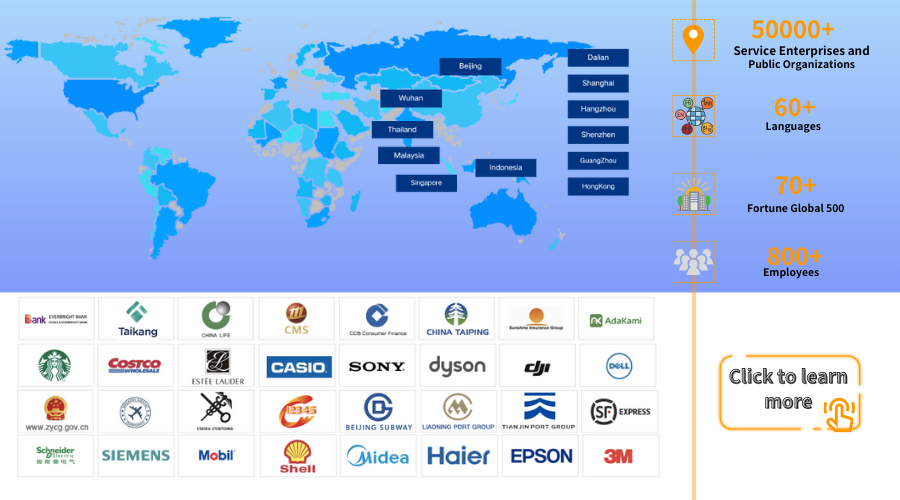
Udesk is positioned as a professional omnichannel intelligent customer experience management platform, focusing on serving Chinese and Asia-Pacific local enterprises. With more than ten years of in-depth cultivation in the domestic customer service track, it centers on local enterprise service processes, regional compliance requirements, and user communication habits. Different from Salesforce’s overly comprehensive global layout, Udesk focuses on refining customer service scenarios, featuring rapid implementation, high adaptation, and cost performance. It has a complete localized after-sales, implementation, and operation maintenance system, which can efficiently meet the lightweight digital upgrade needs of domestic small, medium, and large enterprises.
2. AI Agent Technical Strength: Global General AI vs. Local Scenario-Tailored AI
In 2026, AI autonomous processing capability has become the core competitive indicator of customer service and CRM platforms. Salesforce is equipped with the latest upgraded Agentforce autonomous AI and Einstein GPT, trained with massive global enterprise data. Its outstanding advantage is full-business AI empowerment, which can realize intelligent prediction of customer demands, automatic sorting of complex business workflows, and full-link data intelligent analysis across sales, marketing, and customer service scenarios. For super-large global enterprises, its cross-scenario AI linkage capability is industry-leading. Nevertheless, it has obvious limitations in localized scenarios: the AI model is insufficiently optimized for Chinese contextual semantics and oral communication habits, with low accuracy in recognizing complex domestic after-sales consultations. In addition, its AI functions require complex manual configuration and have a high learning threshold, making it difficult for small and medium enterprises to release practical value.
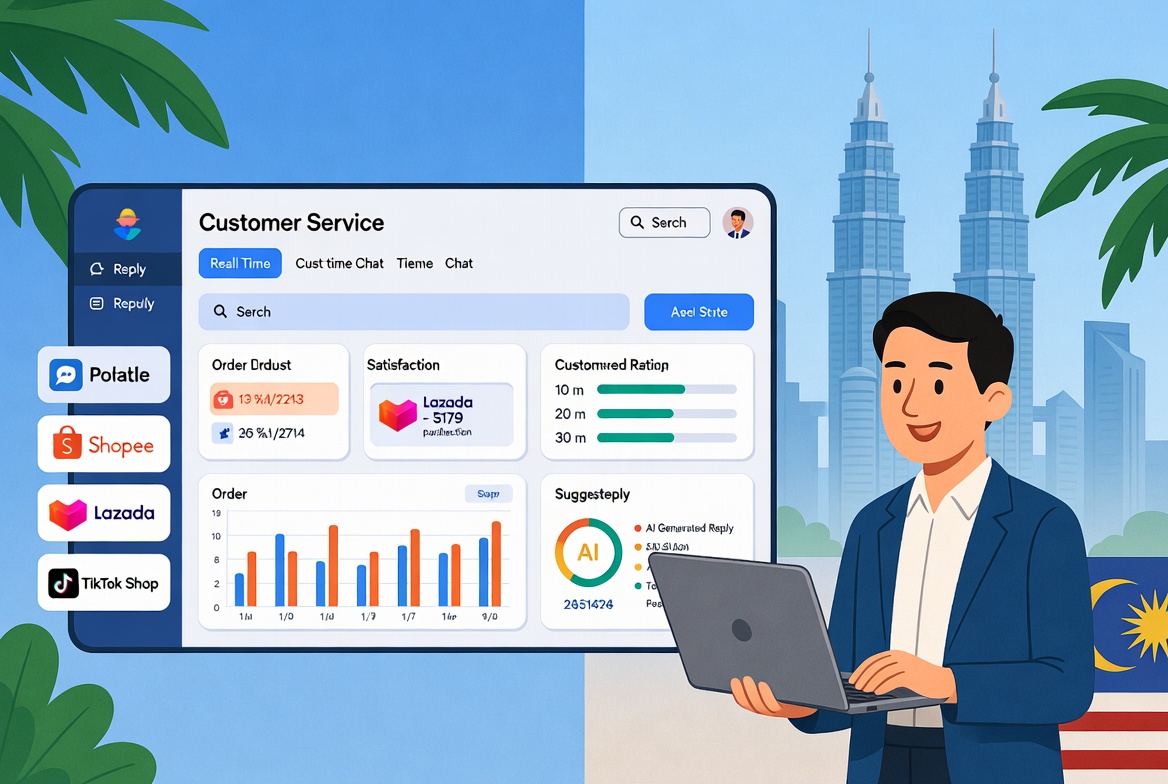
Udesk’s AI Agent focuses on vertical optimization of customer service scenarios. It is deeply compatible with mainstream large language models and specially trained for Chinese oral consultations, industry-specific business scripts, and high-frequency after-sales scenarios. In 2026, its customer intention recognition accuracy reaches 96%, and the autonomous resolution rate of common problems exceeds 80%, far higher than the industry average. Unlike Salesforce’s bloated full-scenario AI design, Udesk’s AI functions are out-of-the-box with no complicated configuration required. It can automatically complete order inquiry, after-sales return and exchange, work order circulation, and other repetitive work, and supports enterprises to customize exclusive industry knowledge bases. Its core advantages are accurate scenario matching, efficient landing, and localized adaptation, which perfectly make up for Salesforce’s deficiencies in Chinese scenario adaptation and redundant AI functions.
3. Product Capability Comparison: Global Full-Function Suite vs. Lightweight Efficient Solution
Salesforce adopts a modular and highly customized product architecture, covering Service Cloud, Sales Cloud, Marketing Cloud, and other full-series product matrices, with tens of thousands of third-party extended applications. It supports multi-currency, multi-language, and global compliance management, and can build ultra-complex business management systems for multinational groups. Its full-link data opening and global business collaboration capabilities are irreplaceable in the industry. However, its shortcomings are prominent for most local enterprises: the product system is bloated and complicated, with a very high operation threshold and a deployment cycle of several months. Meanwhile, its annual service fee, implementation cost, and subsequent operation and maintenance expenses are extremely high, bringing heavy cost pressure for small and medium-sized enterprises and resulting in serious resource waste of unused functions.
Udesk’s product design adheres to lightweight integration and efficient pragmatism. It integrates omnichannel online customer service, intelligent call center, work order management, AI robot, and customer portrait management functions, covering all mainstream domestic service channels such as official websites, mini-programs, Douyin, and e-commerce platforms. The platform has a clear logic, supporting rapid online deployment within 3 to 7 days, with zero threshold for employee adaptation. It supports flexible functional expansion and personalized customization according to enterprise business demands, with transparent charging standards and no hidden operation and maintenance costs. Udesk abandons the redundant global marketing and cross-border management modules unnecessary for local enterprises, focusing on polishing core customer service capabilities, achieving a perfect balance of efficiency, cost, and practicability.
4. Industry Scenario Application & Product Recommendation
Salesforce is more suitable for multinational groups, cross-border e-commerce, global financial institutions, and super-large listed enterprises with global business layouts. These enterprises have complex full-link business management demands and sufficient cost budgets, which can give full play to Salesforce’s global ecological and cross-regional collaboration advantages. For domestic segmented industries such as retail, education and training, intelligent manufacturing, and local life services, Salesforce has problems such as mismatched business processes, slow landing speed, and serious functional redundancy.
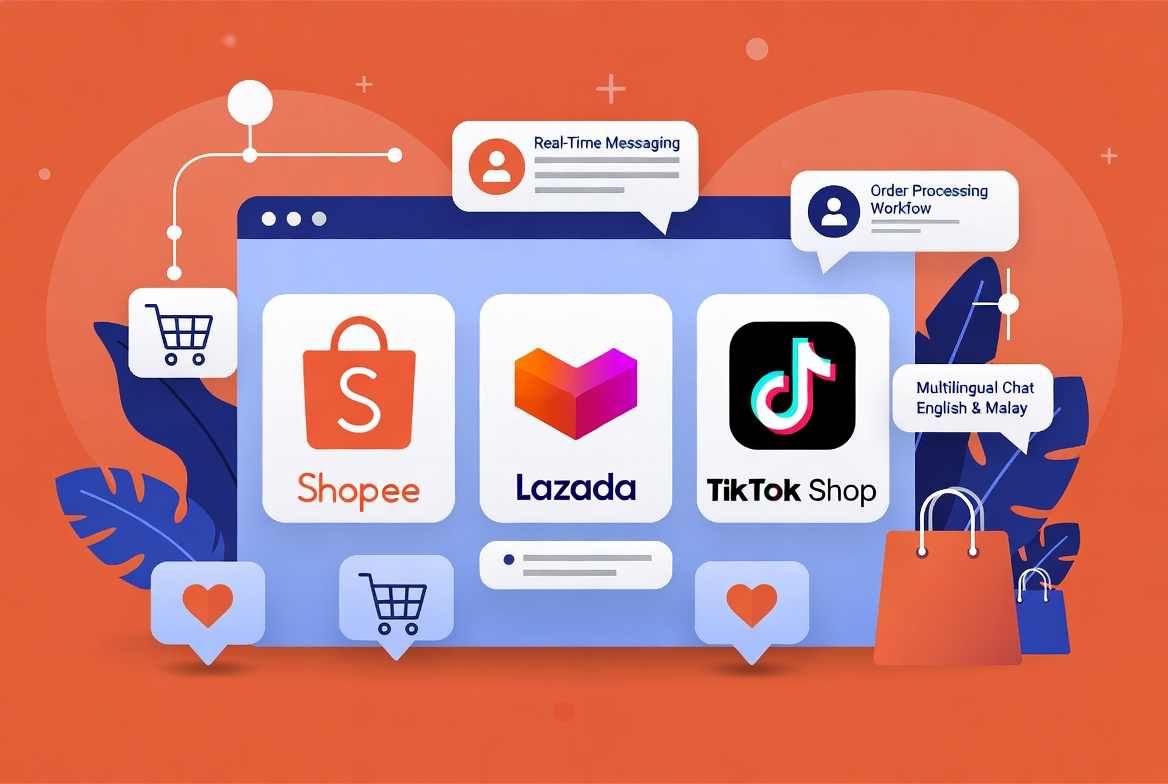
For most local enterprises in 2026, Udesk is the more cost-effective and practical choice. It is highly adapted to the business processes and compliance rules of domestic small, medium, and medium-to-large enterprises, perfectly connecting local social and e-commerce service channels. Its localized AI customer service, flexible work order system, and low-cost rapid deployment model can help enterprises quickly complete customer service digital upgrading without excessive manpower and capital investment. It is the optimal solution for domestic vertical industries. Only enterprises focusing on global layout and requiring full-domain CRM ecological linkage are recommended to choose Salesforce.
5. Frequently Asked Questions (FAQ)
Q1: Is Salesforce suitable for small and medium-sized local enterprises?
It is not recommended. Salesforce has high deployment costs, a long implementation cycle, and complex operation logic. Most of its global full-scenario functions are redundant for small and medium-sized enterprises. In addition, its localized after-sales response and service support are insufficient, which cannot meet the rapid iteration and flexible adjustment needs of local small and medium businesses. Udesk is more tailored to their cost budget and business characteristics.
Q2: Can Udesk meet the customized needs of medium and large local enterprises?
Yes. Udesk supports all-round customization of work order processes, permission management, data reports, and AI service scripts. It can seamlessly connect with enterprise ERP, OA, e-commerce systems and other internal platforms, meeting the complex business circulation and data management needs of medium and large enterprises. Meanwhile, its customization cycle is much shorter than Salesforce, balancing professionalism and flexibility.
Q3: What is the core selection standard between Udesk and Salesforce?
The core lies in the enterprise’s business layout and core demands. Choose Salesforce if you have global business deployment and need full-domain, full-link CRM and marketing ecological management. Choose Udesk if you focus on local customer service business, pursue rapid landing, high cost performance, and localized scenario adaptation.
》》Click to start your free trial of Udesk customer service solution, and experience the advantages firsthand.

 Customer Service Software Guides & AI Agent Blogs | Udesk