Core Differences: AI Agent vs Traditional Chatbot in Support Scenarios
Many businesses mistakenly equate AI agents with ordinary customer service chatbots, but their functional capabilities and application value differ drastically, which is a key consideration for enterprise tool selection. Traditional rule-based chatbots rely on fixed keyword triggers and pre-written response templates, failing to understand ambiguous customer questions or handle cross-scenario complex demands. They can only complete simple tasks like FAQ replies and navigation guidance, with extremely limited flexibility.
In contrast, intelligent AI agents for customer service own three core advantages. First, they support context-aware conversation, remembering customer dialogue history to avoid repeated information collection. Second, they realize autonomous workflow execution, capable of completing ticket creation, order query, refund application and other operational tasks independently. Third, they feature continuous iterative learning, optimizing response accuracy and service logic based on real interaction data. This fundamental difference makes AI agents suitable for large-scale, high-complexity enterprise customer service scenarios.
Key Business Benefits of Deploying AI-Powered Customer Service Agents
Deploying professional AI agents brings tangible business improvements to support teams, covering service efficiency, cost control and customer experience optimization. For small and medium-sized enterprises with limited support staffing, AI agents fill the gap of off-hours service, ensuring customers get timely responses at any time. For large enterprises with massive consultation volume, they effectively disperse high-repeat basic inquiries, freeing human agents to focus on high-value complex problems such as customer complaint mediation and personalized demand consultation.
Statistically, mature AI customer service solutions can reduce enterprise support costs by 30%–50% and shorten the average first response time to less than 10 seconds. Meanwhile, standardized and accurate autonomous service reduces manual response errors, improving overall service uniformity. Additionally, AI agents can automatically sort and analyze customer consultation data, mining user pain points and demand trends, providing reliable data support for enterprise product iteration and service optimization.
Industry-Specific Application Cases of AI Customer Service Agents
AI Agent in Customer Service has strong industry adaptability, and its landing scenarios vary significantly across vertical industries. Targeted application can maximize the value of intelligent customer service tools. The following are typical practical applications in three mainstream industries.
E-commerce: Automated Order and After-Sales Support
The e-commerce industry features high consultation volume, concentrated after-sales demands and highly repetitive problems, making it the most mature application scenario for AI customer service agents. E-commerce AI agents can independently handle order query, logistics tracking, return and refund application, coupon verification and other daily inquiries. During shopping festivals such as Double 11 and Black Friday, they can instantly burst capacity to cope with sudden consultation peaks, avoiding customer loss caused by delayed responses.
Finance: Intelligent Consultation and Compliance Service
The financial industry has strict requirements for service standardization and data security. Professional AI agents for financial customer service can accurately answer questions about account opening, loan policies, fee standards and product explanations. Meanwhile, they are equipped with built-in compliance audit mechanisms to ensure all service contents comply with industry regulatory requirements, effectively avoiding operational risks caused by manual non-standard replies. For user risk consultation and abnormal account feedback, AI agents can also complete preliminary identification and rapid escalation.
Education: 24/7 Student and Parent Service
Online education and training institutions have scattered user consultation time and diverse demand scenarios. Educational AI customer service agents can provide round-the-clock services for students and parents, including course consultation, class schedule inquiry, learning equipment debugging, tuition refund consultation and other scenarios. They can also classify user demands in real time, accurately distribute professional teacher resources, and improve the efficiency of teacher-student connection.
Practical Criteria for Enterprises to Select Qualified AI Customer Service Agents
Faced with numerous AI customer service tools in the market, enterprises need to select solutions matching their business characteristics based on practical demands, rather than blindly pursuing high-end functions. Combining industry landing experience, the following core selection standards are summarized for reference.
First, prioritize industry scenario adaptability. The AI agent should have pre-built industry knowledge bases and mature scenario templates, avoiding long-term secondary development. Second, focus on multi-channel unified management capability, supporting seamless docking of official websites, social platforms, APPs and other channels to realize integrated dialogue management. Third, verify intelligent recognition accuracy and autonomous resolution rate, which directly determines the actual labor-saving effect of the tool. Fourth, pay attention to data security and compliance capabilities to ensure user information protection meets industry and national standards.
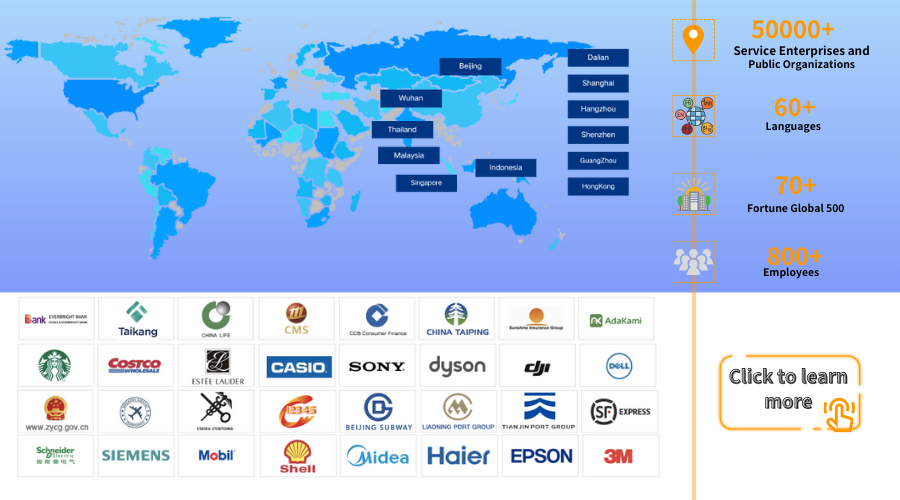
For enterprises pursuing stable landing and comprehensive functions, Udesk AI customer service agent is a highly cost-effective choice. As a mature one-stop intelligent customer service solution, Udesk deeply iterates functions for multiple industries such as e-commerce, finance and education. Its built-in industry-specific knowledge base can be quickly deployed online without complicated coding.
The platform’s intelligent AI agent supports full-process autonomous processing of customer inquiries, multi-channel dialogue context inheritance, and real-time data statistical analysis. It also provides flexible manual escalation rules, realizing the perfect combination of intelligent automation and manual refined service. Many enterprises have reduced support pressure and improved customer satisfaction significantly after accessing Udesk’s AI agent system.
In addition,
Udesk supports customized function development according to enterprise personalized business processes, adapting to the service characteristics of different scales and types of enterprises. Its stable system operation and professional after-sales technical support also ensure the long-term stable operation of enterprise customer service systems.
Common FAQs About AI Agents for Customer Service
Q1: Can AI customer service agents completely replace human support teams?
A1: No. AI agents are efficient auxiliary tools rather than substitutes for human customer service. They are mainly responsible for high-repeat, standardized and low-complexity service scenarios, while human agents are still irreplaceable in handling emotional complaints, personalized customized demands, complex dispute mediation and high-value customer maintenance. The optimal service mode is the intelligent collaboration of AI automation and manual refinement.
Q2: What kind of enterprises are suitable for deploying AI customer service agents?
A2: All enterprises with standardized customer service scenarios and certain consultation volume can deploy AI agents. It is especially suitable for e-commerce, finance, education, Internet service and other industries with high daily consultation volume and repetitive problems. Small and micro enterprises with insufficient staffing can use it to make up for service gaps, while large and medium-sized enterprises can rely on it to optimize team efficiency and reduce operating costs.
Q3: How long does it take to deploy and launch an enterprise AI customer service agent?
A3: It depends on the platform and enterprise demand. Mature tools like Udesk support rapid deployment. For conventional industry standard scenarios, the AI agent can complete knowledge base access and function debugging within 1–3 working days and be officially launched. For enterprises with highly personalized customized processes, the deployment cycle will be appropriately extended, but professional technical teams can ensure rapid iteration and online landing.
 Customer Service Software Guides & AI Agent Blogs | Udesk