 Customer Service Software Guides & AI Agent Blogs | Udesk
Zendesk Alternative for Global Support: A Neutral 2026 Comparison
578
Article Summary:Neutral 2026 comparison of Zendesk competitors for global multilingual support teams. Discover cheaper Zendesk alternatives built for cross-border ecommerce, multi-timezone teams and native multilingual AI automation.



Table of contents for this article
- 1. Core Limitations of Zendesk for Cross-Border Global Support
- 2. Udesk: A Native Global Support Platform Built for Multinational Teams
- 3. Head-to-Head Cost Comparison: Total Expense for Global Teams
- 4. Operational Performance Gap: Global CX & Team Efficiency
- 5. Who Should Consider Switching From Zendesk to Udesk in 2026
- 6. Step-by-Step Low-Disruption Migration Strategy
- FAQ
- 》Click to start your free trial of Udesk customer service solution, and experience the advantages firsthand.
Zendesk has long been a popular, standardized customer support option, especially in North America and Europe, thanks to its familiar interface and wide integrations. Yet as businesses go global, its one-size-fits-all model often fails to meet the needs of multilingual, cross-timezone customer bases.
Rising per-agent costs, disjointed AI, weak native support for emerging-market channels, and expensive add-ons drive companies to seek more flexible, cost-effective alternatives. Today’s market offers mature Zendesk competitors built specifically for global support teams.
This article provides a neutral, feature-based comparison of Zendesk and its top alternatives, with a focused analysis of Udesk as a strong solution for international, multilingual support. We review real-world functionality, total cost, regional adaptability, and scalability with no marketing bias.
1. Core Limitations of Zendesk for Cross-Border Global Support
Zendesk’s architecture is built primarily for North American and European markets, creating consistent pain points for brands operating across multiple regions and languages:
- Fragmented multilingual functionality: Native real-time translation is locked behind premium tiers; voice IVR and callback systems only support one static language per phone line, forcing customers to receive confirmations in mismatched languages and increasing call abandonment
- Extra cost for core AI automation: Chatbot AI, agent assist Copilot, and quality monitoring all act as separate paid add-ons, with additional per-resolution fees for fully autonomous bot conversations on top of seat subscriptions
- Limited native regional channel integrations: Popular global messaging tools including WhatsApp Business, LINE, Shopee, Lazada and Instagram Messenger require third-party plugins with extra maintenance fees, rather than native built-in connectors
- Cumulative hidden operational costs: Voice Talk charges per minute, capped data storage with overage fees, annual contract price escalations, and mandatory custom development to meet regional data compliance rules like PDPA and GDPR
- Weak cross-timezone workflow tools: No native timezone-aware SLA routing or follow-the-sun agent distribution logic, requiring custom scripting for teams spread across multiple continents
- Slow localized technical support: Most regional markets rely on remote global support with limited local implementation teams, leading to longer resolution times for critical cross-border configuration issuesUdesk
These constraints create inflated total costs and disjointed customer experiences for any brand targeting multiple international markets, even mid-sized scaling cross-border SMBs.
2. Udesk: A Native Global Support Platform Built for Multinational Teams
As a balanced Zendesk alternative designed from the ground up for cross-border e-commerce and global SaaS brands, Udesk eliminates Zendesk’s regional blind spots with omnichannel, AI-first architecture that requires no costly third-party plugins. Key native capabilities tailored for global operations include:
- All-in-one multilingual engine: Built-in real-time translation supporting 40+ languages and regional dialects, unified across chat, voice, email and tickets without add-on purchases; language-aligned voice callbacks and IVR remove customer confusion from mismatched system messagingUdesk
- Core AI included in base pricing: Autonomous AI chatbots, voice bots, predictive support, and AI quality compliance monitoring are standard features with no per-resolution overage charges or separate Copilot-style seat fees
- Native global channel integrations: Pre-built connectors for WhatsApp Business API, Facebook Messenger, Instagram, LINE, Shopee, Lazada, Amazon and Shopify, consolidating all regional customer touchpoints into a single unified inbox
- Pre-configured regional compliance workflows: Native templates for GDPR, ASEAN PDPA, and local data protection rules with automatic sensitive data desensitization, eliminating custom development work to avoid regulatory fines
- Distributed global infrastructure: Service nodes in Frankfurt, Singapore, Indonesia, Japan, Beijing and Shanghai deliver low-latency service and meet local data residency requirements across every major trading region
- No-code global workflow builder: Support managers build cross-timezone routing, multilingual bot dialogue, and regional SLA rules without developer resources, cutting implementation timelines from weeks to days
Every core global support capability is native to Udesk’s platform, removing the stack of third-party tools and add-ons that inflate Zendesk’s total cost of ownership for international teams.
3. Head-to-Head Cost Comparison: Total Expense for Global Teams
When evaluating platform costs, most businesses only compare base seat pricing and overlook cumulative hidden fees unique to cross-border operations:
- Zendesk cost structure breakdown: Per-agent monthly seat fees starting at $115 for Suite Professional; minimum $50 per agent extra for AI Copilot; per-minute voice call charges; per-resolution fees for autonomous bot chats; third-party plugin subscriptions for regional messaging channels; additional development hours for compliance and multilingual customization. A 10-agent cross-border team can easily exceed $2,000 monthly before factoring call and translation overhead
- Udesk cost structure breakdown: Predictable per-seat pricing with all core AI, multilingual translation, omnichannel connectors and compliance tools included in base packages; transparent WhatsApp BSP pricing without hidden markup surcharges; flat-rate voice bot telephony with no per-minute overages; zero extra fees for automated AI resolutions or cross-region channel integration
- Real-world customer cost data: Cross-border retail brands switching from Zendesk to Udesk report a 38%–52% annual reduction in combined platform, labor and third-party tool overhead, driven by higher AI automation rates and eliminated add-on expensesUdesk
For scaling global SMBs and mid-market cross-border enterprises, Udesk delivers enterprise-grade global functionality without Zendesk’s layered premium pricing model.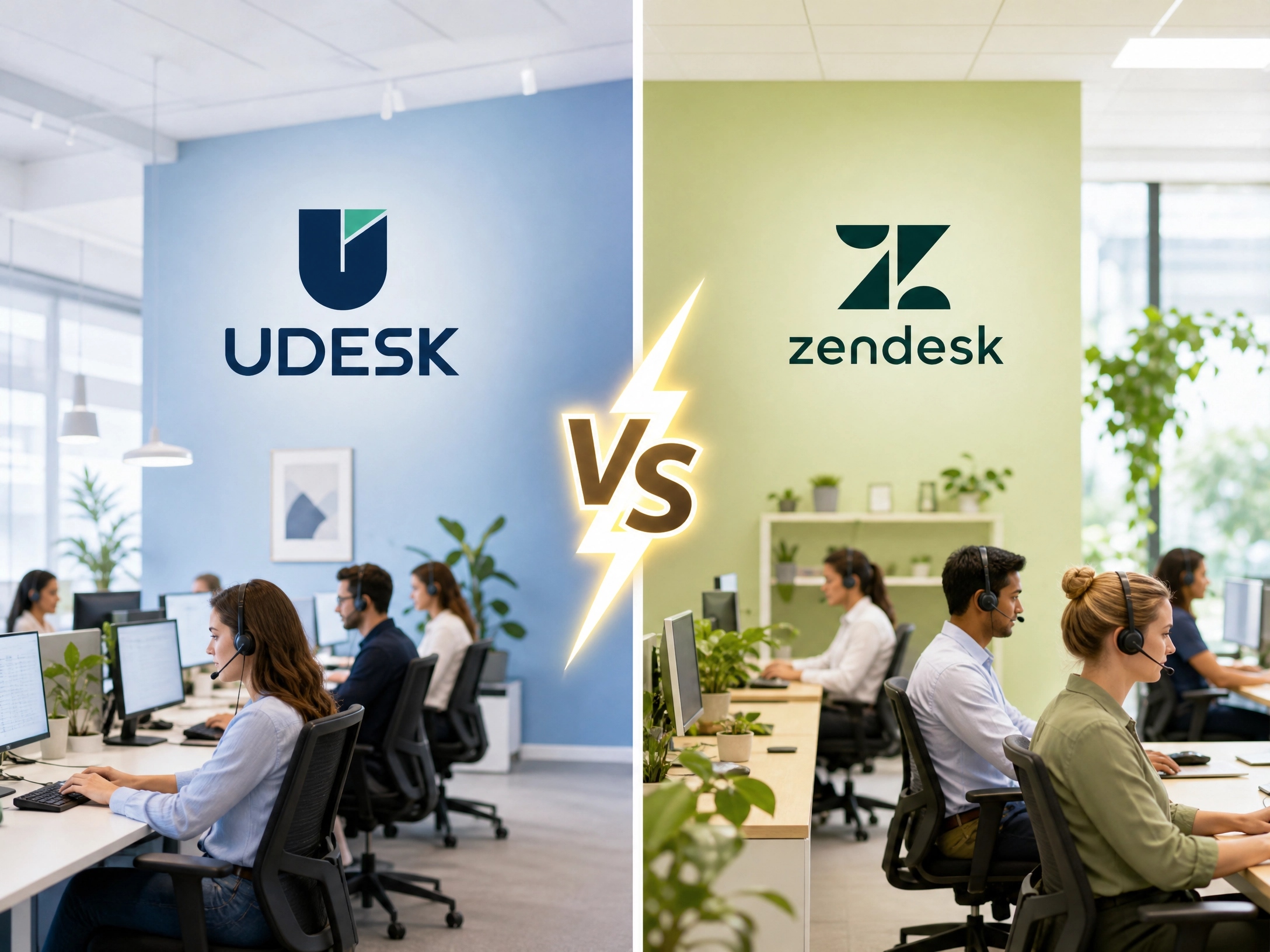
4. Operational Performance Gap: Global CX & Team Efficiency
Beyond direct platform costs, platform design directly impacts daily agent productivity and cross-border customer satisfaction:
- Autonomous resolution capacity: Udesk’s integrated AI handles 60%–85% of routine multilingual inquiries end-to-end, reducing ticket volume reaching human agents; Zendesk caps free AI resolutions and charges per completed bot case, limiting cost-effective automation at scale
- Cross-region context retention: Udesk’s unified global customer profile consolidates order history, past tickets and cross-channel interactions across all markets and languages, so agents never force customers to repeat information during transfers; Zendesk requires manual cross-tab ticket lookup to access multilingual conversation history
- Multilingual self-service tools: Native multi-language knowledge base synchronized across all regional markets, with AI auto-translation for policy and product updates; Zendesk requires separate help center instances for each language tier
- Follow-the-sun agent routing: Built-in timezone and language-based ticket distribution automatically shifts workload between regional agent teams overnight; Zendesk requires complex custom rule-building to replicate this basic global workflow
- Call center optimization: Udesk’s AI voice bot delivers full multilingual phone automation as standard; Zendesk Talk adds steep per-minute fees for inbound and outbound global calls, with limited multilingual voice functionality
These performance differences compound over time, cutting average handle time and lowering customer churn for brands serving global audiences with Udesk.
5. Who Should Consider Switching From Zendesk to Udesk in 2026
This alternative platform delivers the clearest ROI for specific categories of global support teams:
- Cross-border e-commerce sellers operating across Southeast Asia, Europe and Latin America, relying on WhatsApp, Shopee and LINE for primary customer communication
- Mid-sized multinational SaaS brands supporting users in multiple languages without large dedicated native-language agent teams
- Businesses required to comply with multiple regional data privacy regulations including GDPR and ASEAN PDPA, seeking built-in compliance automation
- Teams aiming to scale 24/7 follow-the-sun support without expanding agent headcount via AI chatbot and voice bot automation
- Budget-conscious global SMBs that want enterprise multilingual and AI features without stacking expensive Zendesk add-ons
- Regional brands targeting fast-growing emerging markets where Zendesk’s limited local support creates implementation and maintenance delays
Teams focused solely on domestic North American support with minimal multilingual traffic may continue to find Zendesk sufficient, but any brand with global customer reach gains measurable efficiency and cost savings from Udesk’s region-first design.
6. Step-by-Step Low-Disruption Migration Strategy
Switching support platforms does not require full operational downtime with a phased rollout workflow:
- Phase 1: Data audit & channel mapping – Export existing Zendesk ticket history, knowledge base content and contact data; map all active regional messaging, voice and e-commerce channels to Udesk’s native connectors
- Phase 2: Parallel trial operation – Run both platforms simultaneously for 2–4 weeks; deploy Udesk’s multilingual AI bots to handle routine inquiries while agents retain Zendesk access for unresolved legacy tickets
- Phase 3: Workflow configuration – Build cross-timezone routing, multilingual bot dialogue and regional compliance rules via Udesk’s no-code editor without developer support
- Phase 4: Agent training & optimization – Deliver short intuitive training focused on unified omnichannel inbox and AI assist tools; refine bot intent recognition using live cross-border customer conversation data
- Phase 5: Full migration – Disable Zendesk channel integrations once ticket volume fully shifts to Udesk; archive historical Zendesk data for compliance record-keeping
The majority of global teams complete full stable migration within one month with zero disruption to live customer support.
FAQ
Q1: Is Udesk a true enterprise-grade Zendesk alternative?
A: Yes. Udesk supports enterprise-level security, SLAs, custom reporting, and API access while adding global features Zendesk charges extra for, such as multilingual AI and native cloud call center tools.
Q2: How much cheaper is Udesk compared to Zendesk?
A: Most global teams with 20+ agents reduce their 3-year total cost by 35–55% due to Udesk’s bundled pricing and lack of add-on fees for core global features.
Q3: Can Udesk support follow-the-sun global support models?
A: Absolutely. Udesk’s intelligent routing automatically distributes tickets across regional teams based on time zone, language, and expertise, with unified customer history visible to every agent.
Q4: Does Udesk natively support global channels like WhatsApp and regional ecommerce platforms?
A: Yes. Udesk offers built-in integration with WhatsApp Business, Shopee, Lazada, TikTok Shop, Amazon, and more, without requiring third-party connectors.
》Click to start your free trial of Udesk customer service solution, and experience the advantages firsthand.

The article is original by Udesk, and when reprinted, the source must be indicated:https://www.udeskglobal.com/blog/zendesk-alternative-for-global-support-a-neutral-2026-comparison.html
prev: How to Build a Multilingual Support Workflow for Global Customersnext: Live Chat for Website: Turning Support Conversations into Conversions