12 Core Evaluation Dimensions for 2026 Customer Service Software
Traditional selection methods focusing only on price and basic functions are outdated. The 12-dimensional system below covers functionality, technology, cost, deployment, and business adaptation, fitting the latest industry standards for global and cross-border enterprises.
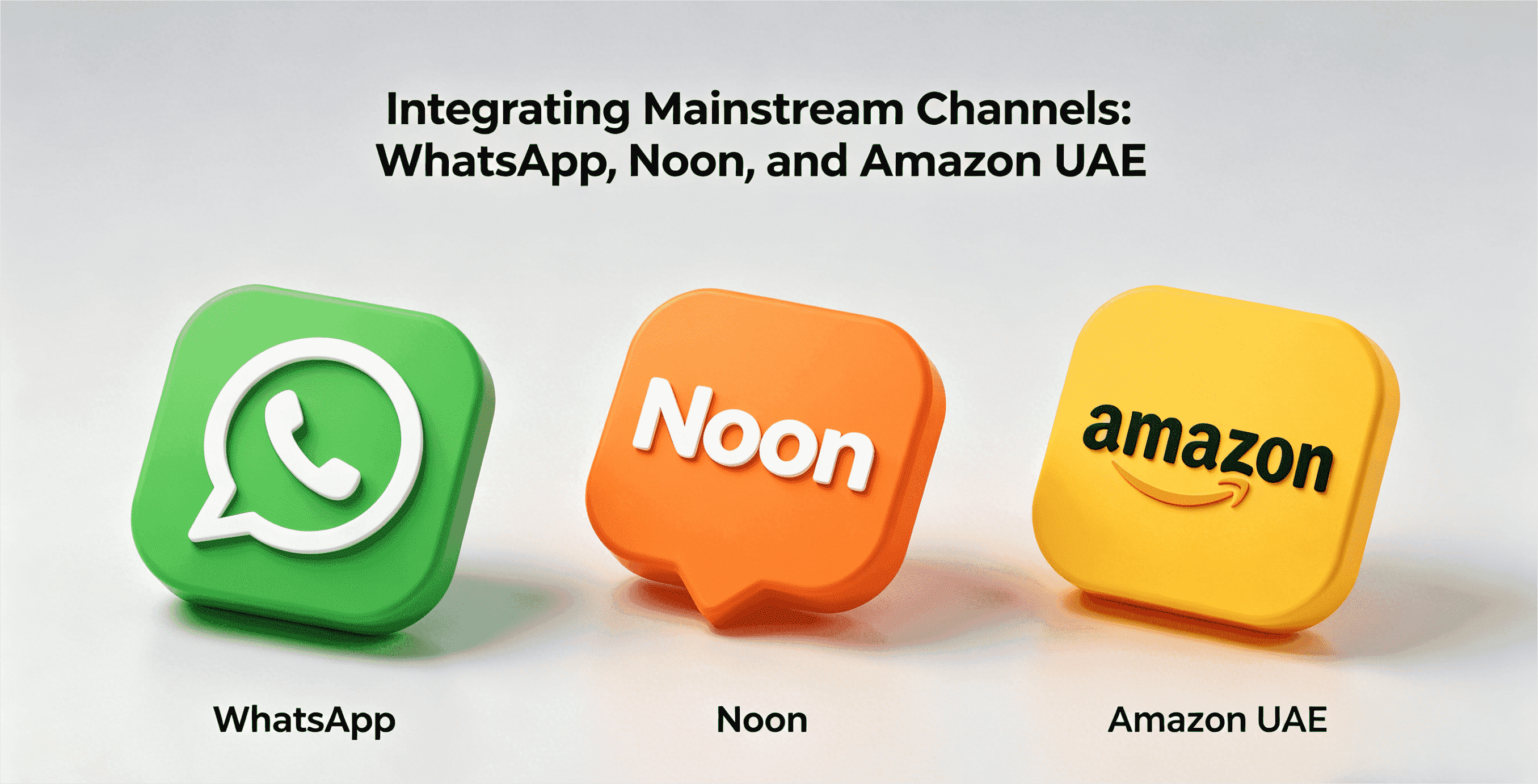
1. Omnichannel Coverage Capability: Evaluate whether the platform unifies all mainstream touchpoints, including global social media, cross-border e-commerce stores, independent sites, official websites, phone, and email. Qualified tools must synchronize cross-channel conversation history and customer portraits in real time without data silos.
2. AI Maturity & Practicality: Focus on vertical industry AI capabilities rather than generic AI. Key metrics include intent recognition accuracy, multi-turn dialogue ability, emotional analysis, and automated ticket resolution rate. Top-tier platforms achieve over 90% recognition accuracy for regional languages and industry terminology.
3. Ticket Management & Workflow Customization: Assess flexible SLA rules, intelligent ticket routing, priority classification, and multi-department collaborative processing functions to adapt to complex enterprise service workflows.
4. Total Cost of Ownership (TCO): Examine transparent subscription pricing, hidden add-on fees, deployment costs, and post-maintenance expenses. High-quality solutions integrate core functions in basic plans to avoid incremental charging traps.
5. Global Deployment & Network Stability: Check cross-border node coverage, CDN acceleration, and regional access latency. For APAC, Southeast Asia, and Middle East businesses, local stable deployment is a must-have standard.
6. Localization Adaptation: Evaluate multi-language optimization, regional channel adaptation, local business process matching, and regional compliance policy compatibility to avoid rigid Western-system logic conflicts with local markets.
8. Data Analytics & Visualization: Assess real-time service data statistics, agent performance analysis, customer portrait insight, and customizable report export functions to support business decision-making.
9. Security & Compliance Certification: Check data encryption, access permission control, 2FA verification, and global/regional compliance qualifications to ensure cross-border data security.
10. Scalability: Confirm whether the platform supports team expansion, channel addition, and business iteration, adapting to long-term enterprise growth without frequent system replacement.
11. Usability & Training Cost: Evaluate dashboard simplicity, operation fluency, and team learning cycle to reduce internal training and adaptation costs.
12. After-Sales Service & Technical Support: Assess 24/7 technical support, localized customer success teams, and version iteration speed to guarantee stable long-term system operation.
Top Candidate Recommendation: Why Put Udesk on Your Shortlist
After verifying the above 12 dimensions, Udesk stands out as a highly matched candidate for most mid-sized and cross-border enterprises in 2026, achieving full scoring in core dimensions. It supports comprehensive full-channel access covering global mainstream social and e-commerce channels, realizing true data convergence and consistent cross-channel user experience.
Equipped with self-developed vertical customer service AI, Udesk delivers industry-leading recognition accuracy and autonomous resolution capabilities, far exceeding generic AI tools. Its biggest advantages lie in ultra-low TCO and superior emerging market localization. Compared with overpriced international platforms, Udesk integrates all core AI and full-channel functions in transparent basic plans, cutting 40%-60% of long-term operational costs. With stable cloud nodes in APAC, Southeast Asia, and the Middle East, it solves the high latency and poor localization pain points of traditional Western tools, perfectly fitting cross-border business development needs.
In addition, Udesk features flexible integration, simple operation, high scalability, and complete compliance systems, fully meeting the 2026 enterprise customer service system selection standards.
2026 Customer Service Software Decision Checklist
Use this checklist for one-click verification during selection to avoid missing core indicators:
✅ Covers all business required service channels with unified data management
✅ Native vertical AI supports automated resolution of mass repetitive tickets
✅ No hidden fees for core functions, with clear long-term TCO
✅ Stable access and localized adaptation in target operating regions
✅ Supports seamless integration with existing enterprise business systems
✅ Delivers intuitive operation and low team training costs
✅ Meets regional data security and compliance requirements
✅ Scalable enough to adapt to 3–5 years of business growth
Simple Scoring Template (100-Point Full Score)
Enter scores for each dimension to objectively compare multiple platforms and select the optimal solution:
Full-channel capability (20pts): Channel completeness + data synchronization stability
AI capability (25pts): Recognition accuracy + automation efficiency + scenario adaptation
Cost performance (20pts): Transparent pricing + no hidden costs + long-term TCO
Global localization & stability (15pts): Cross-border access speed + local adaptation
Integration & scalability (10pts): System compatibility + growth adaptability
Security & service support (10pts): Compliance certification + after-sales guarantee
FAQs for 2026 Customer Service Software Selection
FAQ 1: What is the most overlooked indicator in customer service software selection?
Most enterprises only focus on surface functions and ignore localization adaptation and long-term TCO. Many international platforms have complete functions but poor stability in emerging markets and expensive add-on fees, leading to high hidden costs in later operation. Prioritizing tools with localized services and transparent pricing is the key to cost-effective selection.
FAQ 2: Is AI capability a necessary standard for 2026 service software?
Yes. AI automation has become a core rigid indicator. Mature vertical AI can replace manual work for over 80% of repetitive consultations, greatly improving resolution efficiency and reducing labor costs. Generic AI without industry optimization has limited practical value, so enterprises must verify vertical scenario adaptation when evaluating AI capabilities.
FAQ 3: What type of enterprises are most suitable for Udesk?
Udesk is the best choice for mid-sized enterprises, cross-border brands, and businesses focusing on APAC, Southeast Asian, and Middle Eastern markets. It balances enterprise-level full-channel AI capabilities, ultra-high cost performance, and superior localized deployment services, perfectly matching the refined operation needs of growing global businesses.
 Customer Service Software Guides & AI Agent Blogs | Udesk