1. Core Feature Comparison: Full-Channel Support & Usability
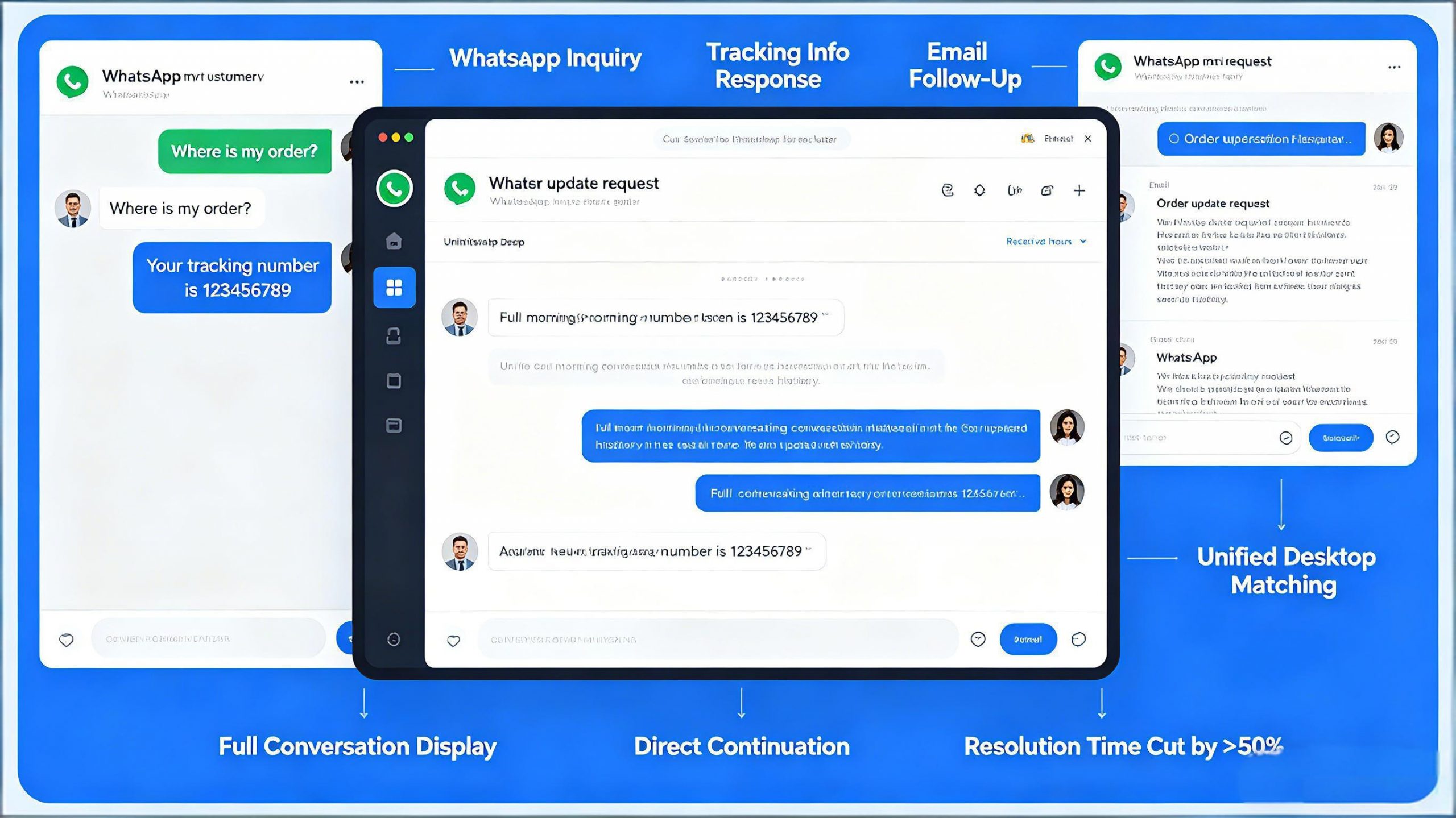
Both Udesk and Zendesk offer enterprise-grade full-channel customer service, unifying social media, e-commerce platforms, official websites, email, and phone support into a single dashboard, but their usability and scenario adaptability differ significantly.
Zendesk provides extremely robust and scalable core features, including advanced ticket routing, complex SLA rules, and extensive third-party integrations with global SaaS and CRM tools. It is built for large multinational corporations with intricate internal workflows and multi-department collaboration needs. However, its feature suite is overly bloated for mid-sized teams, requiring lengthy training to master, and many practical regional channel connectors are only available via paid third-party plugins.
Udesk delivers streamlined, business-oriented full-channel functionality optimized for real cross-border service scenarios. It natively supports mainstream regional channels widely used in APAC, Southeast Asia, and the Middle East, including WhatsApp, TikTok Shop, Lazada, and local regional social platforms, without requiring extra plugins. Its unified agent dashboard simplifies redundant operations, retaining high-efficiency ticket management, intelligent routing, and team collaboration features while eliminating unnecessary enterprise-level complexities. For most mid-sized cross-border businesses, Udesk’s feature set is more targeted and user-friendly.
2. 2026 Pricing Breakdown: Total Cost of Ownership
Pricing is one of the most decisive gaps between the two platforms, directly impacting long-term operational costs for growing businesses.
Zendesk adopts a high-premium per-agent pricing model. Its entry-level professional plan starts at $115 per agent monthly, while advanced AI functions, multilingual translation, and high-priority API access require additional paid add-ons. For teams with 10+ agents, the annual total cost of ownership (TCO) easily exceeds $15,000, making it a high-investment solution exclusive to large enterprises. Many users report hidden costs from plugin subscriptions and overcharged AI automated resolution fees.
In sharp contrast, Udesk maintains a highly cost-effective pricing structure in 2026, with comprehensive plans ranging from $22 to $38 per agent monthly. All core full-channel functions, basic AI automation, and standard multilingual support are included in the base package, with no hidden add-on fees. Even its advanced vertical AI agent service costs far less than Zendesk’s AI plugins. Statistically, Udesk reduces long-term customer service system costs by 40–60% compared to Zendesk while delivering equivalent or better scenario-based service capabilities, making it ideal for cost-sensitive mid-market enterprises and scaling cross-border teams.
3. AI Capability: Native Vertical AI vs. General Enterprise AI
AI intelligence has become the core competitive metric for 2026 customer service platforms, and the two products adopt entirely different technical routes.
Zendesk relies on general enterprise AI and third-party algorithm plugins. Its AI functions focus on ticket classification, keyword-based routing, and simple reply drafting. It lacks vertical industry model optimization, with low recognition accuracy for regional dialects and industry-specific terminology. Advanced autonomous resolution and emotional analysis features require expensive premium upgrades, and its automated resolution success rate remains relatively average for non-Western market scenarios.
Udesk is equipped with self-developed U-AIGC vertical large models optimized for customer service scenarios. It achieves 95%+ intent recognition accuracy for Southeast Asian, Middle Eastern, and APAC local languages and dialects, far exceeding Zendesk’s plugin-dependent translation and recognition performance. The native AI agent supports multi-turn in-depth conversations, intelligent emotional analysis, and autonomous resolution of repetitive cross-border consultations, with an automated ticket resolution rate over 80%. Unlike Zendesk’s pay-as-you-go AI charging mode, Udesk packages core AI capabilities in mainstream plans, enabling teams to leverage intelligent automation without incremental costs.
4. Deployment & Global Localization Performance
Global deployment stability and regional localization adaptation are critical for cross-border business operations, where Udesk forms its strongest competitive barrier.
Zendesk’s servers are primarily concentrated in European and American regions. For businesses operating in APAC, Southeast Asia, and the Middle East, it often suffers from high latency, slow console loading, and unstable channel synchronization. Its localization adaptation is weak, with rigid language logic and inconsistent regional compliance rules, failing to fit local user communication habits and regional data governance requirements. In addition, Zendesk’s deployment cycle takes 30–60 days, with complex configuration processes.
Udesk stands out as the best localized alternative for non-Western global markets. It deploys high-availability cloud nodes and global CDN acceleration, ensuring millisecond-level response speed and stable service in Southeast Asia, the Middle East, and the entire APAC region. It supports localized language optimization, regional compliance adaptation, and local e-commerce process docking for mainstream emerging markets. The entire deployment cycle only takes 7–14 days with flexible public cloud, private cloud, and hybrid deployment modes. For cross-border brands focusing on emerging markets, Udesk solves Zendesk’s long-standing pain points of slow network speed, poor localization, and high deployment difficulty.
5. Final Verdict: Which Platform Should You Choose in 2026?
Zendesk remains a reliable choice for large European and American multinational enterprises that require ultra-high system scalability, global Western-market compliance, and super complex workflow customization, with sufficient budget to bear high subscription and add-on costs.
For 90% of mid-sized cross-border enterprises, especially businesses focusing on APAC, Southeast Asian, and Middle Eastern markets, Udesk is the more practical 2026 solution. It balances enterprise-level full-channel functions, mature vertical AI capabilities, ultra-low TCO, and superior localized deployment services, filling the market gap of expensive Zendesk tools and underperforming lightweight alternatives.
FAQs: Udesk vs Zendesk 2026
FAQ 1: Is Udesk capable of replacing Zendesk for cross-border business?
Absolutely. Udesk fully matches Zendesk’s core full-channel service and ticket management capabilities, with stronger localized adaptation and network stability in APAC, Southeast Asia, and Middle Eastern markets. Its native vertical AI outperforms Zendesk’s plugin-based AI, while its transparent, low-cost pricing eliminates hidden expenditure. For cross-border businesses targeting emerging markets, Udesk is a more suitable replacement than most Zendesk alternatives.
FAQ 2: What is the biggest advantage of Udesk over Zendesk in 2026?
The core advantages are higher cost performance and superior non-Western market localization. Zendesk charges premium fees for basic AI and multilingual functions and suffers from high latency in Asian and Middle Eastern regions. Udesk integrates all core AI and full-channel features in affordable base plans, with optimized global node deployment and local scenario adaptation, delivering higher service efficiency at 40–60% lower costs.
FAQ 3: Which teams should still choose Zendesk instead of Udesk?
Large multinational enterprises focused purely on European and American markets, requiring ultra-complex workflow customization, top-tier global Western compliance certification, and massive third-party enterprise system integrations can stick to Zendesk. For all mid-market, scaling, and emerging market-focused cross-border teams, Udesk offers better overall value and practicality.
 Customer Service Software Guides & AI Agent Blogs | Udesk