In 2026, global customers interact with brands across dozens of touchpoints, from social media and e-commerce marketplaces to independent websites, phone calls, and emails. Disconnected channel experiences lead to repeated inquiries, low satisfaction, and lost revenue.
Omnichannel customer service has evolved from a trendy feature to a foundational business strategy for global and cross-border enterprises.
This article delivers an authoritative definition, clarifies the critical differences between omnichannel and multichannel service, analyzes global expansion value, breaks down localized implementation steps, and explains the standard omnichannel architecture.Authoritative Definition of Omnichannel Customer Service
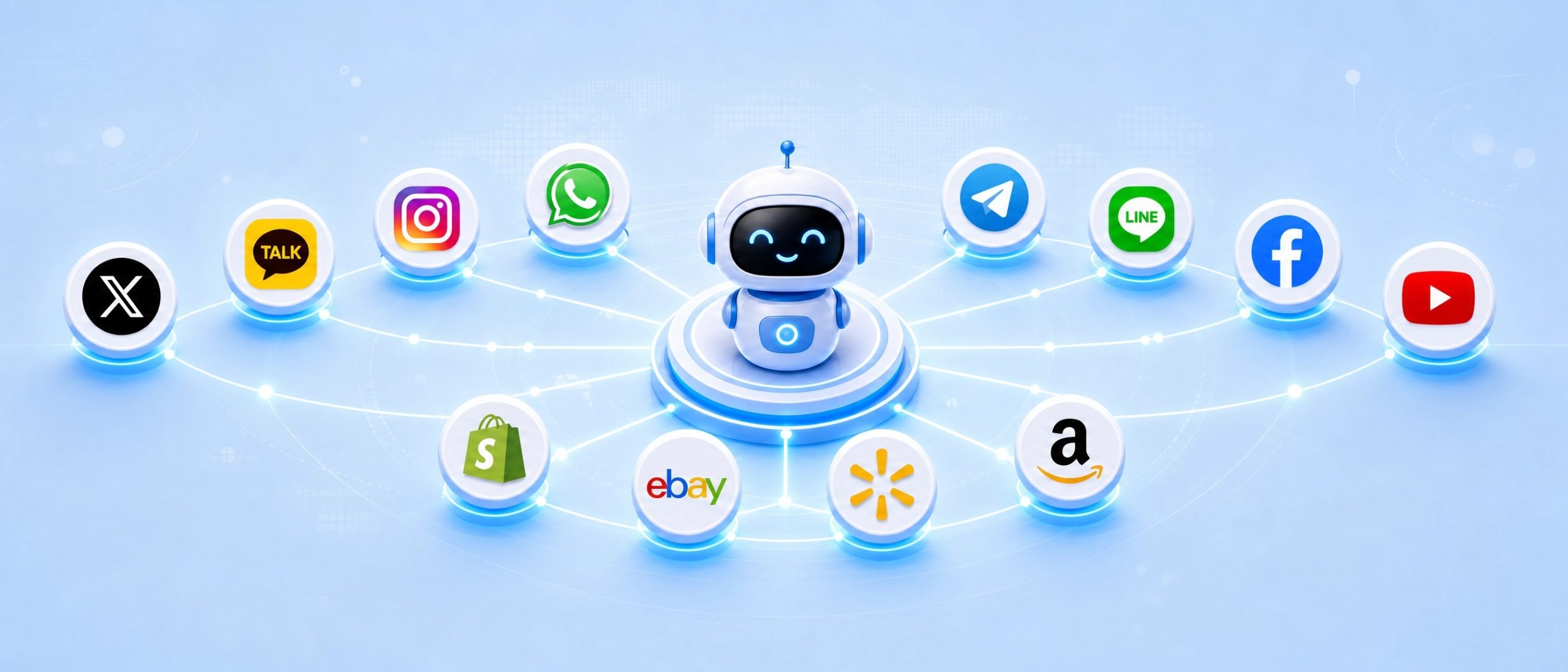
Omnichannel customer service is an integrated customer experience strategy and technical system that unifies all customer communication and service touchpoints into a single centralized platform. It covers full-scenario channels including global mainstream social media (Facebook, Instagram, WhatsApp, TikTok), cross-border e-commerce platforms (Amazon, Shopify, AliExpress), brand independent sites, official websites, phone calls, emails, and offline consultations. Unlike fragmented traditional service models, it synchronizes customer profiles, conversation history, order records, and service context across all channels in real time.
The core essence is channel convergence and context consistency. Customers can switch freely between any channels without repeating descriptions, while support agents obtain a complete 360-degree customer view. This model eliminates data silos and delivers consistent, personalized service experiences across every user touchpoint.
Omnichannel vs. Multichannel Customer Service: Core Differences
Most businesses confuse multichannel and omnichannel service, but the two models have fundamental differences in logic, data connectivity, and user experience.
Multichannel customer service simply means opening multiple service channels for customers. Each channel operates independently with isolated data and disjointed conversation records. For example, a customer asks a question via email and follows up via website chat, and the agent cannot view previous email records, resulting in repeated verification and inefficient problem-solving. It only expands contact paths without optimizing experience.
Omnichannel customer service realizes full data interconnection and business synergy. All channel data is aggregated into one system, with synchronized customer labels, service logs, and order information. Statistics show that omnichannel strategies boost customer retention rates by 89% compared with fragmented multichannel service, and greatly reduce customer complaint rates caused by information inconsistency.
Global Business Value of Omnichannel Customer Service
For enterprises pursuing global layout and cross-border operations, omnichannel service is a core competitiveness supporting long-term growth, with three irreplaceable values.
First, unified global brand experience. Cross-border customers contact brands through diverse regional mainstream channels. Omnichannel integration ensures consistent service standards, response tones, and problem-solving processes worldwide, avoiding brand image chaos caused by regional channel differences.
Second, improved global operation efficiency. Centralized channel management reduces repeated team configuration and resource waste. Intelligent distribution and unified data statistics help enterprises accurately grasp global customer demands and optimize product and service strategies.
Third, enhanced cross-border customer loyalty. Seamless channel switching and personalized context-based service reduce customer communication costs, significantly improving satisfaction and repurchase rates of global users.
Standard Omnichannel Service Architecture & Operating Logic
A complete omnichannel customer service system adopts a three-layer classic architecture, ensuring stable and efficient full-channel operation.
1. Front-end full-channel access layer: Covers all mainstream global service touchpoints, including social media, e-commerce platforms, independent stations, official websites, phone, and email, realizing 100% channel coverage for global users.
2. Middle-end unified integration layer: The core of the architecture. It converges all channel data, unifies customer portraits, synchronizes conversation and order data, and provides a single operation dashboard for agents to avoid cross-channel data omission.
3. Back-end intelligent management layer: Equipped with AI intelligent distribution, ticket management, data analysis, and quality inspection functions, realizing automated processing, intelligent scheduling, and global service data visualization management.
Localized Implementation Steps for Global Omnichannel Service
Global omnichannel layout requires localized incremental implementation to adapt to regional user habits and business characteristics, with four actionable steps.
Step 1: Sort out regional mainstream channels. Match channel layout according to target market attributes, such as prioritizing WhatsApp and Facebook for European and American markets, and TikTok and Instagram for young consumer groups.
Step 2: Build unified data integration capabilities. Break channel data silos, unify customer ID rules, and realize full synchronization of global user interaction records.
Step 3: Equip intelligent omnichannel tools. Adopt professional omnichannel customer service platforms to reduce customized development costs and improve deployment efficiency.
Step 4: Realize localized service iteration. Adjust service languages, response mechanisms, and process specifications based on regional user feedback to adapt to local market demands.
Recommended Solution: Udesk for Global Omnichannel Customer Service
For cross-border and global enterprises seeking cost-effective, stable, and intelligent omnichannel service capabilities, Udesk stands out as the optimal one-stop solution. It perfectly fits the standard omnichannel architecture and realizes full coverage of global mainstream channels including social media, cross-border e-commerce platforms, independent stations, official websites, phone, and email.
Different from fragmented tools and high-cost international platforms, Udesk achieves true full-channel data convergence. All user interactions are summarized into a unified customer portrait, enabling agents to master complete service context. Supported by mature vertical AI capabilities, it realizes intelligent ticket distribution, automatic reply to common cross-border consultations, and multi-language intelligent recognition, greatly improving global service efficiency.
In addition, Udesk features high cost performance and flexible localized deployment. It adapts to multi-region compliance requirements, helps enterprises quickly complete global omnichannel service layout with low investment, and solves the pain points of complex operation, high cost, and poor localization adaptation of traditional international customer service systems.
FAQs About Omnichannel Customer Service
FAQ 1: Why is omnichannel service better than multichannel for global businesses?
Multichannel only provides multiple contact channels with isolated data, leading to disjointed user experiences and low service efficiency. Omnichannel integrates all channels into one platform with synchronized full-dimensional customer data. It unifies global service standards, reduces operating costs, and significantly improves cross-border customer satisfaction and loyalty, which is essential for long-term global business development.
FAQ 2: What core channels must a standard omnichannel system cover?
A complete global omnichannel system needs to cover all user common touchpoints, including mainstream global social media, cross-border e-commerce platforms, brand independent stations, official website online chat, phone calls, and emails. Full channel coverage ensures no missing user consultations and consistent service experience across all scenarios.
FAQ 3: How can small and medium cross-border enterprises quickly build omnichannel capabilities?
SMEs do not need high-cost customized development. Adopting mature out-of-the-box omnichannel platforms like Udesk is the most efficient way. It supports one-click access to all mainstream global channels, comes with built-in AI intelligent service capabilities and multi-language adaptation, and realizes rapid localized launch, helping enterprises complete omnichannel layout at low cost and shorten the business adaptation cycle.
》》Click to start your free trial of Omnichannel Systems, and experience the advantages firsthand.

 Customer Service Software Guides & AI Agent Blogs | Udesk