 Customer Service Software Guides & AI Agent Blogs | Udesk
How to Set Up a Customer Service System for Cross-Border E-commerce
448
article summary:A step-by-step guide to global customer service setup for online sellers. Cover omnichannel integration, multilingual support, multi-timezone scheduling, and returns SOPs — with actionable tips for cross-border ecommerce customer service.



Table of contents for this article
- Step 1: Omnichannel Integration – Build a Single Point of Service
- 1. Map Your Core Support Channels
- 2. The Value of Unified Channel Management
- Implementation Example
- Step 2: Build a Layered Multilingual Support Model
- 1. Three-Tier Service Structure
- 2. Unified Multilingual Knowledge Base
- Implementation Example
- Step 3: Multi-Timezone Scheduling for Reliable Coverage
- 1. Start with Peak Volume Analysis
- 2. Hybrid Coverage Strategy
- 3. Protect Marketplace Response Metrics
- Implementation Example
- Step 4: Standardize Returns & Refunds SOPs
- 1. Core Elements of a Cross-Border Returns SOP
- 2. Systemize the Workflow
- Implementation Example
- Key Considerations for Tool Selection
- FAQ
- Q1: Do small cross-border sellers need a full customer service system?
- Q2: What is the biggest source of problems in cross-border returns support?
- Q3: Do I need overnight shifts to support multiple time zones?
- 》》Click to start your free trial of Omnichannel Systems, and experience the advantages firsthand.
For cross-border sellers, customer experience is increasingly the key differentiator in crowded global markets. A well-structured cross-border ecommerce customer service system does more than resolve tickets — it improves retention, reduces operational costs, and lowers compliance risk. Many international sellers still operate fragmented support teams: agents switch between multiple platform backends, language and timezone gaps cause delayed responses, and inconsistent return policies lead to unnecessary disputes and marketplace penalties.
Building a reliable global support function does not have to be overwhelming. It follows a clear, step-by-step framework covering channels, language, scheduling, and after-sales processes. This guide breaks down each stage of global customer service setup with actionable, field-tested methods, using Udesk as a practical implementation example for scaling customer support for international sellers.
Step 1: Omnichannel Integration – Build a Single Point of Service
Fragmented channels are the first pain point for most cross-border teams. When inquiries live in separate platform backends, agents waste time switching between tools, messages get missed, and there is no complete view of a customer’s service history. Integration is the foundational first step.
1. Map Your Core Support Channels
First, inventory all customer touchpoints and rank them by priority based on your market presence:
- Independent store channels: Website live chat and support email, the core service entry point for DTC brands.
- Social & messaging channels: WhatsApp, Facebook Messenger, and LINE — the dominant daily communication tools for overseas consumers and the backbone of private domain operations.
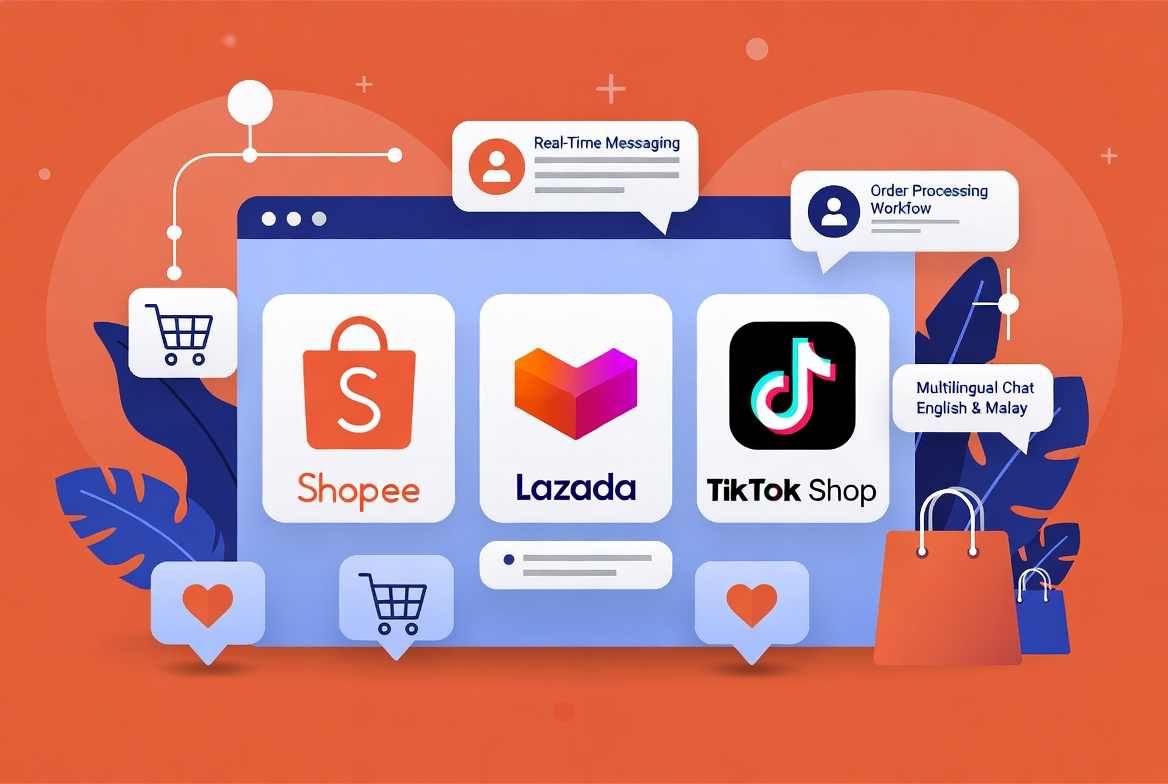
- Marketplace channels: Native in-app chat on Amazon, Shopee, Lazada, and other third-party platforms, where response speed directly impacts seller performance and ranking.
- Voice channels: Local phone numbers for high-value orders and escalated after-sales disputes.
2. The Value of Unified Channel Management
Running channels in separate silos creates three core problems: fragmented customer context, inconsistent reply quality, and wasted agent time from constant tab switching. A unified intake layer ensures every inquiry flows into one workspace, with full customer history attached to every ticket.
Implementation Example
As a purpose-built cross-border ecommerce customer service platform, Udesk offers native, official API integration with all major global e-commerce and messaging channels. All inquiries — from marketplace chat, WhatsApp, social media, email, and website chat — converge into a single agent dashboard. The system automatically matches customer identities across channels and syncs associated order, shipping, and conversation history, so agents resolve issues end-to-end without switching platforms.
Step 2: Build a Layered Multilingual Support Model
Language barriers are the core operational threshold for global support. Hiring full native-speaking teams for every market from day one is rarely cost-effective and often leads to underutilized staffing. A layered language model delivers strong customer experience at a predictable, scalable cost.
1. Three-Tier Service Structure
Match service capability to issue complexity, so high-cost staff do not waste time on routine work:
- Tier 1 – AI automation: Language-specific AI chatbots handle high-volume, standard questions such as order status, shipping tracking, and return policy. Available 24/7, they absorb the majority of repetitive tickets.
- Tier 2 – Translation-assisted agents: Domestic support teams use real-time translation tools to handle mid-complexity inquiries, without requiring full fluency in every language. This works well for growth markets and non-critical scenarios.
- Tier 3 – Native agent escalation: Complex complaints, high-value negotiations, and sensitive escalations are handled by native-speaking specialists to ensure communication quality and empathy.
2. Unified Multilingual Knowledge Base
A single, authoritative knowledge base is the foundation of consistent answers across languages. Maintain one master set of policies to ensure business rule accuracy, then localize and review each language version by native speakers to avoid stiff, literal translation. All channels and all team members use the same knowledge base, guaranteeing 100% alignment.
Implementation Example
Udesk delivers a complete multilingual stack for customer support for international sellers. It includes pre-trained e-commerce AI chatbots for 30+ major global languages that can be launched quickly, built-in real-time translation with a customizable terminology dictionary for consistent brand language, and a centralized multilingual knowledge base that updates across all channels from a single source. This combination drastically reduces reliance on full native-speaking teams while keeping reply quality high.
Step 3: Multi-Timezone Scheduling for Reliable Coverage
Time zone differences are an inherent challenge for cross-border support. Operating only on domestic office hours misses peak overseas inquiry windows, hurts customer experience, and drags down marketplace response metrics. Full overnight staffing, however, drives up labor costs dramatically. A smart scheduling strategy balances both experience and cost.
1. Start with Peak Volume Analysis
First map inquiry volume by hour for each target market to identify true peak and off-peak windows, to avoid overstaffing low-traffic periods. For most markets, peak inquiries fall in local afternoon and evening hours, which typically correspond to evening and overnight in China.

2. Hybrid Coverage Strategy
The most cost-effective approach combines AI automation and targeted human staffing:
- Core peak hours: Staff native or translation-assisted agent teams to cover the highest-volume windows in each priority market.
- Off-peak & overnight hours: AI chatbots handle all routine inquiries, capture customer details, and flag high-priority tickets for follow-up the next business day.
- Light off-peak shifts: For top-priority markets, add a small dedicated overnight team for escalations, rather than full shift coverage.
3. Protect Marketplace Response Metrics
For marketplace sellers, response rate is a critical performance metric. Automated first-reply rules ensure every incoming message receives an instant acknowledgment and self-service options, even outside manned hours, to keep performance scores high.
Implementation Example
Udesk supports flexible global customer service setup with configurable service rules by time zone, market, and language. The platform delivers 24/7 AI coverage with intelligent ticket routing and priority flagging, plus real-time response time tracking aligned with marketplace performance requirements. Built-in reporting makes it easy for operations teams to monitor and optimize service quality across regions.
Step 4: Standardize Returns & Refunds SOPs
Returns and refunds are the highest-risk area for disputes in cross-border customer service. Longer logistics chains, higher return costs, and varying local consumer protection rules create room for inconsistency. Without standardized processes, mixed messaging and ad-hoc decisions often lead to negative feedback and platform disputes.
1. Core Elements of a Cross-Border Returns SOP
A complete returns process covers three key layers:
- Standardized policy language: Localized return and refund rules for each market, including eligibility conditions, timeframes, shipping responsibility, and refund timelines. All agents must follow approved wording and avoid ad-hoc promises.
- Tiered resolution authority: Clear approval limits by role — for example, frontline agents can approve eligible standard returns, while exceptions and higher-value refunds require supervisor approval.
- Exception playbooks: Predefined workflows and empathy scripts for common edge cases such as lost packages, damaged items, customs delays, and refused deliveries.
2. Systemize the Workflow
Embed the SOP directly into your support platform with auto-routing, template replies, and automated status notifications. This reduces reliance on agent memory and ensures every case follows the approved process.
Implementation Example
Udesk allows teams to build fully custom after-sales ticket workflows with automatic routing by issue type and market. It includes a library of pre-approved, multilingual return and refund templates, and can trigger automated customer updates at key processing stages. This standardizes customer support for international sellers, cuts handling time, and reduces dispute rates.

Key Considerations for Tool Selection
When choosing a platform for your cross-border ecommerce customer service system, prioritize four factors:
- Native channel coverage: Verify official API integration for your core sales and messaging channels, to avoid stability issues, data sync delays, and account compliance risks.
- Scalable multilingual capabilities: Look for a layered language stack that can grow with your markets, from AI automation to agent assist.
- Compliance and data security: Ensure the platform supports local data residency and meets regional requirements such as GDPR.
- Local support: For China-based sellers, Chinese-language implementation and technical support dramatically speeds up deployment and issue resolution.
As a purpose-built platform for global e-commerce, Udesk checks all four boxes, making it a reliable choice for sellers of all sizes building out their global support function.
FAQ
Q1: Do small cross-border sellers need a full customer service system?
A: Not all at once. Start by unifying your highest-volume channels into one platform to eliminate constant backend switching. Add AI automation and standardized processes as volume grows, scaling capabilities gradually to match your budget and business stage.
Q2: What is the biggest source of problems in cross-border returns support?
A: The two most common issues are inconsistent policy answers from different agents, and lack of proactive status updates for customers. A standardized SOP paired with automated system notifications eliminates most of these problems.
Q3: Do I need overnight shifts to support multiple time zones?
A: No. A hybrid model of 24/7 AI coverage plus targeted light staffing for peak windows works for most sellers. AI handles routine questions around the clock, and complex tickets are prioritized for the next working shift.
》》Click to start your free trial of Omnichannel Systems, and experience the advantages firsthand.

The article is original by Udesk, and when reprinted, the source must be indicated:https://www.udeskglobal.com/blog/how-to-set-up-a-customer-service-system-for-cross-border-e-commerce.html
customer servicecustomer support software
next: Customer Service for European Cross-Border Sellers: A GDPR-Compliant Guideprev: The Complete Guide to Multilingual Customer Support in 2026