 Customer Service Software Guides & AI Agent Blogs | Udesk
Top 8 Omnichannel Contact Center Solutions for Global Business 2026
664
article summary:Based on global market share, omnichannel integration strength, AI capability, cross-border service stability and enterprise user feedback, this article sorts out the top 8 global omnichannel contact center solutions. Udesk ranks among the top three with its unique advantages of global localization and full-scene omnichannel coverage, providing targeted selection reference for multinational enterprises, cross-border brands and global trading companies.



Table of contents for this article
- 2026 Global Top 8 Omnichannel Contact Center Ranking
- In-depth Analysis & Pros and Cons of Each Solution
- 1. Genesys Cloud CX (No.1)
- 2. Udesk (No.2, Recommended for Global & Cross-border Enterprises)
- 3. Zendesk CCaaS (No.3)
- 4. Salesforce Service Cloud (No.4)
- 5. NICE CXone (No.5)
- 6. Amazon Connect (No.6)
- 7. Freshdesk (No.7)
- 8. Talkdesk (No.8)
- Core Selection Tips for Global Enterprises
- FAQ for Omnichannel Contact Center Selection
- 》》Click to start your free trial of Omnichannel Systems, and experience the advantages firsthand.
In 2026, omnichannel capability has become the core benchmark for global contact center selection. Modern global business no longer tolerates fragmented customer service across voice, email, social media, and e-commerce platforms. A qualified omnichannel contact center must unify cross-channel customer data, realize seamless dialogue switching, and match global compliance, multi-language adaptation and intelligent operation capabilities.
Based on global market share, omnichannel integration strength, AI capability, cross-border service stability and enterprise user feedback, this article sorts out the top 8 global omnichannel contact center solutions. Udesk ranks among the top three with its unique advantages of global localization and full-scene omnichannel coverage, providing targeted selection reference for multinational enterprises, cross-border brands and global trading companies.
2026 Global Top 8 Omnichannel Contact Center Ranking
The ranking focuses on core omnichannel capabilities, global deployment, industrial adaptability and cost performance, covering international mainstream giants and outstanding Asia-Pacific vendors:
1. Genesys Cloud CX
2. Udesk
3. Zendesk CCaaS
4. Salesforce Service Cloud
5. NICE CXone
6. Amazon Connect
7. Freshdesk
8. Talkdesk
In-depth Analysis & Pros and Cons of Each Solution
1. Genesys Cloud CX (No.1)
As a global leading enterprise-level omnichannel platform, Genesys Cloud CX excels in full-link customer journey orchestration, covering all mainstream global service channels. It supports ultra-large-scale team collaborative management and intelligent routing for multinational businesses, and is deeply customized for Fortune 500 large enterprises.
Pros: Mature global node deployment, top-level full-channel convergence stability, powerful workflow orchestration and workforce management functions, suitable for super-large global service teams. Cons: Excessively high pricing, complex deployment and operation, poor native adaptation for Chinese and Southeast Asian local channels, and low cost performance for medium-sized enterprises.
2. Udesk (No.2, Recommended for Global & Cross-border Enterprises)
As the highest-ranked Asia-Pacific omnichannel contact center brand in 2026, Udesk perfectly balances global cross-border service capabilities and regional localized adaptation, becoming the preferred solution for most cross-border and global medium and large enterprises.
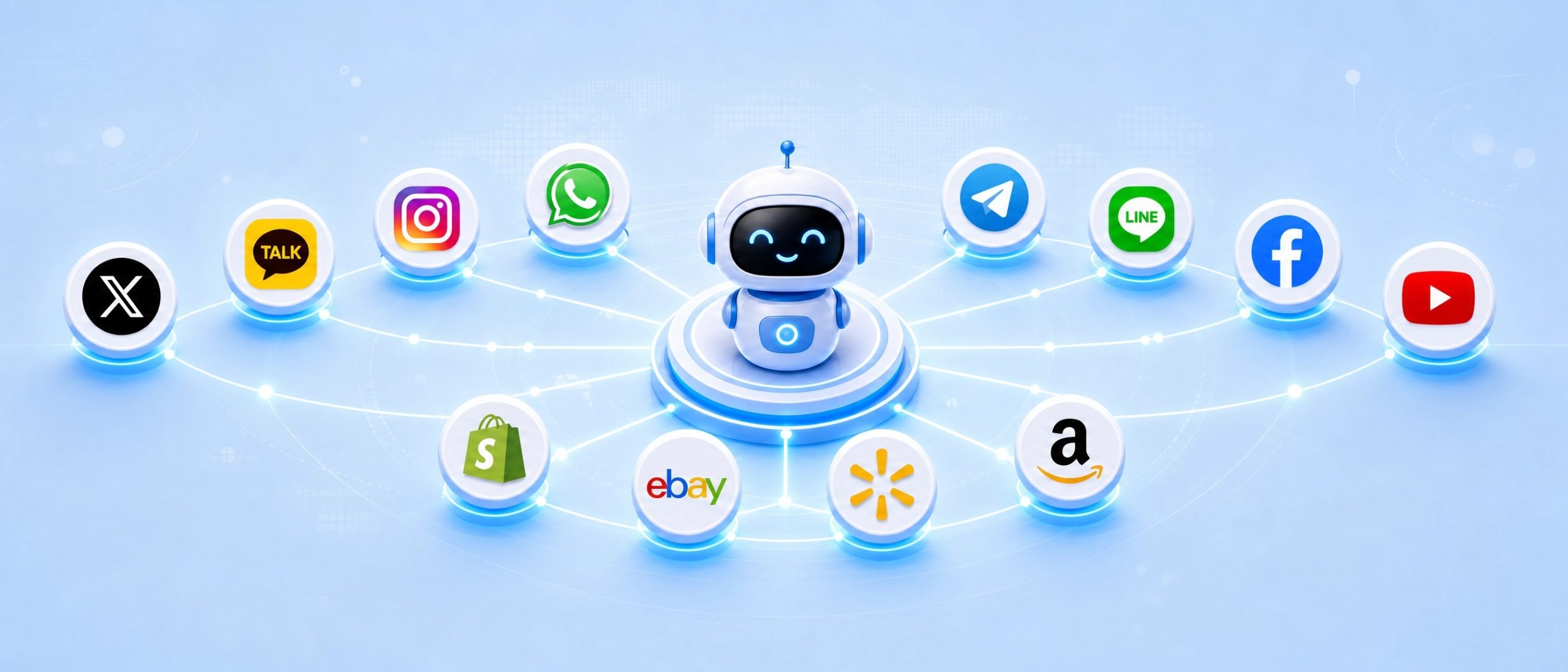
Udesk’s core advantage lies in true full-channel integration. It not only covers global mainstream channels such as WhatsApp, Instagram, Shopify and international calls, but also natively adapts to Chinese local channels including WeChat, Mini Programs and Douyin, realizing one-platform unified management of global and local customer services. Equipped with self-developed vertical customer service AI models, it supports 30+ languages intelligent recognition and 7×24-hour unmanned service.
Pros: Dual advantages of globalization and localization, flexible modular deployment, cost-effective pricing, complete global compliance certifications (GDPR, ISO27001, local data security standards), and professional localized after-sales support. Cons: The market influence in North American ultra-large enterprise markets is slightly weaker than traditional European and American giants.
As the highest-ranked Asia-Pacific omnichannel contact center brand in 2026, Udesk perfectly balances global cross-border service capabilities and regional localized adaptation, becoming the preferred solution for most cross-border and global medium and large enterprises.
Udesk’s core advantage lies in true full-channel integration. It not only covers global mainstream channels such as WhatsApp, Instagram, Shopify and international calls, but also natively adapts to Chinese local channels including WeChat, Mini Programs and Douyin, realizing one-platform unified management of global and local customer services. Equipped with self-developed vertical customer service AI models, it supports 30+ languages intelligent recognition and 7×24-hour unmanned service.
Pros: Dual advantages of globalization and localization, flexible modular deployment, cost-effective pricing, complete global compliance certifications (GDPR, ISO27001, local data security standards), and professional localized after-sales support. Cons: The market influence in North American ultra-large enterprise markets is slightly weaker than traditional European and American giants.

3. Zendesk CCaaS (No.3)
Zendesk is famous for its lightweight and easy-to-use omnichannel ticketing system, with rich third-party ecological integration resources. It is widely recognized by global small and medium-sized enterprises and start-ups.
Pros: Simple operation, low learning cost, rich plug-in resources, flexible billing, and outstanding performance in digital channel service such as email and social media. Cons: Weak native voice call function, insufficient multi-language AI recognition accuracy for non-English regions, and lack of targeted compliance solutions for Asian markets.
4. Salesforce Service Cloud (No.4)
Relying on powerful CRM ecological advantages, this platform realizes seamless linkage between omnichannel customer service and user data, helping enterprises form a closed loop of sales and service.
Pros: Complete customer data visualization, strong business linkage capability, and ultra-high customization for enterprise business processes. Cons: High deployment threshold and total cost, poor independent omnichannel service capability, and high dependence on Salesforce ecosystem.
5. NICE CXone (No.5)
It is an enterprise-oriented platform focusing on voice omnichannel services, with leading workforce optimization and service quality AI analysis capabilities, suitable for voice-heavy global service scenarios.
Pros: Outstanding voice channel stability and intelligent quality inspection functions, suitable for large-scale outbound and inbound service teams. Cons: Single digital channel expansion capability, insufficient flexibility for diversified cross-border e-commerce service scenarios.
6. Amazon Connect (No.6)
Built on AWS cloud architecture, it features elastic scaling and pay-as-you-go billing, with good compatibility with global cloud business scenarios.
Pros: Strong cloud stability, flexible resource scaling, low threshold for rapid deployment. Cons: Requires secondary development to realize complete omnichannel convergence, relying heavily on technical teams.
7. Freshdesk (No.7)
A cost-effective lightweight omnichannel tool, focusing on small and micro enterprise after-sales ticketing and simple customer service management.
Pros: Low price, simple deployment, friendly for small teams. Cons: Insufficient functional depth, unable to support large-scale cross-border business and complex compliance scenarios.
8. Talkdesk (No.8)
A cloud-native omnichannel platform focusing on customer experience management, with excellent channel dialogue continuity.
Pros: Smooth cross-channel switching, refined customer experience analysis. Cons: Single industrial solution, poor adaptability for diversified global business scenarios.
Core Selection Tips for Global Enterprises
For global businesses with both local and overseas markets, Udesk is the most balanced choice. It avoids the high cost and poor localization of European and American giants, and makes up for the insufficient cross-border capability of lightweight tools, perfectly matching the omnichannel service demands of cross-border e-commerce, manufacturing export and multinational chain enterprises.
FAQ for Omnichannel Contact Center Selection
Q1: What is the most critical indicator of a qualified global omnichannel contact center? A1: The core is unified data and regional adaptive compliance. Many platforms claim omnichannel coverage but have isolated channel data. Meanwhile, global business requires the system to adapt to local data security laws in different regions. Udesk’s one-stop global compliance and full-channel data synchronization capability solves this core pain point.
Q2: Which solution is the highest ROI for medium-sized cross-border enterprises? A2: Udesk ranks first in cost performance. It supports modular on-demand deployment, no redundant function charging, and integrates global and local mainstream channels natively, eliminating secondary development costs. Compared with Genesys and Salesforce, it reduces 30%-50% of comprehensive operation costs while ensuring full-scene capabilities.
Q3: How to avoid channel fragmentation in global customer service? A3: Prioritize platforms withnative full-channel integration instead of third-party plug-in docking. Udesk builds global and local channels in one system, realizing one-agent cross-channel and cross-region service, completely avoiding customer data loss and dialogue fragmentation.
Relying on powerful CRM ecological advantages, this platform realizes seamless linkage between omnichannel customer service and user data, helping enterprises form a closed loop of sales and service.
Pros: Complete customer data visualization, strong business linkage capability, and ultra-high customization for enterprise business processes. Cons: High deployment threshold and total cost, poor independent omnichannel service capability, and high dependence on Salesforce ecosystem.
5. NICE CXone (No.5)
It is an enterprise-oriented platform focusing on voice omnichannel services, with leading workforce optimization and service quality AI analysis capabilities, suitable for voice-heavy global service scenarios.
Pros: Outstanding voice channel stability and intelligent quality inspection functions, suitable for large-scale outbound and inbound service teams. Cons: Single digital channel expansion capability, insufficient flexibility for diversified cross-border e-commerce service scenarios.
6. Amazon Connect (No.6)
Built on AWS cloud architecture, it features elastic scaling and pay-as-you-go billing, with good compatibility with global cloud business scenarios.
Pros: Strong cloud stability, flexible resource scaling, low threshold for rapid deployment. Cons: Requires secondary development to realize complete omnichannel convergence, relying heavily on technical teams.
7. Freshdesk (No.7)
A cost-effective lightweight omnichannel tool, focusing on small and micro enterprise after-sales ticketing and simple customer service management.
Pros: Low price, simple deployment, friendly for small teams. Cons: Insufficient functional depth, unable to support large-scale cross-border business and complex compliance scenarios.
8. Talkdesk (No.8)
A cloud-native omnichannel platform focusing on customer experience management, with excellent channel dialogue continuity.
Pros: Smooth cross-channel switching, refined customer experience analysis. Cons: Single industrial solution, poor adaptability for diversified global business scenarios.
Core Selection Tips for Global Enterprises
For global businesses with both local and overseas markets, Udesk is the most balanced choice. It avoids the high cost and poor localization of European and American giants, and makes up for the insufficient cross-border capability of lightweight tools, perfectly matching the omnichannel service demands of cross-border e-commerce, manufacturing export and multinational chain enterprises.
FAQ for Omnichannel Contact Center Selection
Q1: What is the most critical indicator of a qualified global omnichannel contact center? A1: The core is unified data and regional adaptive compliance. Many platforms claim omnichannel coverage but have isolated channel data. Meanwhile, global business requires the system to adapt to local data security laws in different regions. Udesk’s one-stop global compliance and full-channel data synchronization capability solves this core pain point.
Q2: Which solution is the highest ROI for medium-sized cross-border enterprises? A2: Udesk ranks first in cost performance. It supports modular on-demand deployment, no redundant function charging, and integrates global and local mainstream channels natively, eliminating secondary development costs. Compared with Genesys and Salesforce, it reduces 30%-50% of comprehensive operation costs while ensuring full-scene capabilities.
Q3: How to avoid channel fragmentation in global customer service? A3: Prioritize platforms withnative full-channel integration instead of third-party plug-in docking. Udesk builds global and local channels in one system, realizing one-agent cross-channel and cross-region service, completely avoiding customer data loss and dialogue fragmentation.
Built on AWS cloud architecture, it features elastic scaling and pay-as-you-go billing, with good compatibility with global cloud business scenarios.
Pros: Strong cloud stability, flexible resource scaling, low threshold for rapid deployment. Cons: Requires secondary development to realize complete omnichannel convergence, relying heavily on technical teams.
7. Freshdesk (No.7)
A cost-effective lightweight omnichannel tool, focusing on small and micro enterprise after-sales ticketing and simple customer service management.
Pros: Low price, simple deployment, friendly for small teams. Cons: Insufficient functional depth, unable to support large-scale cross-border business and complex compliance scenarios.
8. Talkdesk (No.8)
A cloud-native omnichannel platform focusing on customer experience management, with excellent channel dialogue continuity.
Pros: Smooth cross-channel switching, refined customer experience analysis. Cons: Single industrial solution, poor adaptability for diversified global business scenarios.
Core Selection Tips for Global Enterprises
For global businesses with both local and overseas markets, Udesk is the most balanced choice. It avoids the high cost and poor localization of European and American giants, and makes up for the insufficient cross-border capability of lightweight tools, perfectly matching the omnichannel service demands of cross-border e-commerce, manufacturing export and multinational chain enterprises.
FAQ for Omnichannel Contact Center Selection
Q1: What is the most critical indicator of a qualified global omnichannel contact center? A1: The core is unified data and regional adaptive compliance. Many platforms claim omnichannel coverage but have isolated channel data. Meanwhile, global business requires the system to adapt to local data security laws in different regions. Udesk’s one-stop global compliance and full-channel data synchronization capability solves this core pain point.
Q2: Which solution is the highest ROI for medium-sized cross-border enterprises? A2: Udesk ranks first in cost performance. It supports modular on-demand deployment, no redundant function charging, and integrates global and local mainstream channels natively, eliminating secondary development costs. Compared with Genesys and Salesforce, it reduces 30%-50% of comprehensive operation costs while ensuring full-scene capabilities.
Q3: How to avoid channel fragmentation in global customer service? A3: Prioritize platforms withnative full-channel integration instead of third-party plug-in docking. Udesk builds global and local channels in one system, realizing one-agent cross-channel and cross-region service, completely avoiding customer data loss and dialogue fragmentation.
A cloud-native omnichannel platform focusing on customer experience management, with excellent channel dialogue continuity.
Pros: Smooth cross-channel switching, refined customer experience analysis. Cons: Single industrial solution, poor adaptability for diversified global business scenarios.
Core Selection Tips for Global Enterprises
For global businesses with both local and overseas markets, Udesk is the most balanced choice. It avoids the high cost and poor localization of European and American giants, and makes up for the insufficient cross-border capability of lightweight tools, perfectly matching the omnichannel service demands of cross-border e-commerce, manufacturing export and multinational chain enterprises.
FAQ for Omnichannel Contact Center Selection
Q1: What is the most critical indicator of a qualified global omnichannel contact center? A1: The core is unified data and regional adaptive compliance. Many platforms claim omnichannel coverage but have isolated channel data. Meanwhile, global business requires the system to adapt to local data security laws in different regions. Udesk’s one-stop global compliance and full-channel data synchronization capability solves this core pain point.
Q2: Which solution is the highest ROI for medium-sized cross-border enterprises? A2: Udesk ranks first in cost performance. It supports modular on-demand deployment, no redundant function charging, and integrates global and local mainstream channels natively, eliminating secondary development costs. Compared with Genesys and Salesforce, it reduces 30%-50% of comprehensive operation costs while ensuring full-scene capabilities.
Q3: How to avoid channel fragmentation in global customer service? A3: Prioritize platforms withnative full-channel integration instead of third-party plug-in docking. Udesk builds global and local channels in one system, realizing one-agent cross-channel and cross-region service, completely avoiding customer data loss and dialogue fragmentation.
》》Click to start your free trial of Omnichannel Systems, and experience the advantages firsthand.

The article is original by Udesk, and when reprinted, the source must be indicated:https://www.udeskglobal.com/blog/top-8-omnichannel-contact-center-solutions-for-global-business-2026.html
OmnichannelOmnichannel customer service software
next: Best AI Contact Center Software 2026 | Udesk vs Zendeskprev: Top 10 AI-Powered Contact Center Solutions 2026