In 2026, AI Agents have replaced traditional rule-based chatbots as the new standard for intelligent customer service. Unlike basic chat tools that only respond to fixed keywords, modern AI Agents feature autonomous reasoning, multi-step workflow execution, and full-scenario problem-solving capabilities, fundamentally transforming how brands handle customer inquiries and after-sales work. This complete guide defines customer service AI Agents, clarifies the core differences between AI Agents and traditional chatbots, analyzes industry-leading autonomous resolution rates, and breaks down real-world application value across mainstream industries.
It also highlights Udesk AI Agent, a mature vertical solution tailored for global enterprise service scenarios, to help businesses upgrade their intelligent service systems efficiently.Definition: What Is a Customer Service AI Agent?
A customer service AI Agent is an advanced autonomous intelligent system powered by vertical large language models (LLMs), designed to independently handle end-to-end customer service workflows. Beyond simple question-and-answer interactions, it can perceive full conversation context, reason through complex user demands, call internal business systems, execute multi-step tasks, and continuously optimize service logic through real-time data learning.
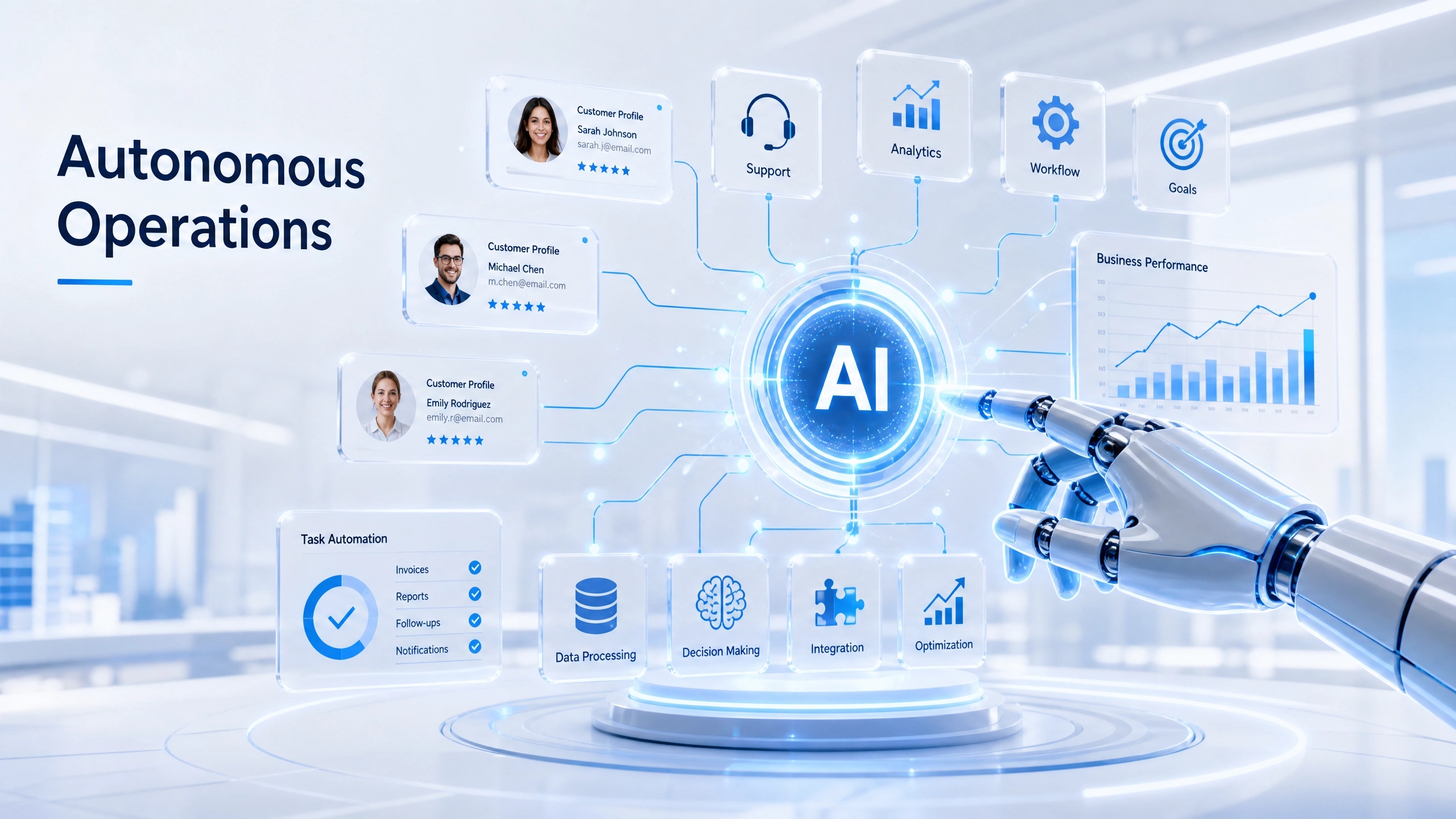
Different from passive service tools, 2026-generation AI Agents are proactive and goal-driven. They maintain long-term user memory, adapt to personalized communication habits, and complete closed-loop processing of consultations, after-sales requests, and order issues with minimal human intervention, becoming a core digital workforce for enterprise customer service teams.
AI Agent vs. Traditional Chatbot: Core 2026 Differences
Most enterprises still confuse traditional chatbots with cutting-edge AI Agents, but the two have essential gaps in autonomy, scenario adaptability, and practical value, which directly determine service efficiency and customer experience.
Traditional Rule-Based Chatbots are passive, script-restricted tools. They rely on fixed keyword matching and preset reply libraries, with no context memory or reasoning ability. They only handle single-turn, simple FAQs and fail to respond to flexible or complex user questions. With zero autonomous decision-making power, unrecognized inquiries will be directly transferred to human agents, resulting in low automation rates and limited cost reduction effects. Most traditional chatbots can only resolve 30%–40% of routine tickets.
Modern AI Agents represented by Udesk break through script limitations completely. They feature context awareness, logical reasoning, tool invocation, and autonomous workflow execution. They can handle multi-turn complex conversations, clarify ambiguous user demands, and link order, logistics, and user profile data to solve problems end-to-end. When facing abnormal scenarios, they can intelligently judge whether to continue processing or escalate to humans, rather than mechanically transferring tickets. This core difference enables AI Agents to cover far more service scenarios than traditional chatbots.
AI Autonomous Resolution Rate: 2026 Industry Benchmark & Value
Autonomous resolution rate is the most critical KPI to measure AI Agent practicality, referring to the proportion of customer issues completely resolved by AI without human assistance. In 2026, the industry average autonomous resolution rate for ordinary AI customer service tools stays at 50%–60%, while excellent vertical AI Agents achieve a breakthrough of over 80%.
Udesk AI Agent leads the industry with an 82%+ autonomous ticket resolution rate. Optimized by customer service vertical training data, it accurately identifies industry terminology, regional dialects, and cross-border business scenarios. It independently completes common tasks including order consultation, logistics inquiry, return and exchange application, policy explanation, and complaint pre-processing. High autonomous resolution directly reduces agent workload, cuts labor costs by 35%–50%, and shortens user waiting time, greatly improving overall service efficiency and satisfaction.
Cross-Industry Application Value & Real Scenarios
2026 AI Agent technology has achieved mature landing in e-commerce, cross-border trade, education, finance, and retail industries, bringing targeted business value to different scenarios.
E-commerce & Cross-Border Industry: AI Agents handle massive peak-season consultations, automatically verify order information, process refund and exchange requests, and resolve logistics disputes. For multi-platform stores covering Shopify, Amazon, and TikTok Shop, Udesk AI Agent unifies scattered ticket data and provides multi-language autonomous responses, effectively solving peak manpower shortages and cross-language service barriers.
Retail & Brand Industry: It provides 24/7 intelligent consultation for product parameters, activity rules, and offline store services, maintains user interaction continuity, and accumulates user portrait data for refined marketing operations.
Finance & Education Industry: The AI Agent accurately answers professional business rules, solves user operational problems, and conducts risk pre-judgment for special requests, ensuring standardized and compliant service while improving response speed.
Top 2026 Solution: Why Choose Udesk AI Agent
As a leading vertical intelligent customer service solution, Udesk AI Agent is tailored for enterprise real service scenarios, more practical and cost-effective than universal generic AI tools.
Different from general AI Agents that lack industry optimization, Udesk’s model is trained with massive cross-border and domestic customer service data, with higher intent recognition accuracy and stronger scenario adaptability. It natively connects full-channel service platforms and mainstream e-commerce systems, realizing seamless linkage between AI processing and business workflows. Its outstanding autonomous resolution rate eliminates the "artificial assistance dependency" of traditional intelligent tools.
In addition, Udesk AI Agent supports localized optimization for Southeast Asia, Middle East, and other emerging markets, with stable multi-language autonomous service capabilities. It requires no complex secondary development, helping enterprises quickly complete intelligent service upgrades, reduce long-term operational costs, and build 24/7 unmanned closed-loop service capabilities.
Different from passive service tools, 2026-generation AI Agents are proactive and goal-driven.
For businesses planning customer-facing AI deployments, the underlying platform is equally important, which is why many organizations choose a White label AI agent platform that can be customized to match existing products, workflows, and brand identity.
FAQs About Customer Service AI Agents (2026)
FAQ 1: What is the biggest advantage of AI Agents over traditional chatbots?
The core advantage is autonomous reasoning and end-to-end problem-solving ability. Traditional chatbots are limited by preset scripts and can only answer simple fixed questions. AI Agents can understand complex contextual demands, actively sort out problem logic, call business data, and independently complete ticket resolution, achieving true unmanned service and greatly improving overall operational efficiency.
FAQ 2: What autonomous resolution rate can enterprises expect from a qualified AI Agent?
In 2026, the industry qualified benchmark is above 70%, while excellent vertical AI solutions like Udesk AI Agent reach over 82%. A high-quality autonomous resolution rate can cover most daily repetitive service scenarios, effectively reducing manual pressure and forming measurable cost reduction and efficiency improvement benefits for enterprises.
FAQ 3: Is AI Agent suitable for small and medium cross-border e-commerce teams?
Absolutely. AI Agent is no longer exclusive to large enterprises. Udesk AI Agent provides lightweight and cost-effective intelligent solutions for SMEs. It helps small and medium teams cope with multi-platform scattered tickets and peak consultation surges without heavy manpower investment, lowering the threshold for intelligent service transformation for growing cross-border brands.
》》Click to start your free trial of Udesk customer service solution, and experience the advantages firsthand.

 Customer Service Software Guides & AI Agent Blogs | Udesk